U.S. Navy turns 251, But Indian and Russian Warships Steal the Show in America’s Recurring Social Media Nightmare

America’s annual tribute to its naval power has once again been overshadowed by a familiar embarrassment: politicians and official accounts celebrating the US Navy with photographs of Indian and Russian warships. What appears to be a harmless social media mistake reveals a deeper problem with how national security, military identity and public communication are handled in the digital age.
On October 13, the United States marked the 251st birthday of its Navy, commemorating the Continental Congress’s 1775 decision to establish a naval force during the American Revolution. The occasion was meant to celebrate centuries of maritime power, military service and the role of American sailors in protecting the country’s interests across the world’s oceans.
Instead, several American politicians and organisations managed to turn the celebration into an unintended showcase of foreign naval power.
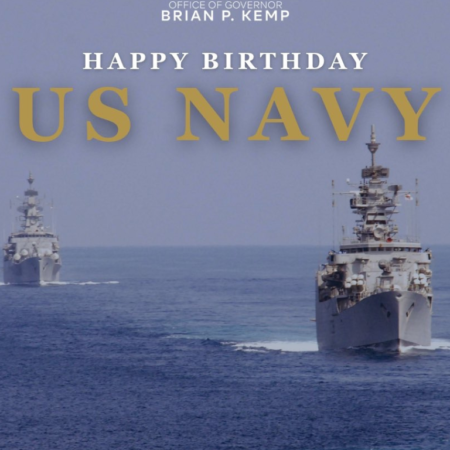
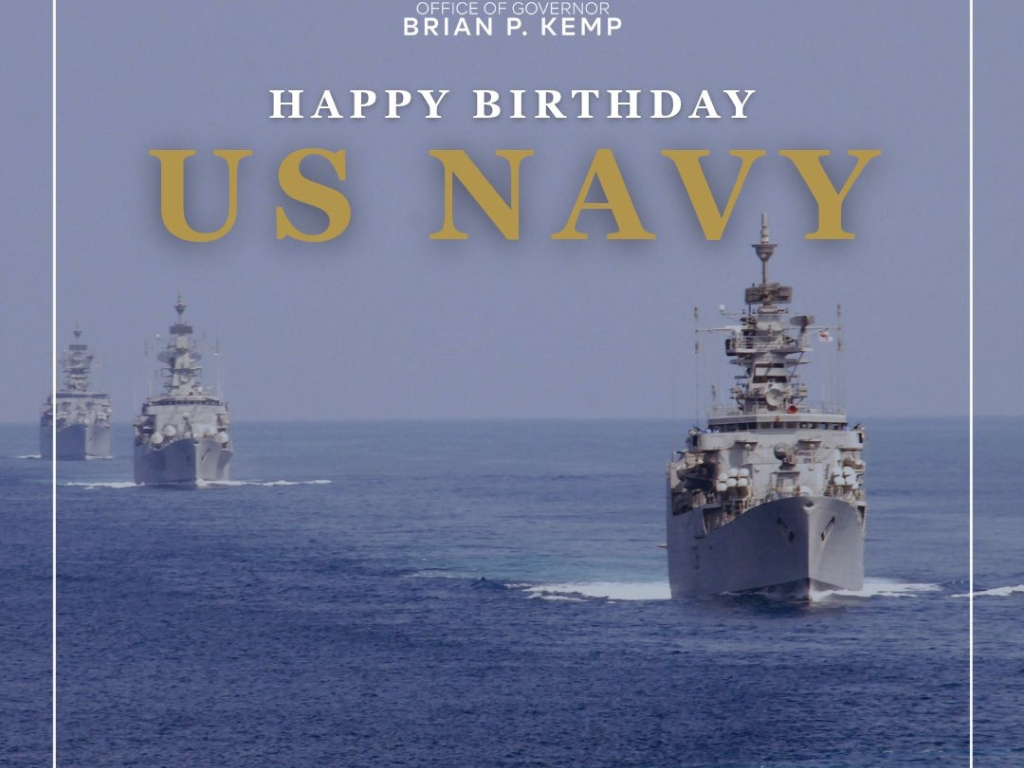
Georgia Governor Brian Kemp shared an image of warships identified as Indian Navy vessels, reportedly including INS Godavari, INS Brahmaputra and INS Beas. Ohio State Representative Mike Dovilla posted an image of a Russian warship before deleting it after the mistake attracted attention. San Diego Mayor Todd Gloria also shared images identified as the Soviet-era cruiser Mikhail Kutuzov, now preserved as a museum ship in Russia. The Freedom Caucus Foundation joined the list with an image of the Indian Navy’s INS Trikand.
From the early days of our nation’s founding, the Navy has stood watch over our country and defended freedom across the seas. On its birthday, we salute the sailors whose service, sacrifice, and courage carry that legacy forward. pic.twitter.com/rc62kQAOuy
— Governor Brian P. Kemp (@GovKemp) October 13, 2026
The irony is difficult to miss. In attempting to celebrate one of the world’s most powerful navies, American public figures ended up giving Indian and Russian warships an unexpected appearance in their patriotic messaging.
Yet the real story is not that a politician confused one grey warship with another. It is that the same mistake keeps happening, year after year, despite the reputational costs and the ease with which such errors can be prevented.
A Recurring Embarrassment, Not an Isolated Mistake
The latest incidents follow a pattern that has become almost ritualistic. In 2025, during the US Navy’s 250th anniversary celebrations, several American public figures and organisations also used photographs of foreign warships. The US Navy SEAL Museum was among the accounts criticised for sharing an image of a Russian missile cruiser.
Similar incidents have surfaced in earlier years. In 2023, American lawmakers and a foundation supporting Navy SEAL families faced criticism for using images of Russian warships in messages celebrating the US Navy. In 2021, Senator Jim Risch used an image of a vessel identified as belonging to the Royal Thai Navy for a birthday tribute.
The confusion has not been limited to naval vessels. American military institutions and politicians have also mistakenly used photographs of foreign combat aircraft in posts celebrating US forces. In 2025, the Pentagon’s F-35 Joint Program Office drew criticism after publishing an image identified as China’s J-35A stealth fighter in a Veterans Day tribute. Earlier incidents involved Russian MiG-29 and Su-34 aircraft appearing in American Air Force birthday messages.
These repeated errors suggest that the problem extends beyond an individual staffer selecting the wrong photograph. It points towards a persistent failure to verify imagery before publishing content that carries an official or patriotic message.
When Patriotism Becomes a Copy-Paste Exercise
Social media has transformed how governments, political representatives and military organisations communicate with the public. A birthday message, an anniversary graphic or a short tribute can reach millions of people within minutes. The pressure to publish quickly is real, and visual content often attracts more attention than text alone.
But this speed has also encouraged a superficial approach to public communication. A photograph of a warship, a fighter jet or a soldier may appear sufficiently convincing to someone unfamiliar with military hardware. If the image looks broadly appropriate, it may pass through the publishing process without anyone checking its identity.
That is where the problem begins.
Military platforms are not interchangeable symbols of national power. A warship carries a particular design history, technological capability, national identity and strategic significance. An Indian frigate represents India’s maritime interests and naval capabilities. A Russian cruiser reflects a different military tradition and strategic context. Neither becomes an American vessel simply because it appears in a patriotic graphic.
When public officials fail to make this distinction, they undermine the very message they are attempting to communicate. A tribute intended to demonstrate institutional pride instead becomes evidence of inadequate preparation.
The problem is particularly striking when the mistake comes from people with military backgrounds or organisations associated with defence. Their professional experience does not necessarily make them experts in identifying every foreign platform, but it does make basic verification an especially reasonable expectation.
India’s Naval Rise Gets Unintended Recognition
For India, these incidents also carry an interesting dimension. The repeated appearance of Indian warships in American Navy tributes demonstrates how readily images of India’s modern naval platforms circulate through the global information environment.
India has steadily expanded its maritime capabilities as it seeks to protect its interests across the Indian Ocean Region and strengthen its position as a major Indo-Pacific power. Its naval fleet has become an increasingly visible component of the country’s strategic profile.
However, the American social media blunders should not be mistaken for a formal endorsement of Indian naval superiority or evidence that Indian ships have been officially confused with American platforms. They are primarily failures of image verification.
Their significance lies elsewhere: India’s military hardware is sufficiently present in online image collections and defence-related visual material that it can enter the communications pipelines used by foreign political organisations.
There is an additional irony in the Russian examples. At a time when Washington and Moscow remain strategic rivals, images of Russian military platforms have repeatedly appeared in American patriotic messaging. These mistakes do not alter the balance of power or military relations, but they create an avoidable communications problem.
For countries competing for influence, military imagery is part of the broader projection of national power. Getting that imagery wrong weakens the credibility of the institution publishing it.
The Information Age Demands More Than a Quick Google Search
The explanation for these mistakes is not particularly complicated. Modern warships often share common visual characteristics: grey hulls, angular superstructures, radar masts and missile-launching systems. Combat aircraft may also resemble one another in broad outline, especially when viewed in low-resolution photographs or simplified graphics.
Identifying a particular vessel can require examining its hull number, weapon configuration, radar arrangement, national markings and operational history. A photograph taken from a distance may make that task harder, while an image found through a generic internet search may lack reliable identification.
Nevertheless, these difficulties do not excuse repeated errors. They make verification more important.
Political offices and public institutions can establish simple safeguards: use photographs from official naval archives, confirm the platform’s identity with a knowledgeable reviewer, check the original image source and avoid publishing an image when its provenance is uncertain. A short verification process is considerably less damaging than a public correction after thousands of people have already seen the mistake.
Artificial intelligence and reverse-image search tools can assist with preliminary checks, but neither should be treated as infallible. Final verification must rest on reliable sources and human review, particularly when the content concerns national security or the armed forces.
The Bigger Lesson: Credibility Is Built in the Details
The recurring confusion between American, Indian and Russian military platforms is unlikely to change the strategic relationship between these countries. Nor does it diminish the achievements of the US Navy, whose history and capabilities extend far beyond a social media post.
But the episode illustrates a broader truth about public communication: credibility is often lost through small, preventable errors rather than dramatic failures.
A government can invest billions of dollars in advanced weapons, maintain a global military presence and deliver elaborate speeches about national strength. Yet when its representatives cannot correctly identify the equipment shown in their own tributes, the resulting embarrassment is immediate and highly shareable.
In the digital age, audiences do not merely consume official messages. They inspect them, challenge them and circulate their mistakes. Community notes, military enthusiasts and defence analysts can expose an error before the original publisher even realises what has happened.
The solution is not to abandon patriotic messaging or expect every politician to become a military hardware specialist. It is to recognise that official communication requires the same attention to accuracy as any other institutional responsibility.
The US Navy deserves to have its 251-year history celebrated on its own terms. Indian and Russian warships do not need to appear in American birthday graphics to demonstrate their capabilities.
Until political offices learn to verify what they publish, however, America’s annual celebration of naval power may continue to provide an unintended platform for the very foreign militaries its messages were never meant to showcase.