
Ukraine’s reliance on American technology and political support exposes a hard geopolitical truth: strategic partnerships can become vulnerabilities when a powerful ally’s domestic priorities diverge from a partner’s national interests.
The debate over Donald Trump’s approach to Ukraine highlights a fundamental dilemma in international relations. Can a country depend on a superpower for its security when that superpower’s political calculations, economic priorities and leadership can change overnight?
For Ukraine, the question is no longer simply whether Washington will continue providing military assistance. It is whether access to critical technology, intelligence, and battlefield communications can remain dependable as political interests diverge.
The controversy surrounding Starlink, Elon Musk’s satellite internet service, has brought this dilemma into sharp focus. It also carries a significant lesson for countries such as India, which are deepening strategic cooperation with the United States while seeking to preserve their own freedom of action.
When Strategic Partnership Becomes Strategic Vulnerability
Ukraine’s war against Russia has demonstrated the importance of commercial technology in modern warfare. Satellite communications, commercial imagery, artificial intelligence and remotely operated drones have become essential components of military operations.
Starlink has played a particularly important role in maintaining communications in areas where conventional infrastructure has been destroyed or disrupted. Its connectivity has supported Ukrainian military communications and broader wartime operations, making the system a significant part of the country’s technological infrastructure.
That dependence, however, creates a strategic vulnerability.
When a military relies heavily on a privately operated communications network, access to that network becomes more than a commercial arrangement. It becomes a question of national security. Decisions taken by a company, its leadership or the government with influence over its operations can have consequences extending far beyond the technology sector.
Any restriction on military connectivity can affect operational planning, coordination and the effectiveness of certain weapons systems. The extent of that impact depends on the restrictions imposed, the systems involved and the availability of alternatives.
This is the uncomfortable reality Ukraine faces: technology that provides a decisive advantage can also become a point of dependence.
The central geopolitical question is not whether Starlink is useful to Ukraine. It is whether Ukraine can afford to rely on a critical system over which it does not exercise sovereign control.
Trump’s Domestic Politics and Ukraine’s Strategic Dilemma
American foreign policy has never operated independently of domestic politics. Presidents must balance international commitments with electoral calculations, economic pressures, congressional politics and public opinion.
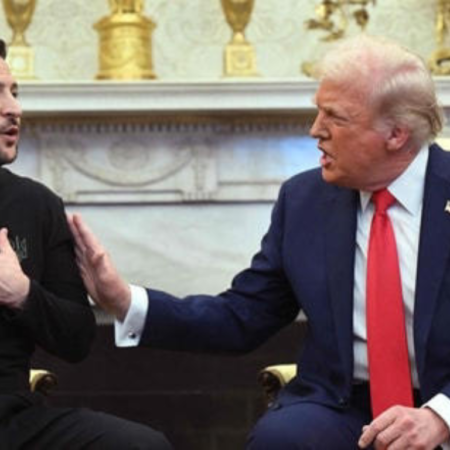
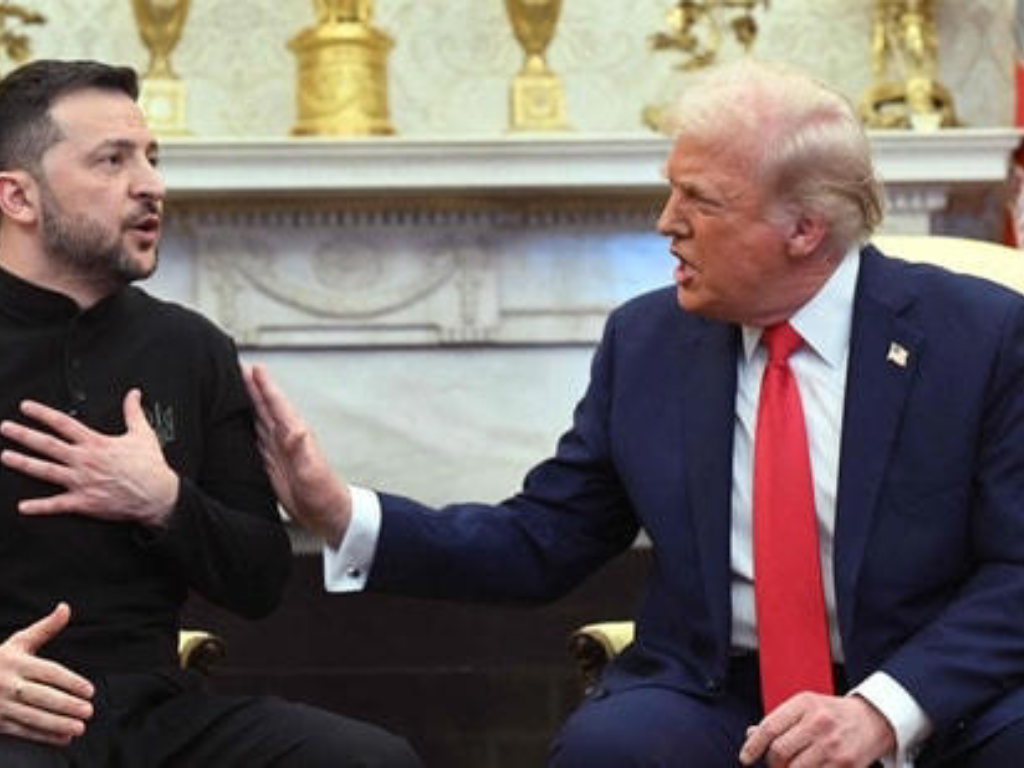
Trump’s approach to Ukraine must be understood within this broader context. His administration’s priorities, including the economic consequences of prolonged conflicts and the political costs of overseas commitments, can influence the level and nature of American support.
If a president concludes that continued assistance to an ally conflicts with domestic political objectives, the ally may find its strategic position changing rapidly.
For Kyiv, this creates a difficult predicament. Ukraine needs external support to sustain its resistance against Russia, but it cannot control the political forces shaping that support in Washington.
The danger is that a country may build its long-term security assumptions around the preferences of a particular American administration, only to discover that those preferences are temporary.
However, claims that Trump deliberately restricted Starlink to punish Ukrainian President Volodymyr Zelensky, or that a particular electoral calculation directly caused a change in battlefield connectivity, require independently verified evidence. A coincidence between political tensions and technological restrictions does not, by itself, establish a direct order or motive.
The broader strategic concern remains valid regardless: when a country’s security depends on decisions made abroad, political uncertainty becomes a national security risk.
Elon Musk and the Power of Private Technology
The Starlink controversy also highlights the growing influence of private technology companies in international affairs.
Traditionally, governments controlled the principal instruments of military power: armed forces, weapons procurement, communications infrastructure and intelligence networks. Today, private companies operate systems that governments and militaries increasingly cannot function without.
Satellite networks, cloud computing, commercial intelligence and advanced artificial intelligence are changing the relationship between states and corporations.
Elon Musk’s position illustrates this shift. Starlink is a commercial service, but its capabilities have acquired strategic importance in an active war. Decisions about connectivity can therefore carry consequences that resemble those of government policy.
This does not automatically make Musk an agent of the American government, nor does it establish that Washington directly ordered any particular restriction. Corporate decisions, contractual arrangements and government authority must be distinguished from one another.
Nevertheless, the concentration of critical infrastructure in private hands creates a serious policy challenge. A company may have commercial interests, contractual obligations and operational limitations, while a government may have military or diplomatic objectives. These interests can overlap, but they are not necessarily identical.
For countries relying on such systems, the answer cannot be to assume that commercial technology will always remain politically neutral. Governments must establish clear contractual safeguards, contingency arrangements and alternative capabilities before a crisis emerges.