
Apple’s latest iPhone launch has once again triggered intense debate in India—not only about its technology, but also about its price. The discussion has become particularly heated around Apple’s newly launched foldable iPhone, priced at around ₹3 lakh in India.
The price has prompted a simple question: Why is an iPhone so expensive in India when Apple is manufacturing and assembling its devices in the country?
The debate has also raised another question: Is Apple still delivering breakthrough innovation, or are consumers paying for the brand and status associated with owning an iPhone?
Why Is Everyone Talking About the iPhone?
Apple’s iPhone has long been more than just a smartphone in India and around the world. It has become a major consumer technology brand, a status symbol and, for some users, a lifestyle product.
India is estimated to have around 4.5 crore active iPhone users. While this represents only a fraction of India’s population, the level of attention generated by every new iPhone launch is disproportionately large.
The latest launch has amplified that attention because of the price of Apple’s premium models.
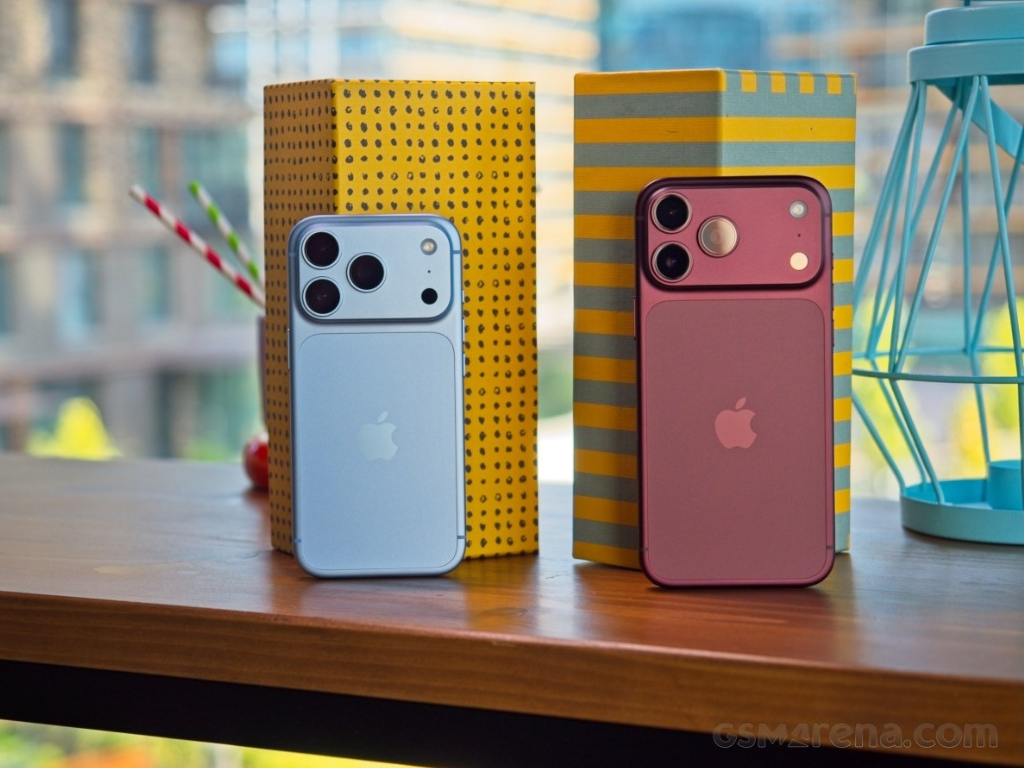
The iPhone 18 Pro is priced at around ₹1,64,900 in India, while the iPhone 18 Pro Max starts at approximately ₹1,79,900. The newly launched foldable model has attracted even more attention with a reported Indian price of around ₹3 lakh.
That has led to a flood of comparisons on social media, with consumers pointing out that travelling foreign countries to purchase device such as UAE etc where taxes are low so comparatively cheaper iPhone than India.
This raises a larger question: What makes the Indian price so high?
India Is Manufacturing iPhones—So Why Are They Still Expensive?
One of the most common explanations for expensive iPhones in India is that the devices are imported.
However, that explanation is no longer sufficient for every model.
Apple has significantly expanded iPhone manufacturing and assembly in India. The country has become an increasingly important part of Apple’s global production strategy, supported in part by India’s Production Linked Incentive (PLI) programme.
India’s iPhone production has grown rapidly, and a substantial share of iPhones sold domestically are now assembled in the country.
Yet manufacturing in India does not automatically mean that the final retail price will match the price in the United States.
There are several components involved in determining the final price.
Taxes Make a Major Difference
One of the biggest factors behind the price difference is taxation.
Imported components and finished devices can attract customs duties, while smartphones sold in India are also subject to Goods and Services Tax (GST).
For premium devices, these costs can significantly increase the final consumer price.
The standard GST rate applicable to mobile phones in India is 18%. Customs duties and other import-related costs can also affect devices or components depending on their classification and origin.
This means that even when a phone is assembled in India, its entire supply chain may not be domestically produced.
The device can contain components sourced from multiple countries, including advanced processors, displays, memory and other semiconductor components.
Therefore, “Made in India” does not necessarily mean “100% Indian-made.”
Why Is the Same iPhone Cheaper in America?
The United States is Apple’s home market and has a fundamentally different taxation and pricing structure.
American consumers also often see prices before applicable state sales taxes, while Indian advertised prices generally incorporate GST. This makes direct headline-price comparisons somewhat misleading.
In addition, Apple has different pricing strategies for different markets based on taxation, distribution costs, currency movements, consumer demand and competition.
The Indian rupee’s exchange rate against the US dollar is another important variable.
When the rupee weakens against the dollar, imported components and globally priced technologies become more expensive in rupee terms.
For a product containing a large number of internationally sourced components, currency movements can therefore affect pricing.
The Foldable iPhone Has Made the Debate Bigger
Apple’s entry into the foldable smartphone market has made the discussion even bigger.
The company is entering a category that competitors have already occupied for years. Samsung has been producing foldable smartphones since 2019, while several Chinese manufacturers have also developed foldable devices with different designs and form factors.
This has led to criticism that Apple’s latest product does not represent the kind of revolutionary innovation historically associated with the iPhone.
Critics argue that foldable technology itself is no longer new. Competitors have already introduced foldable displays, sophisticated hinge mechanisms, multitasking capabilities and increasingly thin foldable smartphones.
From this perspective, Apple is entering an established market rather than creating an entirely new category.
The criticism extends beyond foldable technology. Some consumers argue that Apple’s recent innovations have become more incremental, with annual upgrades often involving improvements to cameras, processors, displays, battery performance and software rather than technologies that fundamentally change how people use smartphones.
Are Consumers Paying for Innovation or the Apple Brand- A status symbol?
This is where the iPhone’s status-symbol factor becomes important.
Critics argue that a significant part of Apple’s pricing power comes from its brand value. For many consumers, owning the latest iPhone is not simply about getting a device with new specifications. It can also signal financial success, professional achievement or social status.
An expensive smartphone can therefore become a form of conspicuous consumption.
Apple’s ecosystem strengthens this effect. Consumers who already own an Apple Watch, AirPods, iPad or Mac may prefer to remain within the same ecosystem. The familiarity of iOS and integration between devices can make switching to another brand less attractive.
Easy access to credit cards, financing and EMI schemes also makes expensive smartphones easier to purchase. Instead of paying the entire amount immediately, consumers can spread the cost across several months.
This can make a product costing several lakh rupees appear more manageable.
The New iPhone Also Comes With New Technology
Apple’s latest generation brings several hardware and design changes.
Among the notable developments is the introduction of a variable-aperture camera system on the Pro models, allowing greater control over how much light enters the camera.
The company has also highlighted greater use of recycled materials.
The latest devices use recycled materials in components such as aluminium, while Apple has continued to emphasise its broader environmental goals, including its ambition to become carbon neutral across its entire business and product lifecycle.
The foldable model also introduces a different hardware architecture, including a dual-battery system and a redesigned internal structure.
These technologies come at a cost, particularly when they are introduced for the first time at large scale.
AI Is Also Affecting Smartphone Component Prices
Another factor receiving increasing attention is the rising demand for semiconductors and memory.
The global artificial intelligence boom has created enormous demand for advanced computing hardware, including high-performance processors and memory components.
AI data centres require vast quantities of advanced chips and high-bandwidth memory.
This competition for semiconductor manufacturing capacity can have wider consequences for consumer electronics.
Smartphones, tablets, televisions and other electronic products can all be affected when the cost or availability of memory and other components changes.
Therefore, even older smartphone models may not necessarily become dramatically cheaper every year.
So, Should You Buy the New iPhone?
That ultimately depends on the individual consumer.
For someone who needs the latest technology, values Apple’s ecosystem or specifically wants a foldable iPhone, the premium may be acceptable.
For another consumer, a smartphone costing ₹10,000–₹50,000 may perform most everyday tasks just as effectively.
There is therefore no single answer to whether an expensive iPhone is “worth it.”
The more important question is what the consumer actually needs.
At the same time, India’s growing role in Apple’s manufacturing network means that the old argument that iPhones are expensive simply because “they are imported” is increasingly incomplete.
Finally, question for buyers : Are the new features worth the premium—or is part of that ₹3 lakh price the cost of owning the Apple logo?