US abandons, Mecca Pact fails as Saudi Arabia’s shiny weaponry struggles Against the Houthis’ aggressive charge

US and Canada issued travel warnings, reporting threats near Mecca and an alleged Saudi F-15 shot down by the Houthis brought forth a troubling question for Riyadh: why has one of the world’s biggest defence spenders struggled to neutralise a relatively smaller, irregular adversary?
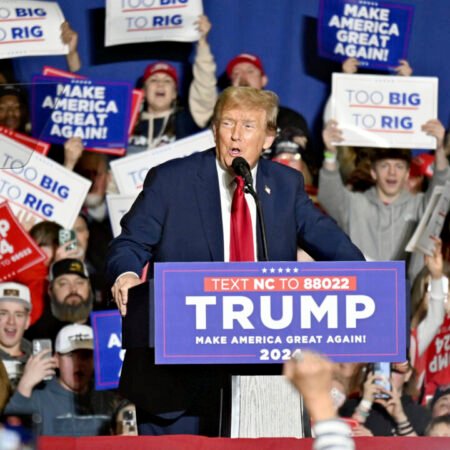
Media report alleges that Saudi Arabia sought American assistance, but Trump refused. The report also claims that United States have deal with Houthi under which they would refrain from attacking U.S. bases in the Middle East and Israel.
Saudi Arabia possesses a massive defence budget, advanced fighter aircraft, sophisticated American weapons, and extensive military infrastructure. Yet the latest escalation involving Yemen’s Houthi movement has once again exposed the kingdom’s vulnerability to relatively inexpensive drones, missiles, and asymmetric warfare.
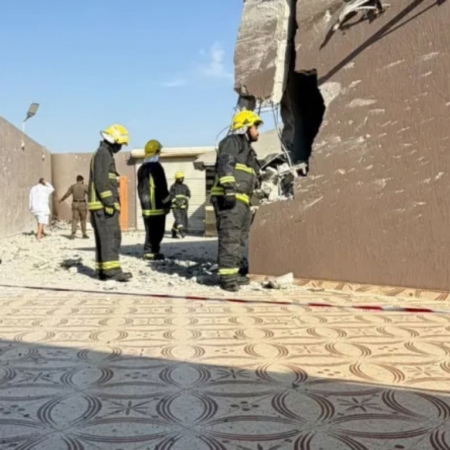
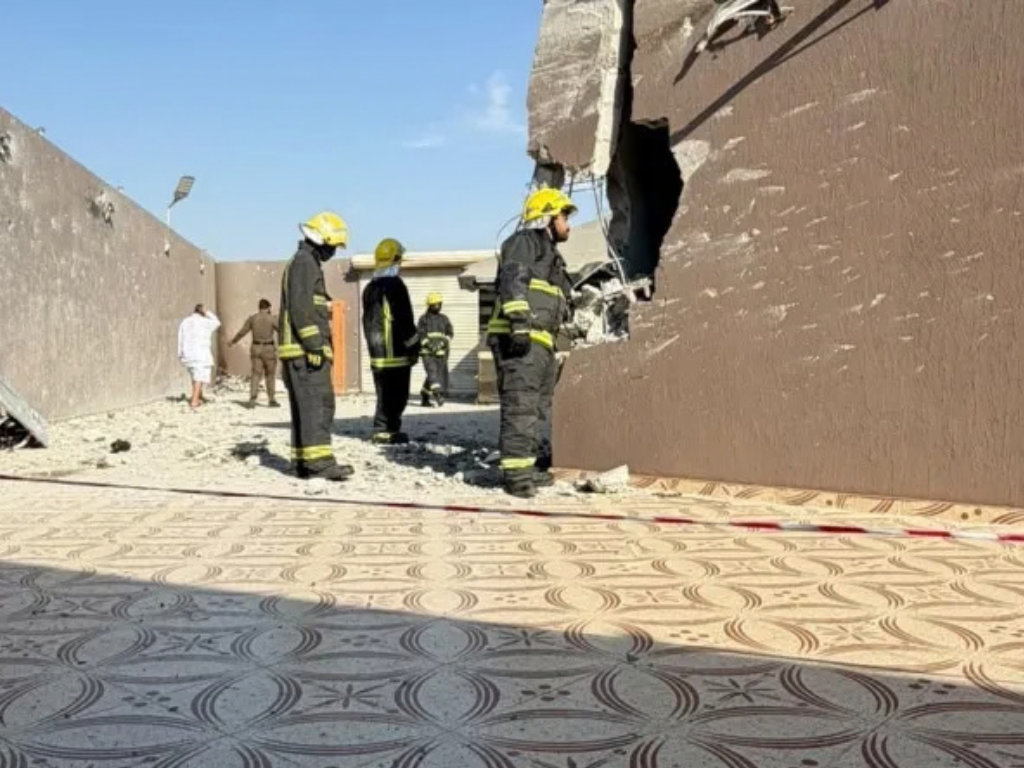
The reported interception of a Houthi drone south of Mecca on September 15, followed by emergency alerts in Mecca, Jeddah, and Taif, has added an unprecedented religious dimension to the conflict. Separately, the Houthis have claimed to have shot down a Saudi F-15 fighter over Yemen’s Marib Governorate. That claim remains independently unverified, and Saudi Arabia has not publicly confirmed the loss.
Together, these developments raise a broader strategic question: Can a country possess some of the most expensive military platforms in the world and still remain vulnerable to a determined non-state adversary?
A Military Giant Facing an Asymmetric Challenge
Saudi Arabia is among the world’s largest military spenders. Its defence establishment operates advanced platforms, including the famed US F-15 fighter aircraft, alongside American-made missile-defence systems, surveillance assets, precision-guided munitions, and other sophisticated equipment.
On paper, this creates a substantial military advantage over the Houthis, who operate from Yemen and rely heavily on asymmetric methods. Their arsenal includes drones, ballistic missiles, cruise missiles, and other systems that can threaten military facilities, energy infrastructure, and population centres.
But military power is not determined by the price or sophistication of individual weapons alone. It also depends on intelligence, surveillance, command-and-control systems, operational readiness, training, geography, and the ability to identify and intercept incoming threats consistently.
The Saudi-Houthi confrontation illustrates this distinction. A country can possess advanced aircraft and missile-defence systems while still facing difficulty in preventing every drone or missile launch, particularly when the attacker uses low-cost systems, dispersed launch sites, deception, and irregular tactics.
This does not mean Saudi Arabia is literally defenceless. Rather, it suggests that its conventional military superiority has not translated into complete protection from asymmetric threats.
The Mecca Incident and Its Strategic Significance
The reported drone interception near Mecca has made the latest escalation especially sensitive. Mecca is home to the Kaaba within Masjid al-Haram and is Islam’s most sacred city. Its security carries consequences far beyond Saudi Arabia’s territorial defence.
According to Saudi coalition spokesman Maj. Gen. Turki al-Maliki, Saudi air defences intercepted and destroyed a drone south of Mecca before it could enter restricted airspace over the holy city. Saudi Civil Defense reportedly activated warning systems in Mecca, Jeddah, and Taif before lifting the alerts after the immediate danger had passed.
The Houthis denied targeting Mecca, describing the Saudi account as “fabrication and lies” and maintaining that their operations focus on military and energy-related targets.
The distinction is important. The reported interception does not, by itself, establish that the holy city was deliberately targeted. Nevertheless, the proximity of a reported threat to Mecca demonstrates how the conflict can create risks in areas of extraordinary religious and political importance.
Any confirmed attempt to attack the city could trigger widespread condemnation across the Muslim world and place pressure on governments with ties to both Riyadh and Tehran.
The F-15 Claim: A Symbolic and Military Challenge
The Houthi claim of shooting down a Saudi F-15 introduces another dimension to the crisis. Houthi military spokesman Yahya Saree said the aircraft was downed over Marib using a “locally manufactured” surface-to-air missile. The group released footage that it said showed the engagement and wreckage, including a tail section bearing Saudi markings.
The claim remains unconfirmed. Saudi Arabia has not publicly acknowledged the loss, and independent verification of the aircraft’s identity and the circumstances of the alleged incident remains limited.
If confirmed, however, the event would carry significance beyond the loss of one aircraft. The F-15 is a sophisticated multirole fighter, and a successful engagement could strengthen Houthi claims that their air-defence capabilities are improving.
It would also highlight a central reality of modern warfare: advanced aircraft remain vulnerable when operating in contested environments, particularly against missile systems whose capabilities, deployment methods, and engagement conditions are difficult to assess from public information.
At the same time, one aircraft loss would not establish Houthi air superiority or negate Saudi Arabia’s broader air-power advantage. The strategic implications would depend on the circumstances of the engagement and whether it represented an isolated incident or part of a wider pattern.
Why Saudi Arabia’s Defence Spending Has Not Eliminated the Threat
Saudi Arabia’s defence paradox is not simply about equipment. It is about the difficulty of converting financial resources into effective, integrated security.
First, asymmetric warfare changes the cost equation. A drone or missile that costs substantially less than the aircraft, radar, or interceptor deployed against it can impose significant financial and operational pressure on the defender. Even successful interceptions may be expensive, while a single projectile that reaches a sensitive target can create disproportionate consequences.
Second, geography favours the attacker in certain circumstances. Yemen’s proximity to Saudi territory gives the Houthis opportunities to threaten southern cities and infrastructure. Mountainous terrain, dispersed launch locations, and the difficulty of monitoring an extensive border complicate efforts to eliminate every threat.
Third, military technology is not the same as military integration. Effective air defence requires early warning, sensor networks, command coordination, identification, interception, and post-attack assessment. Gaps in any of these stages can create vulnerabilities despite the presence of advanced equipment.
Fourth, air power cannot independently solve a political conflict. Saudi Arabia’s military intervention in Yemen, which began in 2015, did not produce a decisive political settlement. The Houthis retained significant territorial control and continued developing their military capabilities.
The result is a conflict in which Saudi Arabia may possess overwhelming conventional advantages but still face persistent strategic exposure.
The Limits of Regional Defence Partnerships/ Mecca Pact
The crisis has also renewed questions about Saudi Arabia’s defence relationships with Pakistan and Türkiye.
Saudi Arabia has pursued closer strategic and defence cooperation with both countries, including a framework publicly associated with the Mecca Agreement. However, collective-defence arrangements do not necessarily mean that every attack automatically triggers military intervention. Their practical effect depends on the agreement’s wording, political decisions, threat assessments, and the willingness of participating states to commit forces.
Pakistan’s position is particularly complex. It maintains close defence and economic ties with Saudi Arabia but must also consider its own security challenges, regional tensions, and the risks of entering another major conflict.
Türkiye likewise has its own strategic priorities. Defence cooperation with Riyadh does not automatically imply a commitment to deploy military assets in every confrontation involving the kingdom.
The current situation therefore tests whether symbolic strategic partnerships can translate into concrete military support during a rapidly escalating crisis.
Israel, Iran and the Wider Regional Equation
Reports of possible Israeli intelligence assistance to Saudi Arabia reflect the emergence of overlapping security interests in West Asia. Saudi Arabia and Israel do not maintain formal diplomatic relations, but both have concerns about Iran’s regional influence and the capabilities of Iran-aligned groups.
Any intelligence coordination, if confirmed, would demonstrate how common threats can encourage pragmatic security cooperation even where diplomatic relations remain politically sensitive.
For Iran, the Houthis provide a means of exerting pressure on Saudi Arabia and influencing the security environment around the Red Sea. However, the Houthis are not simply an extension of Iranian policy; they retain their own local objectives and decision-making structures.
The conflict therefore reflects both a regional power struggle and Yemen’s unresolved internal political crisis.
Why India Should Pay Attention
The developments have direct implications for India. The Bab el-Mandeb Strait is a critical maritime passage linking the Indian Ocean to the Red Sea and the Suez Canal. Sustained instability can affect shipping costs, insurance premiums, delivery timelines, and energy flows between India and Europe.
India also has a significant community of citizens travelling to Saudi Arabia for Hajj and Umrah. Any security incident near Mecca requires close attention to pilgrim safety, consular preparedness, and coordination with Saudi authorities.
New Delhi must also balance its relationships with Saudi Arabia, Iran, and other regional actors while monitoring the impact of conflict on trade and maritime security.
Saudi Arabia’s experience in Yemen offers a broader lesson in contemporary warfare: a massive defence budget, advanced aircraft, and American weapons can create military strength without guaranteeing strategic invulnerability.
The question is no longer whether Saudi Arabia possesses powerful military equipment. It clearly does. The more important question is whether that power can reliably protect the kingdom against an adversary that does not need to defeat the Saudi military outright to impose strategic costs.