Who is Really behind Jensen Huang OUST? Anthropic CEO Dario Amodei or American deep state

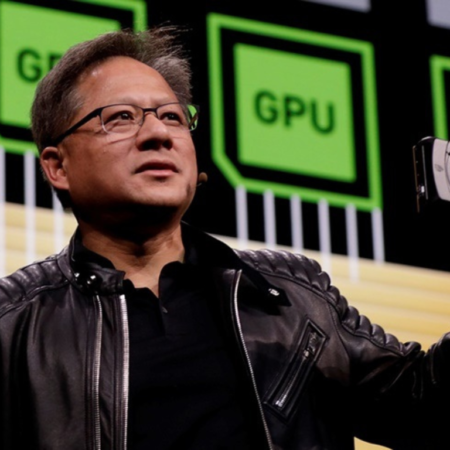
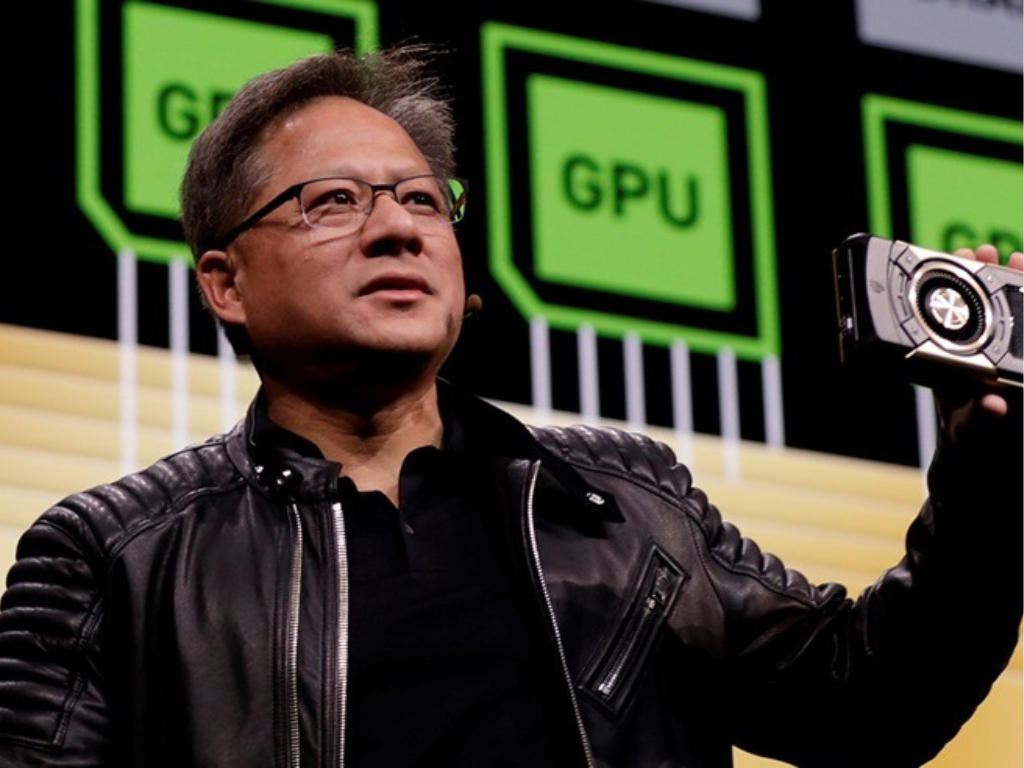
The man who helped turn Nvidia into the backbone of the global artificial intelligence revolution is no longer at its helm. Jensen Huang has resigned as President and CEO of Nvidia, ending a 33-year leadership that transformed a graphics-chip manufacturer into one of the most strategically important technology companies in the world. Nvidia’s board has appointed CFO Colette Kress as interim CEO while beginning the search for a permanent successor.
The immediate controversy involves revelations about Huang’s extramarital relationships, including one involving Alice Huang, a Chinese businesswoman suspected of having links to Chinese intelligence. Reports of a separate relationship with a senior Nvidia employee have further intensified questions about corporate governance and executive accountability. However, the espionage allegations have not been conclusively established, and Nvidia has not publicly attributed Huang’s resignation to any single allegation.
Yet reducing this episode to a personal scandal would miss its larger significance. Nvidia is not simply another technology company. Its advanced processors power the infrastructure behind the global AI revolution, making its commercial decisions directly relevant to American economic competitiveness and national security.
Huang’s departure therefore raises a more consequential question: has America’s AI industry reached a point where the personal conduct, commercial interests and political influence of technology executives have become matters of national security?
When Corporate Ambition Collides With National Security
For years, Jensen Huang advocated maintaining Nvidia’s access to the Chinese market, arguing that excessive American export restrictions could ultimately strengthen China’s domestic semiconductor industry.
His position reflected a familiar corporate calculation. China represents a significant technology market, and abandoning it entirely could mean surrendering commercial opportunities to domestic competitors. Huang also maintained that American companies should remain competitive globally rather than allow Chinese firms to develop independent technology ecosystems without American participation.
Washington, however, increasingly viewed advanced semiconductor exports through a national security lens.
The concern is that access to sophisticated computing infrastructure could accelerate China’s development of artificial intelligence systems with military, intelligence and surveillance applications. Consequently, semiconductor export controls have become an important instrument of American strategic competition with Beijing.
This creates an inherent conflict between the objectives of a multinational technology company and those of a national government.
A CEO is accountable to shareholders, customers and employees. A government, meanwhile, must consider the wider security implications of technology transfers. These interests can overlap, but they are not always identical.
Huang’s advocacy for continued access to China was not, in itself, evidence of disloyalty or wrongdoing. It represented a policy position that deserves examination on its economic and strategic merits. However, when the head of a company controlling critical computing infrastructure becomes entangled in controversies involving foreign intelligence concerns, questions about disclosure, corporate governance and institutional safeguards become unavoidable.
The challenge for Nvidia is no longer simply maintaining its technological advantage. It is demonstrating that its leadership and decision-making structures can withstand the scrutiny that comes with controlling strategically sensitive technology.
The Blackwell Question: Can Washington Control Its AI Advantage?
Perhaps the most consequential dimension of the controversy concerns allegations that China’s leading AI developers have gained access to Nvidia’s advanced Blackwell computing technology despite American export restrictions.
A technical analysis cited in the material surrounding this controversy claims to have identified hardware-specific signatures in the initial weights of several Chinese open-weight AI models, including models associated with DeepSeek, Moonshot and MiniMax.
According to the analysis, these signatures correspond to Nvidia’s Blackwell architecture. The researcher claims to have reproduced certain initial model weights using physical Blackwell hardware and recovered random seeds.
The analysis further estimates that some of the largest Chinese AI training operations may have involved between 2,000 and 3,000 Blackwell GPUs each, potentially representing hundreds of millions of dollars in computing infrastructure.
If independently substantiated, these findings could expose significant weaknesses in the enforcement of American semiconductor export controls.
Washington has invested considerable political and economic capital in maintaining its semiconductor advantage over China. If restricted computing technology can reach Chinese AI developers through intermediaries, third-country networks or other channels, the effectiveness of that strategy comes into question.
Export controls are only as effective as their enforcement mechanisms.
America cannot simultaneously claim to be restricting China’s access to advanced computing infrastructure while overlooking possible weaknesses in the global semiconductor supply chain.
Anthropic and the Politics of AI Regulation
Another important dimension is the growing disagreement between Nvidia and Anthropic over America’s approach to AI exports.
Anthropic CEO Dario Amodei has advocated tighter restrictions on advanced AI chips reaching China, while Huang has argued against policies that could undermine American companies’ global competitiveness.
This disagreement represents two different approaches to technological competition.
One prioritises restricting China’s access to advanced computing infrastructure to preserve America’s strategic advantage. The other argues that maintaining American commercial and technological leadership requires continued engagement with global markets.
Both positions deserve examination. But the controversy surrounding Huang has also brought attention to Anthropic’s expanding presence in Washington.
The material surrounding the controversy identifies connections between Anthropic’s leadership, former government officials, policy institutions, political donors and lawmakers who have called for greater scrutiny of Nvidia.
Jack Clark, Anthropic’s co-founder and policy chief, has extensive experience in technology policy. Other individuals associated with the company have previously held positions in national security and government institutions.
Anthropic has also developed a political and advocacy presence through AnthroPAC and its associated policy networks.
These connections do not establish that Anthropic orchestrated a campaign against Huang or influenced the intelligence allegations. Nor does receiving political contributions establish that a lawmaker’s actions were motivated by a donor.
However, they highlight an increasingly important question in American technology governance: how much influence should private AI companies exercise over national security policy?
When companies competing in the same strategic market advocate different regulatory approaches, their commercial interests must be distinguished from the public interest.
The same transparency standards should apply to Nvidia, Anthropic and every other major AI developer.
National security cannot become a convenient justification for regulatory decisions that disproportionately benefit particular commercial players.
The Intelligence Question Must Not Be Lost in the Corporate Battle
The allegations concerning Alice Huang have created another difficult challenge.
A relationship with a Chinese businesswoman, even one operating in a strategically important technology sector, does not automatically establish espionage. Intelligence investigations must rely on evidence, not assumptions based on nationality, professional associations or personal relationships.
The controversy has already generated competing interpretations of the available intelligence. Sources cite American officials who have expressed reservations about whether the evidence establishes that Alice Huang was acting on behalf of Beijing.
Singapore’s Ministry of Home Affairs has also publicly disputed reports that its authorities had investigated her alleged connections with China.
If there is credible evidence of foreign intelligence activity, it must be investigated thoroughly. But the difference between a security vulnerability, a questionable association and an established espionage operation must remain clear.
There is another uncomfortable issue: the handling and disclosure of sensitive intelligence information.
If classified information was leaked during an ongoing investigation, the source and circumstances of that disclosure deserve scrutiny. Intelligence assessments should not become tools for shaping public opinion or influencing corporate leadership decisions.
The credibility of national security institutions depends on maintaining this distinction.
America’s AI Industry and the Revolving Door of Power
The Nvidia controversy also brings attention to a structural feature of Washington’s technology-policy ecosystem: the movement of officials between government, intelligence institutions, think tanks and private technology companies.
Former government advisers and national security professionals increasingly occupy influential positions within AI companies. Their expertise can be valuable, particularly when governments are struggling to regulate technologies that evolve faster than traditional policymaking.
However, this revolving door creates questions about access, influence and potential conflicts of interest.
When individuals move from government positions responsible for national security and technology policy into companies competing for strategic advantage, appropriate safeguards and disclosure become essential.
The concern is not that former officials should be prevented from working in the private sector. Rather, the government must ensure that decisions affecting national security are not shaped by undisclosed commercial interests.
The AI industry is becoming too strategically important to be governed through informal networks of influence.
The Real Winner Will Be Determined by America’s AI Strategy
Huang’s resignation arrives at a critical moment for the global technology industry.
The competition between the United States and China is increasingly defined by access to advanced semiconductors, computing infrastructure, energy, data and AI talent.
Nvidia occupies a central position in this ecosystem. Its technology has helped establish American dominance in advanced AI computing, but the company’s global commercial ambitions have also exposed the limitations of Washington’s attempt to control strategic technology through export restrictions.
Huang’s departure does not automatically resolve these contradictions.
Nvidia will continue to face difficult decisions about China, export controls, supply-chain security and its relationship with Washington. Its next leadership will have to navigate these questions while preserving the company’s technological and commercial position.
For Anthropic and other American AI developers, the episode also highlights the growing influence of the private sector in defining national technology policy.
But there is a broader lesson for policymakers.
A country’s technological advantage cannot depend exclusively on the success of individual corporations or the influence of their executives. It requires strong institutions, transparent regulatory frameworks, effective export-control enforcement and accountability across the entire technology ecosystem.
The United States must protect its strategic interests without allowing corporate rivalries to dictate national security policy.
Jensen Huang’s departure may mark the end of an extraordinary chapter in Nvidia’s history. But the questions exposed by his resignation will outlast his leadership.
The future of AI will not be determined by who builds the most powerful chip alone. It will also depend on who controls access to computing infrastructure, who shapes the rules governing its use and whether governments can prevent commercial interests from undermining national security.
The real test for America is not whether it can remove a powerful technology executive. It is whether it can build a national AI strategy in which corporate accountability, technological innovation and national security reinforce one another rather than compete for influence.**