Can India’s Three-Part Proposed Peace Plan Create a Path to End the Russia-Ukraine War? Analysis

India’s proposal to protect energy infrastructure, restore grain and energy flows, and secure commercial shipping in the Black Sea signals a more proactive diplomatic role for New Delhi. Its significance lies not in promising an immediate end to the war, but in creating practical conditions under which a wider political settlement may become possible.
The most revealing image of a prolonged war may not be one of destroyed cities, burning military installations or exhausted soldiers returning from the battlefield. Sometimes, it is the search history of a soldier who never made it home.
A Ukrainian soldier’s phone reportedly revealed repeated searches about negotiations between Russia and Ukraine, the possibility of a ceasefire, the future of the war and whether US President Donald Trump could bring the conflict to an end. Behind those searches was a human reality that diplomatic statements and military statistics often fail to capture: even those fighting a war continue to hope that it will end.
Since Russia launched its full-scale invasion of Ukraine in February 2022, the conflict has evolved into one of Europe’s most consequential security crises since the Second World War. It has devastated communities, displaced millions, damaged critical infrastructure and disrupted global food, energy and trade networks. The human cost is enormous, although reliable estimates of military casualties remain contested.
Yet, despite successive diplomatic initiatives, international pressure and changing political calculations, a comprehensive settlement remains elusive.
It is against this background that India’s emerging three-part truce proposal deserves attention. Rather than attempting to resolve every territorial, political and security dispute at once, New Delhi is focusing on three immediate priorities: protecting energy infrastructure, maintaining the movement of grain and energy through Black Sea ports, and safeguarding commercial shipping and its crews.
The proposal may not end the war. But it could help create something that has been missing for years: a workable framework for reducing hostilities without requiring either side to abandon its fundamental negotiating position at the outset.
From Calling for Peace to Creating Conditions for Peace
India’s diplomatic approach to the Russia-Ukraine conflict has often been described through its emphasis on dialogue, diplomacy and strategic autonomy. However, its latest initiative suggests a gradual transition from advocating negotiations to exploring practical mechanisms for de-escalation.
Calling for peace is a diplomatic position. Designing arrangements that can reduce the economic and humanitarian consequences of war is an exercise in conflict management.
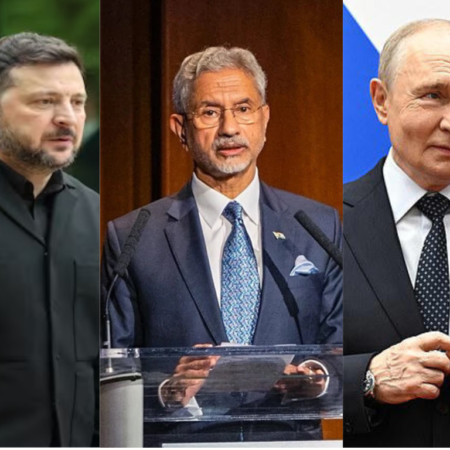
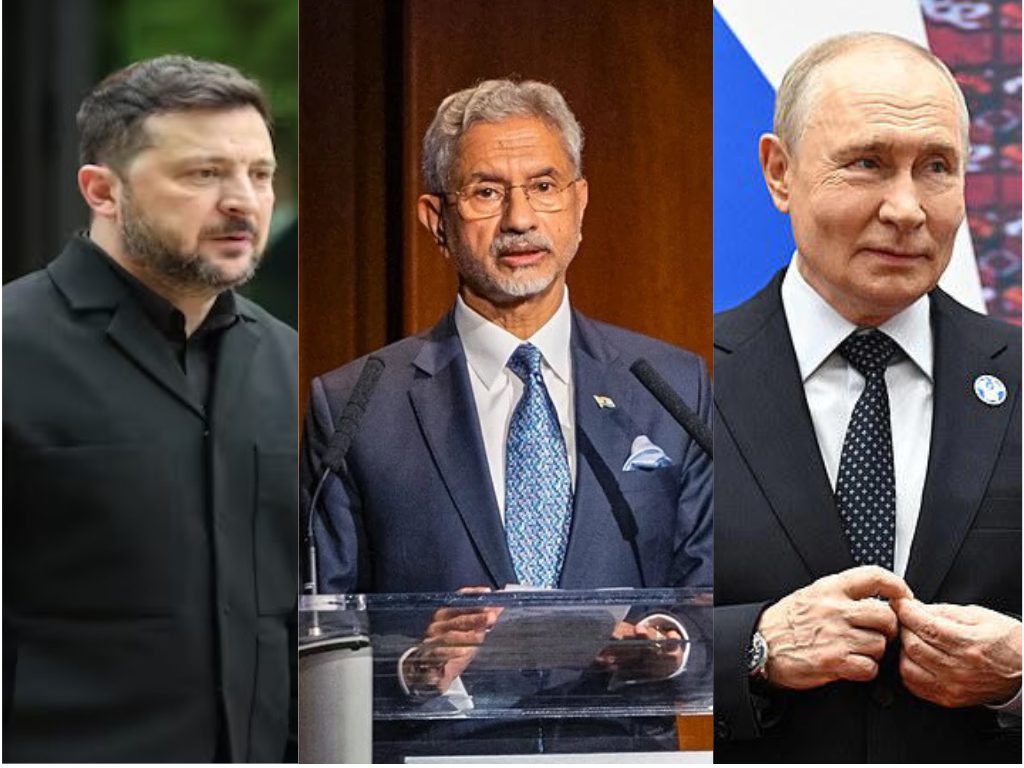
Ukraine’s Foreign Minister Andrii Sybiha described India’s proposal as the broadest among four ceasefire initiatives received by Kyiv, including proposals from the United States, Türkiye and Egypt. India’s External Affairs Minister S. Jaishankar has also indicated that New Delhi is engaging both Moscow and Kyiv on issues involving Black Sea shipping, grain and energy exports, and possibilities for non-attack arrangements.
The Indian proposal, as reported, has three interconnected components.
First, Russia and Ukraine would halt attacks on energy installations and critical infrastructure. Second, grain and energy supplies would be allowed to move through Black Sea ports without military interference. Third, commercial vessels and their crews would be protected from attacks.
These measures are significant because they address the interconnected economic and strategic dimensions of the conflict rather than treating military operations as an isolated battlefield issue.
Why Energy Infrastructure Has Become a Strategic Target
Modern warfare increasingly extends beyond military installations. Electricity grids, oil refineries, fuel storage facilities, power transmission networks and other critical infrastructure have become important targets because their destruction can weaken an adversary’s economic and operational capacity.
Russia’s attacks on Ukrainian energy infrastructure have repeatedly disrupted electricity supplies and damaged the country’s ability to sustain civilian and industrial activity. Ukraine, meanwhile, has intensified its attacks on Russian oil refineries and energy facilities, seeking to undermine Moscow’s revenue-generating capacity and logistical capabilities.
The consequences extend well beyond the two countries.
Russia remains a major participant in global energy markets. Disruptions to its production, refining and export infrastructure can influence international oil prices, shipping costs and supply expectations. For countries dependent on imported energy, including India, prolonged instability creates additional economic uncertainty.
A mutual commitment to stop targeting energy infrastructure would therefore offer benefits beyond immediate military de-escalation. It could reduce the risk of further damage to civilian infrastructure, improve energy-market predictability and create an initial area of agreement between the two adversaries.
However, implementing such an arrangement would require clearly defined categories of protected facilities, verification mechanisms and credible consequences for violations. Without these safeguards, an energy truce could become another temporary diplomatic understanding vulnerable to battlefield calculations.
The Black Sea: Where War Meets Global Food Security
The second component of India’s proposal concerns the movement of grain and energy through Black Sea ports.
Ukraine is one of the world’s important agricultural exporters. Its fertile agricultural land and established export infrastructure make it a significant supplier of wheat, maize and other food commodities. Before the war, the Black Sea was central to the movement of Ukrainian agricultural products to international markets.
The disruption of these routes has had consequences far beyond Europe. Countries in Africa, the Middle East and parts of Asia depend on internationally traded grain, making interruptions in Black Sea exports a concern for food-importing economies.
The Black Sea Grain Initiative, brokered by Türkiye and the United Nations in 2022, demonstrated that limited cooperation between adversaries could be achieved even during an active conflict. The arrangement facilitated the export of Ukrainian agricultural products before Russia withdrew from it in July 2023.
The lesson is important: humanitarian and economic arrangements do not necessarily require a comprehensive political settlement.
India’s proposal seeks to revive this principle by protecting the movement of grain and energy through Black Sea ports. Such an arrangement could help stabilise commodity supplies, reduce uncertainty in international agricultural markets and protect countries that have little influence over the military decisions of Moscow and Kyiv.
For India, food security is also a strategic concern. Global disruptions in agricultural supply chains can influence commodity prices, fertiliser markets and domestic inflation.
The Black Sea, therefore, is not merely a geographical theatre of war. It is an important link in the international food and energy system.
Protecting Commercial Shipping Is Also an Indian Interest
The third component of the proposal is particularly relevant to India’s maritime and economic interests: protecting commercial vessels and their crews.
International shipping is the backbone of global trade. When commercial vessels become targets in a military conflict, the consequences include higher insurance premiums, increased freight costs, disrupted supply chains and greater risks for seafarers.
For India, the issue has an additional human dimension.
Indian nationals constitute a significant share of the global maritime workforce. Any attack on commercial vessels operating in the Black Sea can therefore place Indian citizens directly in danger.
India has raised concerns over attacks on merchant vessels and the safety of Indian seafarers in the region. The protection of commercial shipping is consequently not an abstract diplomatic objective; it is connected to the safety of Indian citizens and the country’s economic interests.
A maritime security arrangement could also create an area of practical cooperation between Russia and Ukraine. Both sides have an interest in maintaining access to commercial routes, even if their political and territorial disagreements remain unresolved.
The challenge would be to establish monitoring arrangements, clear rules of navigation and assurances that commercial vessels will not be used for military purposes.
Why India Has a Diplomatic Advantage
India’s potential contribution to the peace process emerges from a diplomatic position that is different from that of the Western military alliance supporting Ukraine.
New Delhi maintains longstanding defence, energy and diplomatic ties with Moscow. At the same time, it has expanded its economic, technological, strategic and defence cooperation with Western countries and strengthened its engagement with Ukraine.
This gives India channels of communication with both sides that are not identical to those available to countries directly involved in the military and security architecture of the conflict.
However, India’s diplomatic advantage should not be confused with complete neutrality.
India has its own strategic interests, particularly concerning energy security, maritime safety, defence preparedness and its relationship with major global powers. Its engagement with Russia is shaped by decades of cooperation, while its expanding partnership with Europe and the United States reflects changing economic and geopolitical priorities.
The real strength of Indian diplomacy lies not in the absence of interests, but in its ability to engage competing powers without becoming formally aligned with either side in this conflict.
This is an important distinction in a world increasingly divided by geopolitical blocs.
India’s engagement also reflects a broader ambition: to become a contributor to international stability rather than remain only a participant in discussions shaped by established global powers.
Why a Limited Truce May Be More Realistic Than a Grand Peace Agreement
One of the biggest obstacles to ending the Russia-Ukraine war is that the two sides have fundamentally different positions on territory, sovereignty, security guarantees and the future European security order.
These are not disagreements that can be resolved through a single diplomatic meeting.
A comprehensive ceasefire would require decisions involving occupied territories, military deployments, security assurances, sanctions, reconstruction and the political future of Ukraine. Each issue carries substantial domestic and international consequences for the leadership in Moscow and Kyiv.
Expecting both sides to resolve these questions simultaneously may be unrealistic.
A limited truce offers a different approach.
Instead of beginning with the most politically difficult questions, negotiations can focus on areas where the costs of continued confrontation are shared. Energy infrastructure, food exports and commercial shipping are potential starting points because their disruption creates economic and humanitarian consequences for both sides and the wider international community.
If successfully implemented, these arrangements could establish communication channels, create confidence in limited agreements and reduce the intensity of hostilities.
Over time, such mechanisms could provide a foundation for discussions on broader ceasefire arrangements.
But the distinction must remain clear: protecting energy facilities and commercial vessels is not the same as resolving the war. A limited truce can reduce suffering without settling the underlying conflict.
The Trump Factor and the Limits of American Diplomacy
The United States remains one of the most influential external actors in the Russia-Ukraine conflict, given its military, financial and diplomatic support for Kyiv and its ability to engage Moscow.
However, mediation requires more than political influence. It requires sustained engagement, consistency and the confidence of the negotiating parties.
The Trump administration’s approach has generated both diplomatic opportunities and uncertainty. Washington’s willingness to engage Moscow directly can potentially create openings for negotiations, but changing public positions and disagreements over the terms of a settlement can complicate the process.
The latest US-led discussions in Abu Dhabi illustrate both the possibilities and the limitations of diplomacy. The November 2026 meetings between Russian, Ukrainian and American representatives produced progress on a prisoner exchange, but did not resolve the central disagreements preventing a comprehensive settlement.
This demonstrates why diplomatic progress should be measured through concrete agreements rather than political declarations.
India’s role, if it expands, need not compete with American diplomacy. It could complement existing efforts by facilitating discussions on specific areas where practical cooperation is possible.
New Delhi should resist the temptation to present itself as an alternative to Washington. Effective diplomacy does not require replacing one mediator with another; it requires creating additional channels through which negotiations can advance.
The Challenges India Must Not Underestimate
Despite the potential of the initiative, India’s diplomatic ambitions face significant limitations.
First, neither Russia nor Ukraine may be willing to accept restrictions that they believe could weaken their military position. Energy infrastructure and maritime routes have become instruments of strategic pressure, and abandoning these targets involves military as well as economic calculations.
Second, there is the question of enforcement. Who would monitor violations? What would happen if one side accused the other of using a protected facility for military purposes? Would there be an independent monitoring mechanism involving the United Nations or another international body?
Third, India’s relationship with Moscow and its growing engagement with the West may generate competing expectations. Ukraine may seek stronger political commitments from New Delhi, while Russia may expect India to remain sensitive to its security concerns.
Finally, India must avoid overestimating what diplomatic access can achieve. Maintaining communication with both sides is an advantage, but it does not automatically translate into the ability to secure concessions.
The success of the initiative will ultimately depend on whether Moscow and Kyiv see tangible benefits in accepting it.
From Strategic Autonomy to Responsible Global Engagement
The larger significance of India’s initiative lies in what it could mean for the country’s evolving international role.
For decades, India’s foreign policy has prioritised strategic autonomy, preserving the freedom to make independent decisions in a competitive international environment. This approach has allowed New Delhi to maintain relationships across geopolitical divisions.
But strategic autonomy also creates an opportunity for constructive engagement.
India’s growing economic weight, diplomatic reach, energy requirements and participation in international trade give it a direct stake in the stability of the global system. Its interests are no longer confined to developments in South Asia or the Indo-Pacific.
The Russia-Ukraine conflict demonstrates how a war thousands of kilometres away can influence India’s fuel costs, food markets, shipping security and broader strategic environment.
Consequently, participating in de-escalation efforts is not simply an exercise in international goodwill. It is an extension of India’s own national interests.
New Delhi should, however, approach this opportunity with patience and institutional seriousness. Any future diplomatic role must be supported by sustained engagement, coordination with relevant international institutions and clearly defined mechanisms for implementation.
The objective should not be to claim credit for ending a war. It should be to help create conditions in which the parties themselves find continued conflict less attractive than negotiation.
Peace Must Begin Somewhere
The Russia-Ukraine war has demonstrated the limits of military victory as a substitute for political settlement. Even when one side makes territorial or military gains, the economic, humanitarian and strategic costs of prolonged confrontation continue to accumulate.
India’s three-part proposal offers a potentially practical starting point. Protecting energy infrastructure, keeping food and energy supplies moving, and securing commercial shipping will not resolve every disagreement between Moscow and Kyiv. But these measures could reduce the immediate costs of war and create opportunities for further negotiations.
The most important question is not whether India can single-handedly end the Russia-Ukraine conflict. No external power can impose a sustainable peace without the consent of the parties involved.
The real question is whether India can help establish a framework in which limited cooperation becomes possible even when comprehensive agreement remains out of reach.
If New Delhi succeeds, its contribution will extend beyond the Black Sea. It could demonstrate how an emerging power can use strategic autonomy, economic interests and diplomatic credibility to facilitate conflict management in a deeply polarised international system.
Peace does not always begin with a grand agreement signed by world leaders. Sometimes, it begins with an agreement not to destroy a power station, not to interrupt a grain shipment and not to attack a commercial vessel.
For millions of people waiting for the war to end, even these limited commitments could be a meaningful beginning.