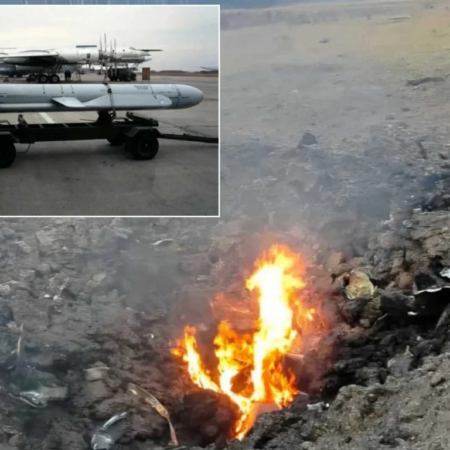
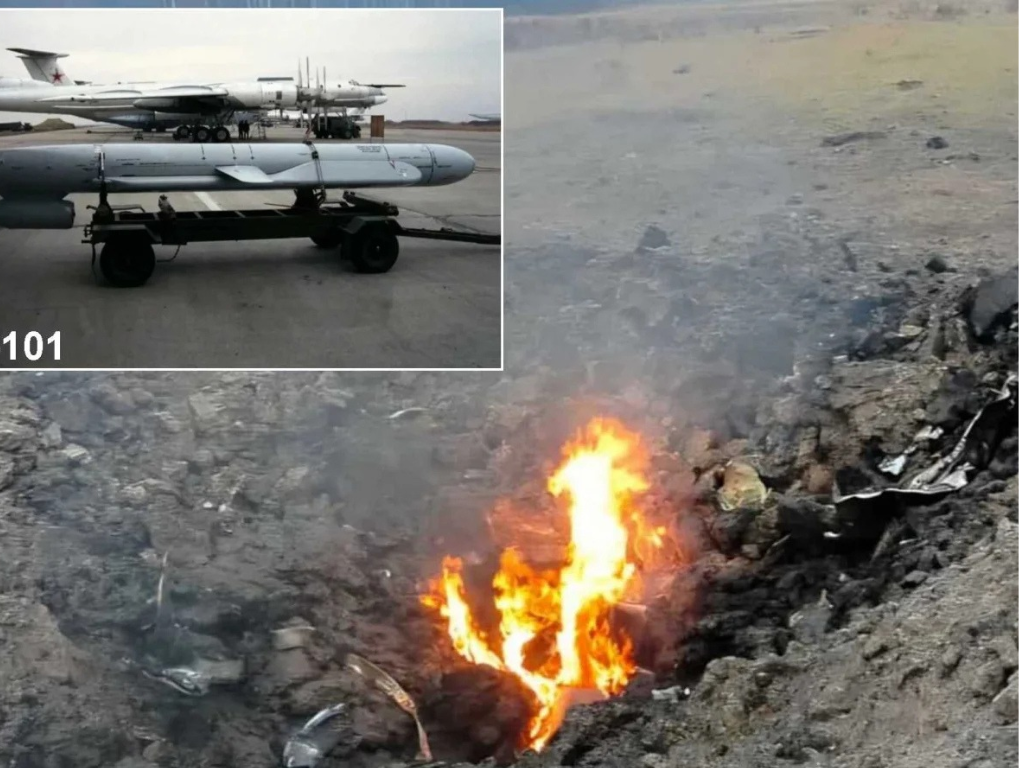
A Russian cruise missile suspected to be an advanced Kh-101 breached Polish airspace on November 20, triggering a major NATO air defence response. However, a Swedish JAS 39 Gripen fighter jet operating under NATO command could not engage the incoming target despite receiving authorisation to use its weapons. The reason was not a technical failure but exceptionally difficult weather conditions that prevented the pilot from positively identifying the missile.
The incident has raised fresh concerns about NATO’s ability to respond to Russian aerial threats along its eastern flank, particularly as Moscow continues large-scale missile and drone operations against Ukraine.
According to Lieutenant General Ireneusz Nowak, operational commander of the Polish Armed Forces, the Swedish Gripen pilot attempted to intercept an aerial object believed to be a Russian Kh-101 cruise missile. However, poor visibility prevented the pilot from identifying the target either visually or through the aircraft’s onboard electro-optical systems.
Speaking to Polish newspaper Rzeczpospolita, Nowak explained that although the pilot had NATO authorisation to engage the target, the necessary identification conditions could not be fulfilled. Consequently, the fighter did not fire.
The incident highlights an important operational challenge in modern air warfare: even when fighter aircraft are deployed, radar systems detect incoming threats and commanders authorise engagement, adverse weather can complicate target identification and prevent an interception.
Three Russian Missiles Found Across Polish Territory
The November 20 incident occurred during a large-scale Russian aerial assault on Ukraine. Polish military authorities initially monitored 11 aerial objects that could potentially threaten the country’s airspace. Three crossed the Polish border and came down at different locations in eastern Poland.
The initial military assessment identified two missiles and a jet-powered drone among the objects. However, subsequent forensic investigations by the Lublin District Prosecutor’s Office identified debris from Kh-101 cruise missiles at three locations: Nowy Lipowiec, Rudnik nad Sanem and Mołodycz.
More significantly, preliminary investigations indicated that the recovered missiles had been manufactured in recent weeks at a Russian production facility in Dubna, in the Moscow region. Prosecutor’s office spokesperson Marcin Kozak said the manufacturing assessment was based on inspections conducted so far.
The discovery suggests that Russia was deploying recently manufactured cruise missiles during its latest attack on Ukraine, rather than relying exclusively on older missile stocks.
No casualties or injuries were reported from the three incidents.
NATO Scrambles Gripens, F-16s and Early Warning Aircraft
Poland and its NATO allies launched a coordinated air defence operation after detecting the incoming aerial threats.
Two Swedish JAS 39 Gripen fighters and two Polish F-16 fighter jets were initially deployed. The operation also involved a Saab 340 airborne early warning aircraft, a Dutch aerial refuelling aircraft and ground-based air defence systems.
The Swedish fighters were operating as part of NATO’s air defence mission over Poland. Their operations were coordinated through NATO’s Combined Air Operations Centre in Uedem, Germany.
The Swedish Armed Forces said the operation continued for several hours under particularly challenging conditions. It required aerial refuelling after dark and the deployment of Swedish combat aircraft from a forward operating base in Poland.
Swedish Deputy Air Force Commander Niclas Magnusson highlighted the difficult flying conditions and limited visibility during the mission. He also emphasised the importance of allied cooperation in protecting NATO airspace.
Polish forces additionally used information transmitted by Ukraine through its Virazh system to monitor and track aerial threats.
According to General Nowak, the military declared a yellow alert at 1:40 a.m., which was subsequently upgraded to the highest red threat level at 5:49 a.m. The red alert remained in effect until noon.
As Russian bombers launched additional cruise missiles while returning from their mission after 7 a.m., another Polish F-16 was scrambled from Krzesiny. Territorial Defence Force personnel were also deployed to locate the crash sites.
NATO Condemns Russian Violation of Polish Airspace
The incident has triggered strong reactions from NATO leadership.
NATO Secretary General Mark Rutte spoke with Polish Prime Minister Donald Tusk following the airspace violations and condemned Russia’s actions.
In a statement on X, Rutte described the incident as dangerous and reaffirmed NATO’s commitment to strengthening its collective defence capabilities.
He also expressed solidarity with Poland, stressing that the alliance would remain united in responding to threats against its members.
Polish Prime Minister Donald Tusk described the incident as a serious Russian provocation. The timing also attracted attention because Poland was hosting military exercises involving countries supporting Ukraine.
The incident has once again exposed the risks of Russia’s ongoing war spilling across Ukraine’s borders and creating security challenges for NATO members.
Kh-101: Russia’s Long-Range Air-Launched Cruise Missile
The Kh-101 is one of Russia’s most advanced conventional air-launched cruise missiles. Developed to replace the older Kh-55 family, it is designed to strike high-value targets at long distances while complicating detection by enemy air defence systems.
The missile has a reported operational range of approximately 4,500 kilometres, although actual performance depends on its flight profile and operational conditions.
Its guidance architecture combines inertial navigation, satellite navigation through GLONASS, terrain contour matching and digital scene-matching technology. These systems help the missile navigate towards designated targets with considerable accuracy.
One of its key characteristics is its ability to fly at low altitudes, using terrain features to reduce exposure to radar detection. This low-altitude flight profile can make tracking and interception more difficult for conventional air defence systems.
The Kh-101 reportedly weighs approximately 2,400 kilograms and carries a conventional warhead weighing around 400 kilograms.
Russia deploys the missile primarily through strategic bomber aircraft. The Tu-95MS and Tu-160 are among its principal launch platforms, with the latter capable of carrying up to 12 Kh-101 missiles internally.
Russia has also developed the Kh-102, a nuclear-armed variant of the missile designed for strategic deterrence.
During the Ukraine war, Moscow has extensively employed the Kh-101 against energy infrastructure, military facilities, command centres and other strategic targets.
What the Polish Airspace Breach Means for NATO
The November 20 incident is significant because it demonstrates the growing difficulty of protecting NATO’s eastern borders against the spillover effects of Russia’s missile and drone campaign in Ukraine.
The deployment of advanced fighter aircraft, early warning platforms and ground-based defence systems demonstrates NATO’s ability to mobilise its air defence resources. However, the Gripen incident also highlights the operational limitations that can emerge when weather conditions, identification requirements and engagement decisions intersect.
The inability to engage the suspected Kh-101 should not be interpreted as evidence that the JAS 39 Gripen lacks the capability to intercept cruise missiles. Rather, the pilot could not establish the required positive identification under the prevailing conditions.
For NATO, the larger challenge is ensuring that aerial threats can be detected, tracked and engaged quickly, even in difficult operational environments.
With Russia continuing to employ long-range cruise missiles and drones in large numbers against Ukraine, the possibility of further airspace violations remains a serious concern for countries along NATO’s eastern flank.
The incident has therefore renewed questions about the effectiveness of allied air surveillance, cross-border intelligence sharing and rapid-response capabilities as the Russia-Ukraine conflict continues to test Europe’s security architecture.