Putin pushes for Russia’s ‘Third Rome’ Doctrine: Why Moscow is Claiming to Be the Final Rome, What It Means for Ukraine and the World

Russian President Vladimir Putin has once again invoked one of the most consequential historical and religious ideas associated with Russian national identity: Moscow as the Third Rome, and the final Rome, after which there will be no Fourth.
In an interview with Serbian filmmaker Emir Kusturica, published on 20 November 2026, Putin explained that Christianity began in ancient Rome, moved to Constantinople (the capital of the Byzantine Empire) after Rome’s decline, and eventually found its spiritual continuation in Moscow following the fall of Byzantium.
Putin described Moscow as the spiritual guardian of Christianity’s sacred heritage and suggested that Russia could serve as a refuge for people seeking to preserve traditional religious and family values.
At first glance, this may appear to be a religious or historical observation. However, the statement has much deeper implications. It touches on Russian nationalism, the relationship between the Russian state and the Orthodox Church, Russia’s confrontation with Western political and cultural values, and its ambitions to establish itself as an independent centre of global civilisation.
The central question is: Is Putin simply defending Russia’s religious heritage, or is he presenting Russia as a civilisation with a special historical mission and authority in the world?
What does ‘Moscow is the Third Rome’ actually mean?
The expression is not a new invention by Vladimir Putin. It originated in the early sixteenth century and is associated with a Russian Orthodox monk named Philotheus of Pskov.
His famous formulation was:
> Two Romes have fallen. The Third stands. And there will be no Fourth.
To understand this statement, we must look at three historical centres of Christianity.
– First Rome: Ancient Rome, which became the centre of Western Christianity and the seat of the Bishop of Rome, later known as the Pope.
– Second Rome: Constantinople, established as the capital of the Eastern Roman Empire by Emperor Constantine. It became the leading centre of Eastern Orthodox Christianity.
– Third Rome: Moscow, which increasingly presented itself as the successor to Byzantine Orthodox Christianity after Constantinople fell to the Ottoman Empire in 1453.
Following the fall of Constantinople, Moscow’s religious and political leaders increasingly viewed Russia as the guardian of Orthodox Christianity.
Monk Philotheus developed this idea in correspondence with Grand Prince Vasily III of Moscow around 1515–1520.
His argument was that the previous Christian centres had fallen because of spiritual and religious failures, while Moscow had a responsibility to preserve the true Christian faith.
The phrase that there would be no Fourth Rome suggested that Moscow would be the final centre entrusted with this spiritual responsibility.
Why is Putin bringing this idea back now?
Putin’s latest remarks are important because they connect historical religious identity with contemporary international politics.
There are several reasons behind this message.
1. Presenting Russia as the defender of traditional Christianity
Putin argues that Western Christian institutions have weakened their traditional religious foundations by adapting to changing social and cultural norms.
In his interview, he suggested that Western churches’ departures from traditional religious canons have weakened their influence rather than strengthened it.
By contrast, he presents Russian Orthodox Christianity as a defender of established religious principles, traditional family structures and spiritual values.
This creates an ideological distinction:
– Russia is presented as a defender of traditional Christian values.
– Western societies are portrayed as increasingly secular and culturally fragmented.
– Moscow is presented as a potential spiritual refuge for people dissatisfied with these changes.
This is an important part of Putin’s broader effort to position Russia as an alternative civilisational model to the West.
2. Giving Russia a special historical mission
The Third Rome doctrine gives Russia a sense of historical purpose beyond ordinary national interests.
It suggests that Russia is not simply another country competing for economic or military influence. Instead, it is a civilisation entrusted with preserving an important religious and historical tradition.
This narrative can strengthen national unity and reinforce the legitimacy of the Russian state.
It also provides a powerful political message to Russian citizens: Russia’s importance does not depend exclusively on its economy, military strength or relationship with Western countries.
3. Strengthening the relationship between the Kremlin and the Orthodox Church
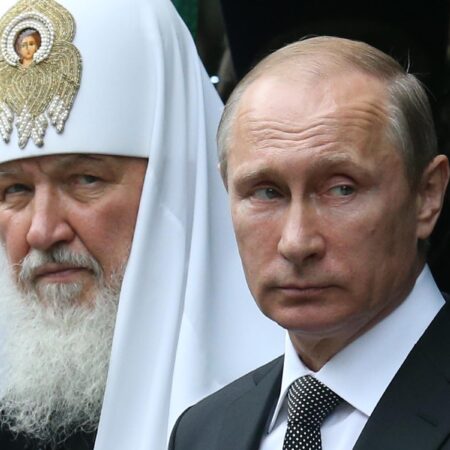
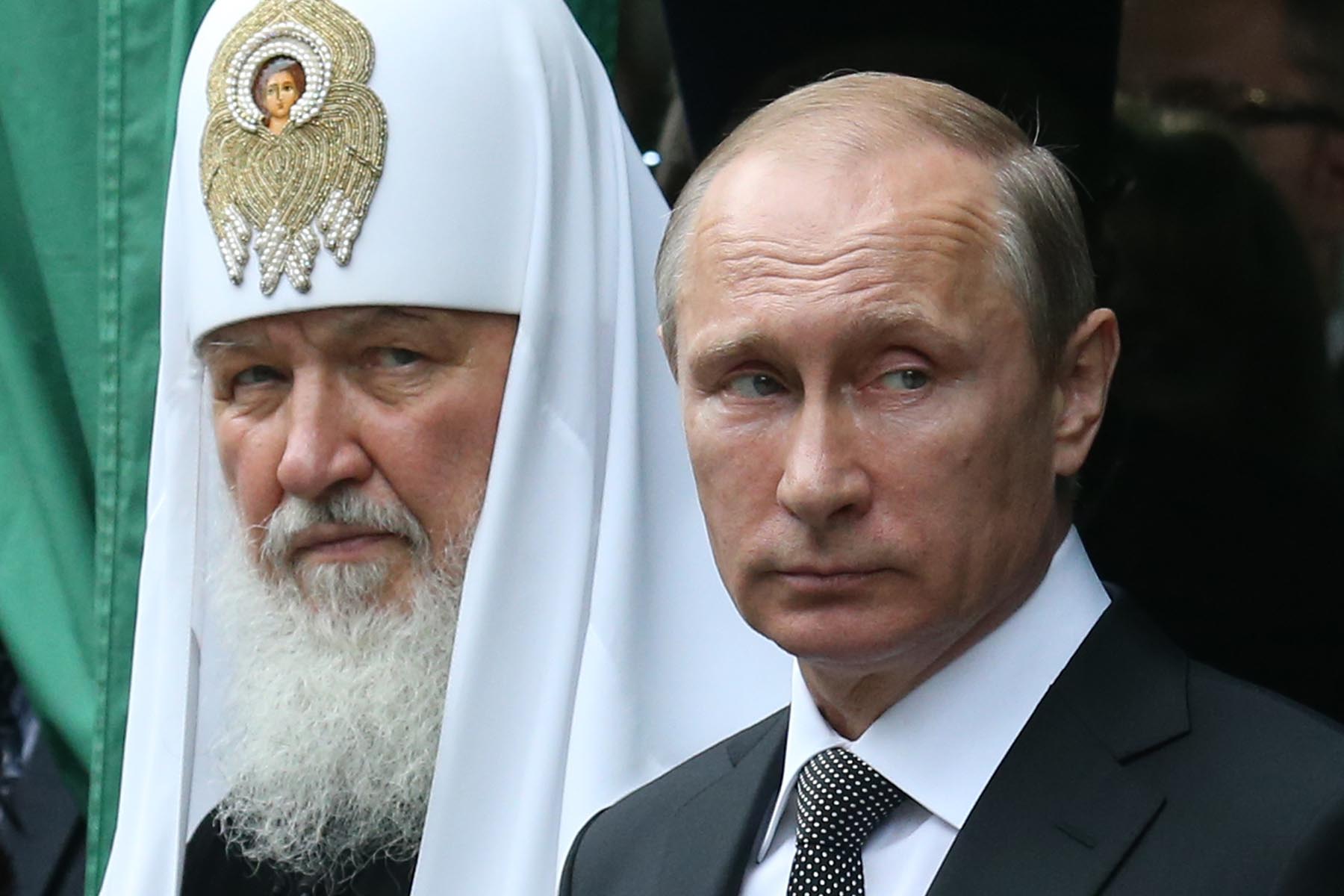
The relationship between Putin and Patriarch Kirill, the head of the Russian Orthodox Church, is central to this discussion.
The Russian Orthodox Church has become an important institution in the country’s national identity and public life.
By presenting Moscow as the spiritual successor to Rome and Constantinople, Putin reinforces the historical narrative that connects the Russian state with the Orthodox Church.
This relationship gives religious legitimacy to aspects of Russia’s national identity, while the state provides political and institutional support to the Church.
The result is a close relationship between religious identity and political power.
4. Offering an alternative to Western civilisation
Putin’s remarks also fit into a larger geopolitical argument. Russia increasingly describes itself as a distinct civilisation rather than simply a European country.
It presents itself as a centre of traditional values, sovereignty, cultural independence and a multipolar international order.
The Third Rome concept provides a historical and religious foundation for this argument.
It effectively communicates that Russia does not need Western approval to define its identity or determine its place in the world.
How does the Third Rome doctrine connect with the war in Ukraine?
One of the biggest reasons the doctrine attracts international attention is its relationship with the broader idea of the Russian World, known in Russian as Russkiy Mir.
This concept promotes the idea that Russian civilisation extends beyond the internationally recognised borders of the Russian Federation.
It emphasises shared:
– Russian language and culture.
– Orthodox Christian heritage.
– Historical experiences.
– Cultural and religious connections with neighbouring populations.
Ukraine occupies a particularly sensitive position in this worldview.
Both Russian and Ukrainian histories are deeply connected to the medieval state of Kyivan Rus, which adopted Christianity in 988 under Prince Vladimir.
Moscow’s political and religious narrative often emphasises this shared historical inheritance.
However, Ukraine has developed its own national identity, political institutions and independent religious structures.
Many Ukrainians reject the suggestion that shared historical or religious origins give Russia any authority over their country’s political future.
Since Russia launched its full-scale invasion of Ukraine in February 2022, the use of historical and religious arguments to describe Russia and Ukraine as parts of one civilisational space has attracted particularly strong criticism.
Putin’s November 2026 interview also included comments about Ukraine, its political leadership and the relationship between Russians and Ukrainians.
The concern among critics is that religious and historical narratives can be used to justify political influence or territories.
The response from the Orthodox Christian world
Perhaps the most interesting aspect of the Third Rome doctrine is that it is not universally accepted even within Orthodox Christianity.
In fact, some of its strongest critics come from within the Orthodox Christian tradition itself.
One of the most important responses has come from Ecumenical Patriarch Bartholomew I, the spiritual leader traditionally regarded as first among equals among Eastern Orthodox bishops.
In 2024, Bartholomew criticised the Third Rome concept, arguing that it had become a geopolitical idea rather than a legitimate theological principle.
His position was particularly significant because Constantinople itself is central to the history of Eastern Orthodox Christianity.
He rejected the idea that Moscow could claim the historical and spiritual position of Constantinople.
His argument was that there is the Elder Rome and the New Rome, Constantinople, rather than a succession in which Moscow becomes a new universal centre of Orthodoxy.
This reveals an important religious disagreement: Russia’s claim to historical succession is not recognised as an established doctrine by the wider Orthodox Church.
The Ukrainian Orthodox response
Ukraine’s religious independence has become another major source of disagreement.
In January 2019, the Ecumenical Patriarchate granted autocephaly, or ecclesiastical independence, to the Orthodox Church of Ukraine.
This was opposed by the Moscow Patriarchate and contributed to the breakdown of communion between Constantinople and Moscow in 2018.
For many Ukrainians, an independent national church is an important expression of their sovereignty and cultural identity.
Consequently, the idea that Moscow has a special religious authority over the wider Orthodox world is deeply contested.
The criticism is not limited to church leaders.
In 2022, more than 1,500 Orthodox scholars, priests and other religious figures outside Russia signed an open letter condemning the ideology of the Russian World.
They described it as a distortion of Orthodox Christianity and criticised its use to support nationalism, political domination and war.
How is the West likely to interpret Putin’s statement?
Western governments and analysts are likely to examine the statement through three different lenses.
The religious lens: Russia is asserting its identity as an Orthodox Christian civilisation and defending its traditional religious heritage.
The ideological lens: Putin is presenting Russia as an alternative to Western liberalism, secularism and cultural change.
The geopolitical lens: The historical narrative may help legitimise Russia’s ambitions to maintain influence over neighbouring countries and establish itself as an independent global power.
These interpretations are not mutually exclusive.
For Western policymakers, the most important concern is whether religious and historical arguments are being used to challenge the sovereignty of neighbouring states.
What does this mean for the future of international politics?
Putin’s invocation of the Third Rome doctrine reflects a broader transformation in how Russia wants to be understood internationally.
Russia is attempting to establish its identity around more than military strength, energy resources and economic influence.
It wants recognition as a distinct civilisation with its own historical traditions, religious foundations and political philosophy.
This has several potential consequences.
A stronger ideological confrontation with the West: Russia may increasingly present international disagreements as a conflict between competing civilisational values rather than merely disputes over security or territory.
Greater tension within global Orthodoxy: The disagreement between Moscow and Constantinople could continue to weaken religious unity among Orthodox Christians.
Complications for Ukraine: Religious and historical claims may remain part of the wider dispute over Ukrainian identity, independence and sovereignty.
A stronger Russian claim to international influence: The idea of a distinct Russian civilisation can support Moscow’s ambition to play a leading role in a multipolar international order.
Ultimately, the doctrine provides Russia with a powerful historical and religious story to mould their own geopolitical ideas.