Russia Warns NATO of Preventive Nuclear Strike: Sputnik-S Satellite Raises Fears of Nuclear War in Space

The Russia-Ukraine war is increasingly moving beyond the conventional battlefield. As Western military support for Kyiv continues to fuel tensions with Moscow, Russia has issued another nuclear warning to NATO, raising concerns about the possibility of a much wider confrontation.
This time, the warning comes from Dmitry Medvedev, former Russian president and prime minister and currently Deputy Chairman of Russia’s Security Council. Medvedev has argued that Russia could consider a preventive nuclear strike if it believes its national security and state survival are under an existential threat.
The warning has attracted considerable attention in American and European media, particularly because it comes amid reports of a potentially more consequential development: Russia’s alleged preparations for a new satellite, reportedly named Sputnik-S, which Western intelligence assessments fear could be associated with a nuclear weapon in space.
Taken together, these developments raise an uncomfortable question: Is Moscow preparing to expand its nuclear signalling beyond conventional deterrence, and how far could the confrontation between Russia and NATO escalate?
Medvedev’s Nuclear Warning: A Message to NATO
Medvedev’s latest warning reflects Moscow’s growing concern over the expanding Western role in the Ukraine conflict. Russia has repeatedly argued that military assistance, intelligence sharing and the possible deployment of Western military personnel in Ukraine are crossing its security red lines.
His argument rests on the premise that Russia cannot be expected to remain restrained if its national survival is threatened.
The Russian position also challenges the assumption that nuclear weapons would remain outside consideration in a prolonged confrontation with NATO. By invoking preventive nuclear action, Medvedev is attempting to communicate that Moscow reserves the option of escalating beyond conventional warfare under circumstances it considers existential.
However, his statements should not automatically be interpreted as an announcement of an imminent nuclear attack. They are political and strategic warnings, and their significance lies partly in the uncertainty they create about Russia’s escalation thresholds.
The distinction is important, particularly when the speaker occupies a senior position in Russia’s security establishment and has previously held the country’s highest political offices.
Why Kaliningrad Remains a Strategic Flashpoint
One of Russia’s major security concerns is Kaliningrad, its geographically isolated exclave situated between Poland and Lithuania.
Unlike mainland Russia, Kaliningrad has no direct land connection to the rest of Russian territory. Its geographical position makes it particularly vulnerable in the event of a major confrontation between Moscow and NATO.
Russia is reportedly considering an emergency supply route, with an investment of approximately $620 million, to strengthen the region’s logistical connectivity and ensure supplies in a crisis.
For Moscow, the issue is not simply about maintaining transport links. Kaliningrad has significant military and strategic importance in the Baltic region. Any blockade or attempt to isolate the territory could become a major flashpoint between Russia and NATO.
The presence of NATO members around the exclave makes the situation particularly sensitive.
A confrontation involving Kaliningrad would risk transforming an already dangerous regional conflict into a direct military crisis between nuclear-armed powers.
Russia’s Red Lines: Ukraine’s Military Integration With the West
Another major concern for Moscow is the possibility of NATO countries expanding their military presence in Ukraine.
Russia has consistently opposed Ukraine’s integration with Western military structures and views the prospect of NATO troops operating on Ukrainian territory as a serious security threat.
The Kremlin is also concerned about the possibility of Ukraine receiving increasingly advanced military capabilities, including technologies and assistance that Moscow believes could fundamentally alter the balance of power.
The issue becomes even more sensitive when nuclear weapons enter the discussion.
Medvedev’s warning suggests that Russia could interpret the transfer of nuclear weapons or assistance that enables Ukraine to acquire such capabilities as a direct threat to its national security.
For Western governments, however, military support for Ukraine is framed as assistance to a country defending itself against Russian aggression.
This difference in strategic perceptions remains one of the fundamental obstacles to resolving the war.
Sputnik-S: Could Russia Take Nuclear Competition Into Space?
Perhaps the most consequential concern emerging alongside Medvedev’s warning is the report about Russia’s alleged Sputnik-S satellite programme.
The name Sputnik carries considerable historical significance. In 1957, the Soviet Union launched Sputnik 1, the world’s first artificial Earth satellite, marking the beginning of the space age and intensifying the technological competition between the Soviet Union and the United States.
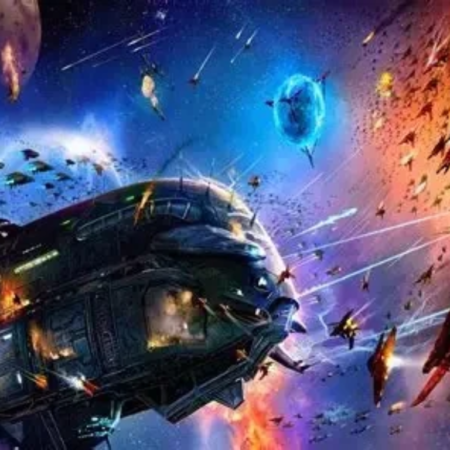
Now, reports citing German intelligence assessments suggest that Russia may be preparing a new satellite, reportedly designated Sputnik-S, which could potentially carry a nuclear weapon into orbit.
The reported assessment has raised concerns that Moscow could be exploring a new dimension of nuclear warfare: space-based nuclear capabilities.
The potential consequences are difficult to ignore.
Modern economies depend heavily on satellites for communications, navigation, financial transactions, weather forecasting, military coordination and other essential services.
A nuclear explosion in space could generate a powerful electromagnetic pulse (EMP) and radiation effects capable of damaging satellites operating in surrounding orbital regions.
The consequences could extend far beyond military infrastructure.
Satellite disruption could affect navigation systems, communication networks, financial services and critical infrastructure that depend on space-based technologies.
The resulting disruption could have serious economic consequences across multiple countries.
However, the scale of destruction would depend on several technical factors, including the weapon’s yield, altitude, orbital characteristics and the vulnerability of individual satellites. It would be inaccurate to assume that every satellite would automatically be destroyed or that the entire global internet and electricity infrastructure would immediately collapse.
There is also a significant strategic contradiction: a nuclear explosion in space could damage Russian satellites alongside those belonging to the United States, China, India and other countries.
In other words, such a development could threaten the very space infrastructure that Russia itself relies upon.
The Sputnik-S reports therefore deserve serious international attention, but intelligence assessments should not be confused with independently confirmed deployment plans.
The Legal Question: Can Russia Use Nuclear Weapons to Protect Its Survival?
Russia’s argument about nuclear weapons also raises an important question concerning international law.
Moscow’s position is that national survival and state security cannot be separated from its right to defend itself.
However, the legal framework governing nuclear weapons is considerably more complicated than the suggestion that international law simply permits their use whenever a state declares itself threatened.
The UN Charter regulates the use of force, while international humanitarian law imposes restrictions on how military force can be employed.
The 1967 Outer Space Treaty also explicitly prohibits placing nuclear weapons or other weapons of mass destruction in orbit around Earth or stationing them in outer space.
Consequently, if reports about placing a nuclear weapon aboard Sputnik-S prove accurate, such deployment would raise a serious question of compliance with existing international treaty obligations.
The issue is not merely whether Russia possesses nuclear weapons. It is whether the international community can prevent the expansion of nuclear competition into an environment on which every major economy increasingly depends.
Russia’s War Economy Is Making the Conflict More Complicated
There is another dimension to this confrontation that deserves attention: Russia’s transformation into a war-oriented economy.
After years of conflict, military production, defence procurement and government expenditure have become increasingly important components of Russia’s economic structure.
This creates a complicated challenge for Moscow.
Even if a ceasefire were achieved tomorrow, Russia would still face the difficult task of transitioning from an economy increasingly organised around military requirements towards a more balanced civilian economic model.
Military industries, employment patterns, supply chains and government spending have adapted to prolonged conflict.
A sudden reduction in defence expenditure could create economic and political pressures.
This does not mean Russia is incapable of ending the war or that its economy requires an indefinite conflict. However, the longer the war continues, the more complicated the economic transition could become.
Meanwhile, Russia’s demands are also extending beyond Ukraine. Moscow has expressed opposition to Finland’s NATO membership and continues to view NATO’s growing presence in Northern Europe as a strategic challenge.
This makes a comprehensive settlement increasingly difficult.
Even if Ukraine were to abandon its NATO ambitions, questions concerning European security guarantees, military cooperation and Russia’s wider demands would remain unresolved.
The conflict is therefore no longer just about Ukraine’s future relationship with NATO. It has become a wider confrontation over Europe’s security architecture.
Why India Cannot Ignore a Russia-NATO Nuclear Confrontation
For India, the developments carry significant strategic and economic implications.
India has maintained important relationships with Russia and Western countries while consistently advocating dialogue and diplomacy to resolve the Ukraine conflict.
A direct confrontation between Russia and NATO would create serious challenges for India’s strategic calculations.
The Black Sea region, global energy markets, international trade and defence supply chains are all connected to the wider geopolitical environment surrounding the conflict.
More importantly, the alleged development of nuclear weapons in space raises concerns for India’s growing space infrastructure.
India increasingly depends on satellites for navigation, telecommunications, weather forecasting, disaster management and national security.
Any major disruption to the global space environment could affect Indian capabilities irrespective of whether India is directly involved in the confrontation.
This makes space security an important part of India’s national security planning.
The country must continue strengthening indigenous satellite capabilities, building resilient communication networks and developing the ability to monitor potential threats in outer space.
Strategic autonomy also requires India to prepare for geopolitical developments that could affect its interests without becoming directly involved in the confrontation.
The World is Entering an Increa Uncertain Nuclear Environment
The most important takeaway from these developments is that the Russia-Ukraine conflict is becoming increasingly difficult to separate from the wider competition between nuclear powers.
Medvedev’s warning reflects Moscow’s willingness to keep nuclear escalation on the strategic table. The Kaliningrad issue demonstrates how geographical vulnerabilities could become military flashpoints. Meanwhile, the Sputnik-S allegations raise questions about whether the competition could extend into outer space.
None of these developments proves that nuclear war is imminent. Nor does the reported satellite programme establish that Russia has decided to deploy nuclear weapons in orbit.
But the combination of prolonged warfare, expanding military involvement and increasingly aggressive nuclear signalling deserves serious attention.
The fundamental problem is that Russia and the Western alliance continue to interpret each other’s security policies as threats. Every new military deployment, weapons transfer or strategic warning risks reinforcing the other’s perception of vulnerability.
This creates a cycle in which deterrence can gradually turn into escalation.
The world has already witnessed how close nuclear powers can come to catastrophe during periods of geopolitical confrontation. The Cuban Missile Crisis remains a reminder that miscalculation can become as dangerous as deliberate aggression.
Today, the stakes extend beyond conventional military power. The global economy, satellite infrastructure and essential communication networks are also exposed to the consequences of nuclear escalation.
The question is not simply whether Russia will use its nuclear arsenal or whether NATO will respond to Moscow’s warnings. It is whether both sides can establish boundaries that prevent a prolonged regional war from turning into a confrontation with global consequences.
A nuclear confrontation in space would not remain a Russia-versus-NATO problem. Its consequences could extend to countries that have no role in the conflict, including India. That is precisely why the international community cannot afford to treat these warnings as just another exchange of geopolitical rhetoric.