10 Most Precious Artifacts Looted During British Colonial Rule and Still Kept in Britain, From Ghana and India to Greece and Egypt

For centuries, the British Empire expanded across continents, looting kingdoms, destroying native territories and shipping their enormous quantities of wealth back to their island home. Alongside gold, silver and precious stones, countless historical artefacts, religious treasures, royal possessions and cultural masterpieces were transported to Britain.
Some were taken during military invasions, others under colonial pressure, and some through arm twisting and deviant tactics.
Today, many of these objects are locked away in British museums, royal collections and other institutions. Their presence continues to raise an important question: how long will Britaain keep these priceless stolen treasures from their colonial past and when will they be returned to the people whose history these artefacts actually represent?
Here are ten of the most famous and culturally significant examples.
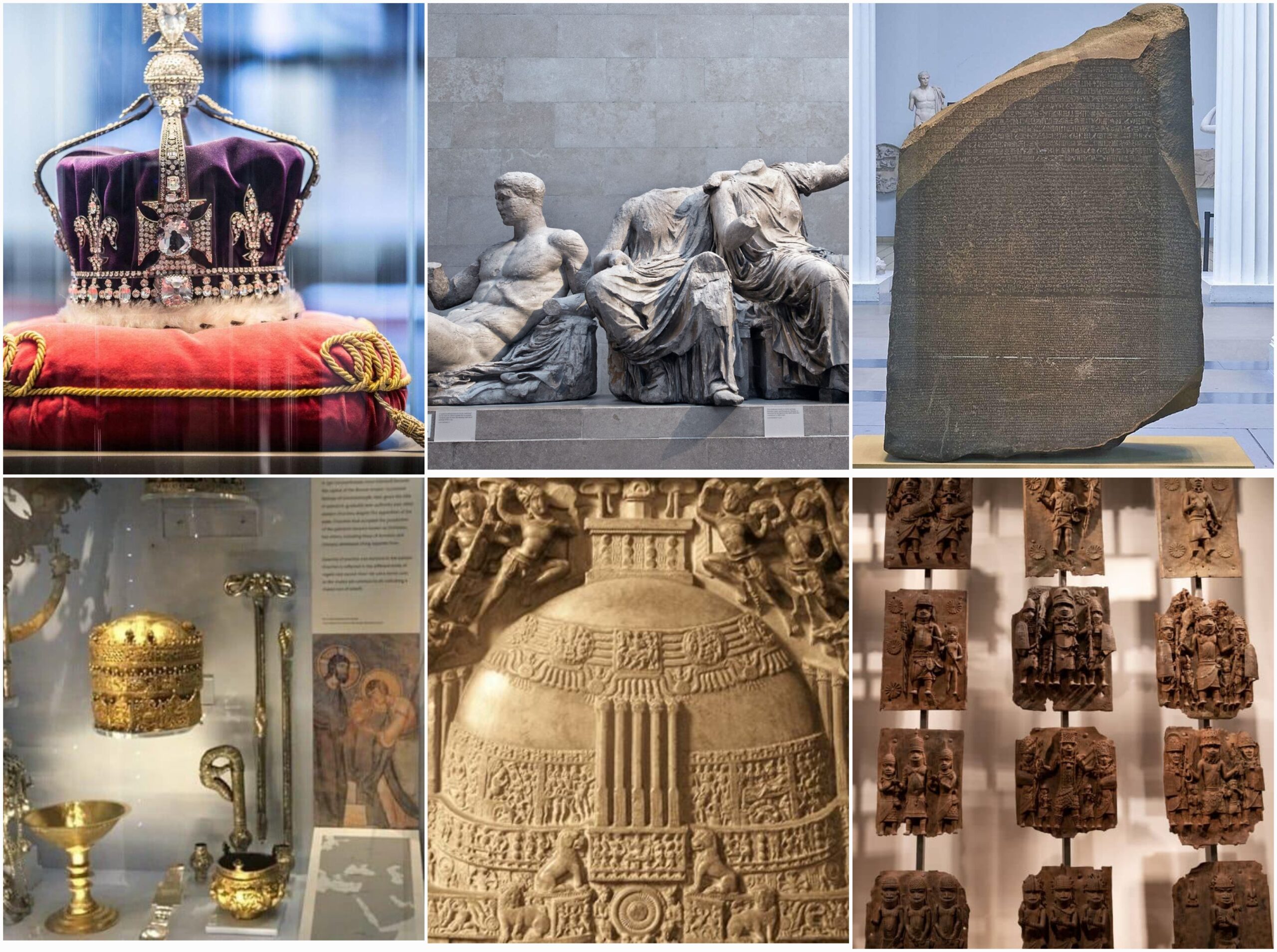
1. Koh-i-Noor Diamond – India
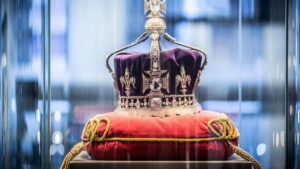
– Origin: India, probably the Golconda region
– Taken: 1849
– Current location: Tower of London, United Kingdom
– Weight: 105.6 carats in its present cut.
The Koh-i-Noor, meaning Mountain of Light, is perhaps the most famous disputed diamond in the world.
Mined and perfected in India. It passed through the hands of various rulers and Maharajas. After the British annexed Punjab in 1849, the East India Company took the diamond from the adolescent Maharaja Duleep Singh under the deviant Treaty of Lahore.
It was subsequently presented to Queen Victoria and eventually incorporated into the British Crown Jewels.
India has repeatedly been associated with demands for its return. The diamond remains one of the most prominent symbols of the colonial-era transfer of Indian wealth. The total loot from India in today’s terms is estimated to be in trillions of dollars.
2. The Rosetta Stone – Egypt
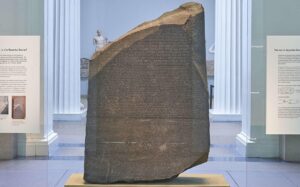
– Origin: Ancient Egypt
– Taken: 1801
– Current location: British Museum, London
The Rosetta Stone is one of the most important archaeological discoveries in human history.
Discovered by French soldiers in Egypt in 1799, it contains the same decree written in three scripts: Egyptian hieroglyphs, Demotic and Ancient Greek.
Its inscriptions enabled scholars to decipher Egyptian hieroglyphs, opening the door to a much deeper understanding of ancient Egyptian civilisation.
Following the French defeat in Egypt, the stone was transferred to British control in 1801 under the terms of the British-French surrender arrangements.
Egypt has sought its return, arguing that this extraordinary historical treasure belongs in the country whose civilisation it represents.
3. The Parthenon Marbles (Elgin Marbles) – Greece
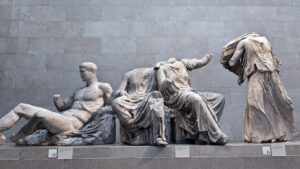
– Origin: Athens, Greece
– Removed: 1801–1812
– Current location: British Museum, London
These magnificent marble sculptures once decorated the Parthenon, the ancient Greek temple dedicated to Athena.
Thomas Bruce, the seventh Earl of Elgin, arranged for their removal while serving as British ambassador to the Ottoman Empire.
Elgin maintained that he had obtained permission from Ottoman authorities. Greece disputes the legitimacy of the removal and argues that the sculptures are an inseparable part of its cultural heritage.
The dispute has continued for generations, making the Parthenon Marbles one of the world’s most famous cultural restitution controversies.
4. The Benin Bronzes – Nigeria
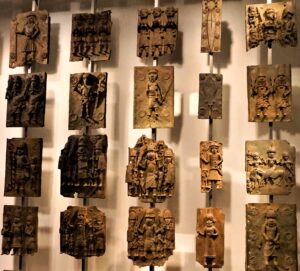
– Origin: Kingdom of Benin, present-day Nigeria
– Taken: 1897
– Current location: British Museum and other international collections
The Benin Bronzes are not simply bronze statues. They include intricately crafted brass plaques, ivory sculptures, royal heads and ceremonial objects.
They were created by highly skilled African artists and formed an important part of the royal palace of the Kingdom of Benin.
In 1897, British forces invaded Benin City, deposed its ruler and looted thousands of cultural objects from the royal palace.
These treasures were subsequently dispersed across museums and private collections in Europe and elsewhere.
Nigeria has campaigned for their return. Several European museums have already begun returning Benin artefacts, although many remain abroad.
5. The Ethiopian Crown and Gold Chalice – Ethiopia
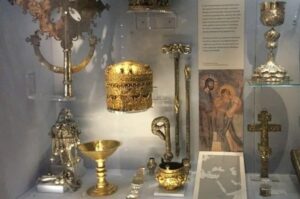
– Origin: Ethiopia
– Taken: 1868
– Current location: Victoria and Albert Museum, London
These extraordinary religious treasures were taken during the British military expedition against Emperor Tewodros II.
British troops stormed the fortress of Maqdala in April 1868, after which the royal treasury and religious possessions were looted.
Among the objects taken were a beautifully decorated gold crown and a solid gold chalice associated with the Ethiopian Orthodox Church.
The V&A’s historical records explain that the chalice was originally donated to an Ethiopian church by Emperor Iyyasu II and Empress Mentewab.
The Ethiopian government formally requested their return in 2007. Their continued presence in Britain remains a significant issue in the debate over colonial-era restitution.
6. Tipu Sultan’s Mechanical Tiger – India
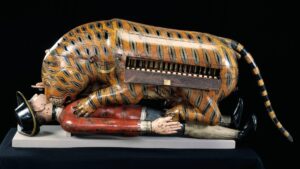
– Origin: Kingdom of Mysore, India
– Taken: 1799
– Current location: Victoria and Albert Museum, London
One of the most unusual objects taken from India is Tipu Sultan’s famous mechanical tiger.
This remarkable wooden instrument depicts a tiger attacking a European man. Inside it is a mechanical mechanism that produces sounds resembling the roaring of a tiger and the cries of the victim.
It belonged to Tipu Sultan, the ruler of Mysore who fiercely resisted British expansion in southern India.
After Tipu Sultan was killed during the British assault on Seringapatam in 1799, his palace and possessions were plundered. The mechanical tiger was subsequently transported to Britain.
Today, it remains a remarkable reminder of Tipu Sultan’s kingdom and the struggle against British colonial expansion.
7. The Amaravati Sculptures – India
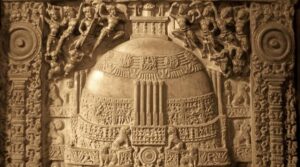
– Origin: Amaravati, Andhra Pradesh, India
– Removed: Mainly during the 19th century
– Current location: British Museum and other collections
The Amaravati sculptures are among the most significant surviving examples of ancient Indian Buddhist art.
They once adorned the magnificent Amaravati Mahastupa, a major Buddhist monument dating back more than 2,000 years.
The sculptures feature elaborate carvings of Buddha’s life, Buddhist symbols, religious stories and scenes from ancient Indian society.
During the colonial period, British antiquarians and officials removed numerous sculptures from the site. Some eventually reached Britain and became part of the British Museum’s collection.
Their removal raises questions about the treatment of India’s archaeological heritage during colonial rule.
8. The Sultanganj Buddha – India
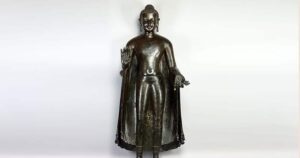
– Origin: Sultanganj, Bihar, India
– Discovered: 1861
– Current location: Birmingham Museum and Art Gallery, England
The Sultanganj Buddha is an enormous ancient copper statue, dating approximately to the 6th–7th century CE.
Standing approximately 2.3 metres tall, it is considered one of the most important surviving examples of ancient Indian metal sculpture.
It was discovered during railway construction in Bihar by British engineer E.B. Harris.
The statue was subsequently transported to Britain and eventually entered the collection of Birmingham Museum. Its removal during colonial rule has made it part of wider discussions about the return of Indian cultural heritage.
9. The Asante Royal Gold Regalia – Ghana
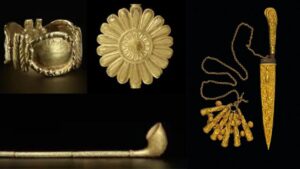
– Origin: Ashanti (Asante) Kingdom, present-day Ghana
– Taken: Particularly during British military campaigns in the 19th century
– Current location: Various British museums and collections
The Asante Kingdom possessed extraordinary quantities of gold, and its royal court used elaborate gold ornaments to represent authority, wealth and spiritual identity.
These included ceremonial jewellery, gold weights, royal decorations and other objects of exceptional craftsmanship.
During British military campaigns against the Asante Kingdom, particularly the invasion of Kumasi in 1874, numerous treasures were seized or acquired under colonial conditions.
Some entered British museums and private collections.
For Ghana, these objects are not merely valuable gold ornaments. They are part of the history, identity and royal traditions of the Asante people.
10. The Gweagal Shield – Australia
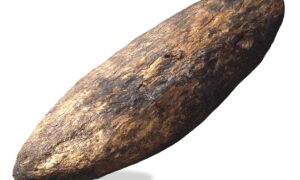
– Origin: Aboriginal Australia
– Taken: 1770
– Current location: British Museum, London
The Gweagal Shield is an important object associated with Australia’s Aboriginal history.
It is traditionally associated with the encounter between Aboriginal people and Captain James Cook’s landing party at Botany Bay in 1770.
The shield represents an important part of the history of Indigenous resistance and the first encounters between Aboriginal Australians and British explorers.
Its presence in the British Museum has generated calls for its return to Aboriginal communities.
It is particularly significant because it connects an Indigenous cultural object with the beginning of Britain’s colonial expansion in Australia.
Loot Should be returned
These ten artefacts represent only a small fraction of the cultural wealth that left colonised countries during the age of the British Empire.
From India’s legendary Koh-i-Noor diamond to Ethiopia’s sacred gold chalice, Nigeria’s Benin Bronzes and Greece’s Parthenon sculptures, each object carries a story that goes far beyond its financial value.
They represent lost royal possessions, religious traditions, artistic achievements and chapters of national history.
The debate is not simply about who owns an expensive diamond or where an ancient sculpture should be displayed. It is also about historical memory, cultural identity and the consequences of imperial conquest.
Arguably the greatest value of these treasures is not their gold, silver or precious stones, but the history they carry and the fact that they are looted memorials, priceless artifacts of historical civilizations stolen and kept by people who have no real connection or claim to them aside from being profits of mindless loot.