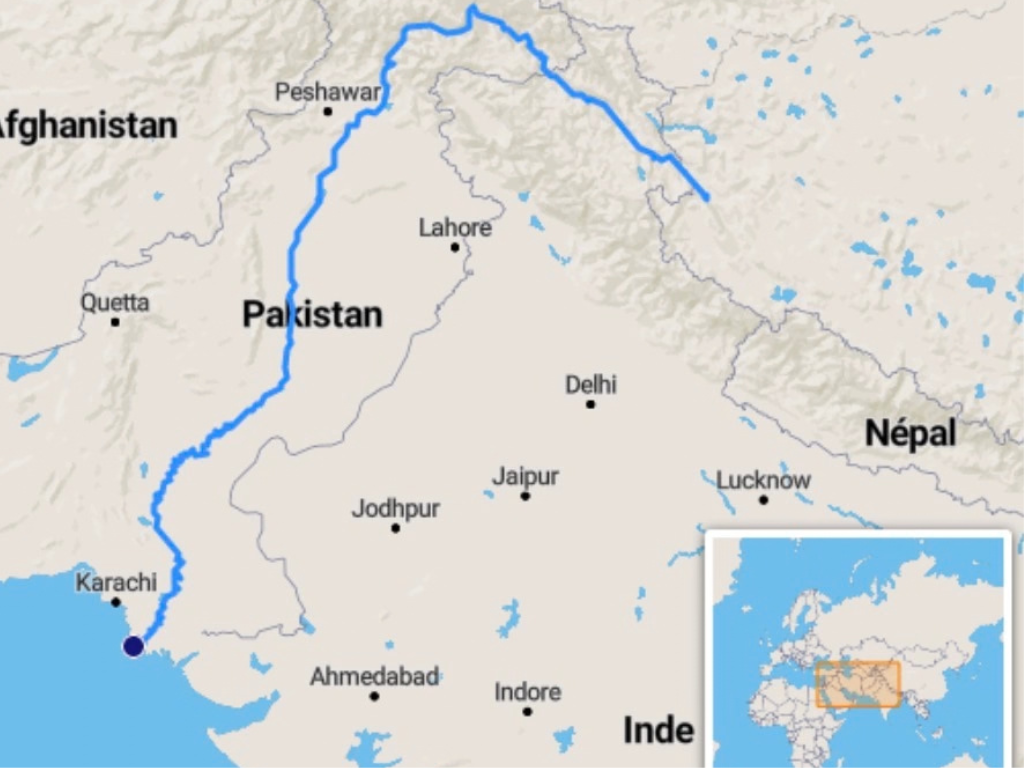

On 31 August 2026, the PCA-administered Court of Arbitration in The Indus Waters Western Rivers Arbitration (Islamic Republic of Pakistan v. Republic of India) issued two decisions. The first was an Award on the Status of the Indus Waters Treaty. The second was an Order on Interim Measures concerning the Ratle Hydro-Electric Plant.1
The tribunal unanimously concluded that India’s April 2025 decision to place the treaty “in abeyance” could only be understood as an attempted suspension or termination. It found no permissible basis for either course under the law of treaties or the treaty’s own framework. It also rejected India’s position that the action could be justified as a countermeasure responding to an earlier breach by Pakistan. The tribunal therefore held that the IWT had neither been terminated norsuspended and remained fully binding, including its rules governing Indian hydro-electric projects on the Western Rivers and the treaty’s dispute-settlement machinery.
The tribunal’s second decision was narrower in practical form. Pending the Neutral Expert’s decision on Ratle’s treaty compliance, expected in July 2027, it prohibited India from concreting the Ratle dam wall and power-intake structure above specified levels. Those restrictions are to continue until 90 days after the Neutral Expert’s final decision. The tribunal also imposed a reporting requirement concerning the Rattle construction schedule, while declining two other measures requested by Pakistan.
The order is therefore an interim protective measure, not a final determination that every disputed feature of Ratleviolates the treaty. The Neutral Expert remains central to the technical questions about the project’s design.
India’s reaction
India’s Ministry of External Affairs categorically rejected both the tribunal and its latest decision. In its statement issued from Bishkek on 31 August, the ministry described the body as an “illegally constituted so-called Court of Arbitration.” It said the court had been established in breach of the treaty, that India had never recognised its existence in law, and that India had neither appeared before it nor taken cognisance of its earlier pronouncements.
India’s central legal objection is jurisdictional and structural. New Delhi has argued that Pakistan’s resort to a Court of Arbitration, while a parallel Neutral Expert process was also under way, violated the treaty’s carefully differentiated dispute-resolution pathways. India consequently disputes not only the merits of the tribunal’s reasoning but also the tribunal’s authority to decide whether the treaty itselfcould be placed in abeyance.
The MEA further stated that the so-called court had “no jurisdiction whatsoever” over India’s sovereign decisions and that its pronouncements would have no effect on India’s actions concerning Indian projects. It concluded that India’s decision to hold the treaty in abeyance remains in force.2
This response creates a sharp compliance gap. The tribunal treats India as legally bound by the treaty and its interim order. India treats the tribunal’s process as legally defective and non-binding. In the absence of India’s participation, the ruling may have strong legal and diplomatic significance but limited direct enforcement capacity.

Figure 2. Jawaharlal Nehru, Mohammed Ayub Khan and World Bank Vice President William Iliff at the signing of the Indus Waters Treaty on 19 September 1960. Image: World Bank Group Timeline
Historical background: why the treaty was created
The IWT emerged from the division of British India in 1947. Partition divided the Indus Basin’s irrigation infrastructure and political jurisdictions in ways that made upstream-downstream dependence unavoidable. Headworks and canals that served agriculture in what became Pakistan were linked to river sources and control points in India. A dispute over canal-water deliveries in 1948 showed how quickly water management could become a security issue between the two new states.
Negotiations began in the early 1950s. The World Bank, led in this effort by President Eugene Black, provided mediation from 1952. The negotiations lasted roughly nine years and culminated in the treaty’s signature in Karachi on 19 September 1960 by Prime Minister Jawaharlal Nehru of India, President Mohammed Ayub Khan of Pakistan and World Bank Vice President William Iliff.3
The treaty did not attempt to create a single jointly managed basin authority. Instead, it made a deliberately concrete allocation of river systems. The three Eastern Rivers—the Ravi, Beas and Sutlej—were allocated for India’s unrestricted use, subject to specified exceptions. The three Western Rivers—the Indus, Jhelum and Chenab—were allocated principally for Pakistan, while India retained limited rights, including domestic use, non-consumptive use, specified agricultural use and hydro-electric generation subject to treaty conditions.
The settlement was accompanied by a large transition and infrastructure programme. Works financed with international assistance helped Pakistan replace canal supplies affected by the reallocation. The treaty also established continuing institutions rather than relying on a one-time political bargain.
|
Date |
Development |
Significance |
|
1947–48 |
Partition and early canal-water crisis |
Demonstrated the risks created by divided infrastructure and upstream-downstream dependence. |
|
1952 |
World Bank mediation begins |
Converted a bilateral water conflict into a sustained technical negotiation. |
|
19 September 1960 |
IWT signed at Karachi |
Created the allocation, cooperation and dispute-settlement framework still contested today. |
|
2010–13 |
Kishenganga arbitration |
Tested treaty limits on India’s hydro-electric use of a Western River. |
|
2016 |
Pakistan institutes Western Rivers arbitration |
Began the present PCA-linked arbitration over Kishenganga and Ratle design issues. |
|
2022 |
World Bank appoints a Neutral Expert and a Court chairman |
Reopened two parallel treaty processes concerning the same broad project disputes. |
|
2023 |
Court of Arbitration issues award on competence |
Confirmed its competence despite India’s objections and non-participation. |
|
27 June 2025 |
Supplemental award on competence |
Reaffirmed the tribunal’s competence after India announced the treaty was in abeyance. |
|
8 August 2025 |
Award on general interpretation |
Addressed treaty interpretation questions involving Western Rivers projects. |
|
15 May 2026 |
Award concerning maximum pondage |
Considered storage-related limits relevant to the disputed projects. |
|
31 August 2026 |
Award on treaty status and Ratleinterim measures |
Held the treaty fully in force and ordered limited construction restraints pending the Neutral Expert’s decision. |
The dispute-settlement architecture
Article IX of the IWT creates a staged framework. Questions are first considered by the Permanent Indus Commission, a bilateral body with commissioners appointed by India and Pakistan. Some technical differences may then be referred to a Neutral Expert, described in the treaty as a highly qualified engineer. A dispute involving broader questions of treaty interpretation or application may be submitted to a Court of Arbitration under Annexure G.
This design is important because it separates technical engineering questions from wider legal disputes. Pakistan has pursued the Court of Arbitration route over the design and operation of the Kishenganga and Ratle projects. India has objected to the tribunal process and has supported the Neutral Expert route for the technical issues. The World Bank’s 2022 decision to resume and staff both processes was intended to address the parties’ competing requests, but it also produced an institutional overlap that India considers incompatible with the treaty.
The PCA is acting as the secretariat for the Court of Arbitration. It is not itself deciding the dispute as a national court would. The five-member tribunal listed by the PCA is chaired by Professor Sean D. Murphy and includes legal and engineering expertise. The treaty’s Annexure G provides for a larger court in the ordinary arrangement, but the tribunal’s constitution in the present proceedings has been the subject of India’s sustained objection.
The legal disagreement thus has two layers:
Why Rattle matters?
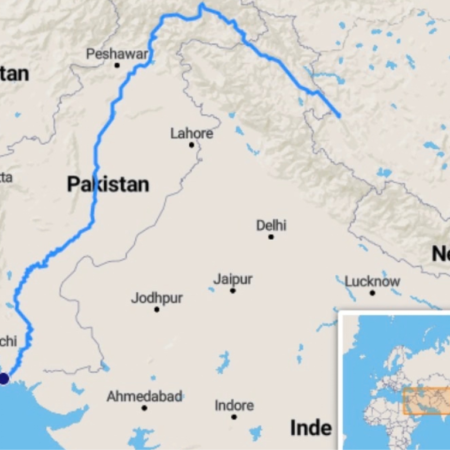
Ratle is a hydro-electric project on the Chenab, one of the Western Rivers. Under the IWT, India is not completely barred from developing hydro-electric facilities on the Western Rivers. The controversy concerns whether particular design and operating features remain within the treaty’s limits while preserving Pakistan’s entitlement to the river’s flows.
Pakistan’s interim-measures application argued that construction could make later relief ineffective. If a disputed concrete structure were completed and the design were subsequently found non-compliant, modification or removal could be technically difficult and financially costly. The tribunal accepted that risk for part of Pakistan’s application and designed a limited order to preserve the effectiveness of the Neutral Expert process.
The Ratle order should not be read as a general prohibition on Indian hydropower development. It is project-specific, time-limited and linked to the pending technical process. Its importance lies in the precedent it may set for the relationship between interim protection, engineering evidence and a state’s refusal to recognise the tribunal.

Figure 3. Ratle Hydro Electric Project location and project illustration. Image source: PMF IAS 9. Publication or republication should be checked against the source’s rights and attribution requirements before commercial use.
What the ruling changes—and what it does not
The ruling strengthens Pakistan’s legal position in four ways. First, it rejects the proposition that the treaty’s operation ended merely because India announced “abeyance.” Second, it confirms the tribunal’s view that treaty obligations include both substantive project rules and dispute-settlement commitments. Third, it gives Pakistan a limited interim remedy at Ratle. Fourth, it creates an authoritative record that Pakistan can use in diplomatic, legal and financial forums.
The ruling does not, by itself, resolve the engineering disputes. It does not automatically compel India to change its position. It also does not end the separate Neutral Expert process, which the PCA says is expected to issue its decision in 2027. Finally, it does not restore political trust, which has deteriorated because the water dispute is now directly connected to wider security tensions after the 2025 attack in Indian-administered Jammu and Kashmir cited by India when announcing abeyance.
|
Issue |
PCA position |
India’s position |
Practical consequence |
|
Treaty status |
The IWT remains fully in force. |
The treaty is in abeyance. |
A direct compliance dispute with no shared legal premise. |
|
Tribunal’s authority |
The Court of Arbitration has jurisdiction and can issue interim measures. |
The body is illegally constituted and has no jurisdiction. |
The order has legal and diplomatic weight but faces non-compliance risk. |
|
Ratleconstruction |
Certain concreting above specified levels is prohibited pending the Neutral Expert’s decision, with a reporting obligation. |
The tribunal’s pronouncements have no effect on Indian actions. |
Construction may become the immediate flashpoint. |
|
Neutral Expert |
The technical process remains relevant and its decision is expected in July 2027. |
India has preferred the technical process over the parallel arbitration route. |
A possible channel for narrowing engineering disagreements, if preserved. |
|
Future relations |
Treaty obligations and dispute settlement continue. |
Abeyance continues until India’s conditions are met. |
Political negotiation is required to close the institutional gap. |
The way forward
1. Preserve the technical process even while contesting the legal process
India and Pakistan should avoid actions that make the Neutral Expert’s future decision meaningless. That means preserving construction records, sharing required data, maintaining agreed monitoring arrangements and avoiding irreversible work on disputed components where possible. The technical process cannot substitute for political agreement, but it can reduce the number of issues that require political bargaining.
2. Create a short, time-bound procedural dialogue
The parties should use the Permanent Indus Commission, or a specially designated senior-level channel, to negotiate a procedural protocol. The protocol could address the overlap between the Court of Arbitration and Neutral Expert processes, the scope of each institution, document exchange, site access, interim reporting and the legal effect of decisions made during the current impasse. A limited procedural agreement would not require either state to abandon its legal position.
3. Separate treaty compliance from security diplomacy
India’s decision to place the treaty in abeyance arose from a security crisis, while Pakistan’s case concerns water allocation and project design. The two issues are politically connected but legally distinct. If water obligations are used as an open-ended instrument of coercion, the treaty’s technical safeguards become difficult to operate. Conversely, if security concerns are excluded entirely from diplomatic engagement, India’s stated rationale will remain unaddressed. A parallel security dialogue, with a separate water track, would reduce the pressure on the IWT to perform functions it was not designed to perform.
4. Update the treaty through consent rather than unilateral reinterpretation
The basin has changed since 1960. Population, irrigation demand, hydropower technology, sedimentation, extreme floods, glacial change and environmental requirements all create pressures that the original text did not fully anticipate. The durable answer is not unilateral suspension. It is a negotiated supplementary protocol or modernisation package that preserves the core allocation while updating data standards, environmental safeguards, climate-risk planning, notification procedures and project-review timelines.
5. Use staged compliance and confidence-building measures
The parties could agree to reciprocal steps without prejudicing their legal claims. Examples include regular exchange of hydrological data, advance notice of major construction milestones, independent engineering verification, emergency flood communications and a commitment to refrain from irreversible work on disputed design elements until the technical decision. Such measures would not solve the treaty-status dispute, but they would lower the risk of miscalculation.
6. Treat the 2027 Neutral Expert decision as a decision point, not an endpoint
The expected Neutral Expert decision may clarify technical issues, but it will not resolve the wider disagreement over the tribunal’s constitution or treaty abeyance. Before that decision arrives, the parties should agree on how technical findings will be translated into project modifications, compensation, monitoring or further negotiation. Without that preparation, the next decision may simply generate another round of non-recognition.
The 31 August 2026 PCA ruling is a major legal development, but it is not a settlement. The tribunal has defended the continuity of the IWT and taken a limited step to preserve Pakistan’s position at Ratle. India has rejected the tribunal’s authority and maintained that the treaty remains in abeyance. Both positions are now embedded in official records.
The IWT survived wars because it converted a politically explosive question into a detailed technical and institutional bargain. Its present crisis reflects the limits of that bargain when bilateral trust collapses and parallel dispute mechanisms are treated as competing sources of authority. The best way forward is therefore neither automatic acceptance of the award nor unilateral disregard of it. It is a sequenced process: protect the technical record, keep the Neutral Expert mechanism functioning, negotiate procedural rules, separate security dialogue from water administration and modernise the treaty by consent.
The central lesson is historical. Water agreements are most resilient when they provide not only allocation rules but also credible channels for communication, verification and adaptation. The future of the Indus system will depend on rebuilding those channels before the next engineering dispute becomes another strategic crisis.