Nepal Floods Expose a New National Security Threat: Why Disaster Management Matters for India

Disaster Management as a Pillar of National Security:
What the Nepal Floods Are Telling India
A death toll past 1,100. A crack in a Himalayan slope, visible on satellite images days before it gave way. And a question India can no longer defer: is disaster resilience being treated as seriously as border security?

Disasters, once understood chiefly as humanitarian emergencies calling for temporary relief, have become events capable of disrupting economies, destroying critical infrastructure, displacing populations and generating consequences that spill across national borders. For India — exposed to earthquakes, floods, cyclones, droughts and landslides in near-equal measure — the catastrophe that has unfolded in Nepal over the past week is a live demonstration of why disaster management now belongs squarely within the country’s national security architecture, not on its periphery.
The Disaster: A Timeline of Escalation
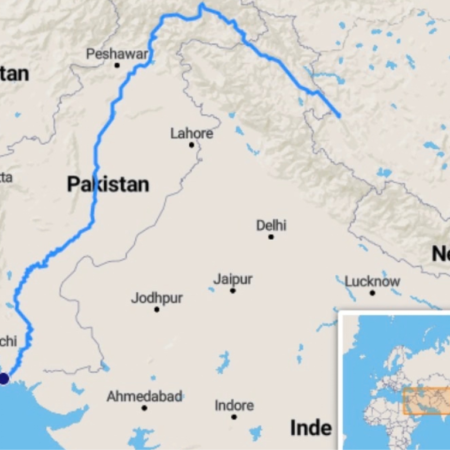
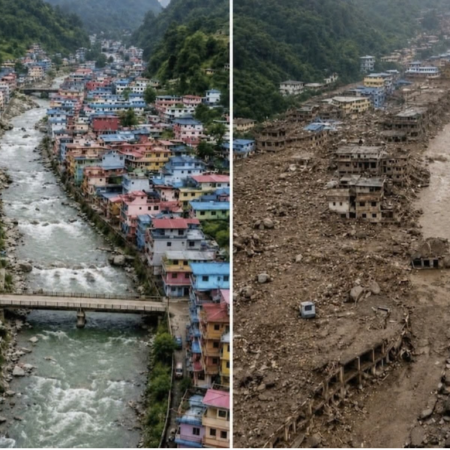
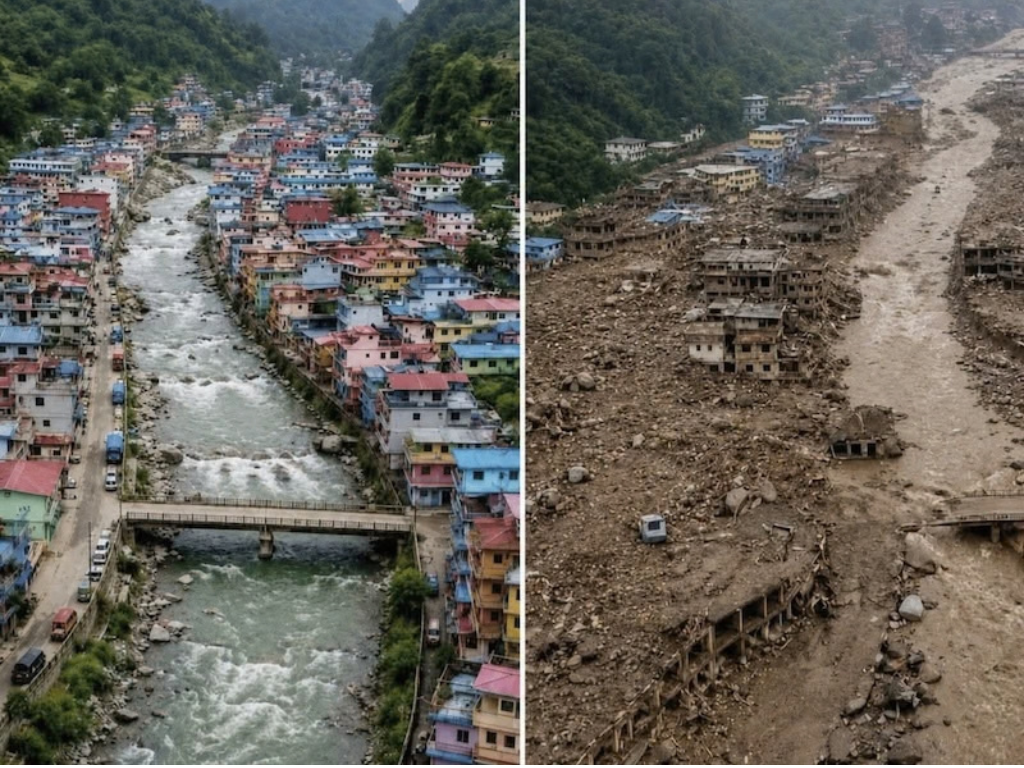
On the morning of 26 August 2026, a mass of rock and glacial ice broke away from a slope near the Nepal-Tibet border, close to the Rasuwagadhi crossing. What followed was not a conventional monsoon flood but a high-velocity debris flow — part avalanche, part flash flood — that tore down the Bhotekoshi-Sunkoshi river system with almost no warning.

The scale of destruction grew with each passing day. Nepal’s death toll stood at 389 within 24 hours; by 30 August it had crossed 900; by 1 September, Nepal’s National Disaster Risk Reduction and Management Authority (NDRRMA) confirmed at least 1,050 deaths, with nearly 4,000 people still missing, according to CNN’s rolling coverage of the disaster. On the Chinese side of the border, authorities have separately reported over a dozen deaths and hundreds missing. Entire hydropower installations — including the Chilime and Langtang tunnel sites — were buried under mud, trapping hundreds of construction workers underground for days.
What Made This Disaster Different: The Warning-Signs Question
The most consequential update to emerge from the disaster is not the casualty count but a scientific finding released in the past week — one that goes to the very heart of the argument that disaster risk reduction, not just disaster response, is a matter of national security.
A rapid hazard assessment by the international HiRISK scientific consortium found the glacier-rock mass had shown “pre-event indications” in the days before it collapsed, including meltwater that had visibly turned brown and a crack that was steadily propagating into the surrounding bedrock, as reported by Asianet Newsable. Separately, satellite analysis published in Nature showed the glacier-rock system had been accelerating in the weeks before the collapse — a recognised sign of an unstable slope.
Crucially, none of this translated into an alert on the ground. Geologist Jakob Steiner, a co-author of the HiRISK report who has advised the Nepali government on Himalayan disaster risk, told ABC News that early warning systems for the construction workers at the hydropower sites were “very weak,” and the report confirmed that no dedicated early warning system for glacier-related hazards had been established in the affected area — this despite Nepali and Chinese officials having met as recently as May 2026 specifically to discuss glacial lake and flood risk along this border.
This is the uncomfortable core of the story: the technology to detect the danger existed. The institutional mechanism to act on it did not. For India, whose own Himalayan border states sit in geologically similar terrain, that gap is a warning it cannot afford to read only as someone else’s failure.
Experts caution the danger has not fully passed. Cryosphere analyst Prashant Baral of ICIMOD told CNN that the remaining glacier ice, fractured bedrock and recently disturbed slopes “may still be unstable” following such a large rock-ice avalanche, even as a meltwater lake that had formed below the collapse site has largely drained.
India’s Response: First Responder, Again
India’s reaction followed a now-familiar template, but with details worth noting. Within hours of the first reports on 26 August, the Indian Air Force dispatched 10 tonnes of relief material to Nepal aboard a C-130J aircraft, with a further 47.5 tonnes moved across two subsequent flights, according to reporting in Organiser. C-17 Globemaster aircraft, medical teams and earth-moving equipment were placed on standby.
Along the border, the National Disaster Response Force deployed 20 teams across Bihar and Uttar Pradesh as a precaution against downstream spillover — a direct, practical illustration of the argument that a Himalayan disaster does not stay confined to one sideof a border. India additionally offered to deploy specialised NDRF teams inside Nepali territory pending clearance from Kathmandu, per The Tribune, and has since sent specialised Indian Army teams to assist Nepali forces directly at the Chilime and Langtang tunnel sites — some of the most hazardous rescue terrain in the entire operation.
From Disaster Relief to Disaster Risk Reduction: India’s Framework
India’s own disaster-management architecture has evolved considerably from the relief-centric model of earlier decades. The Disaster Management Act, 2005, the National Policy on Disaster Management, 2009, and the National Disaster Management Plan, 2019 collectively shifted the emphasis toward a full cycle: prevention, mitigation, preparedness, response, rescue, relief, rehabilitation and reconstruction.
The logic is straightforward — disasters cannot always be prevented, but their human and economic cost can be substantially reduced through risk identification, resilient infrastructure, functioning early-warning systems, sound land-use planning and community preparedness. The central lesson, reinforced with brutal clarity by the Nepal disaster, is that resilience has to be built before the event, not assembled after it.
India’s Own Exposure
India’s hazard profile is not hypothetical. Roughly 58.6 per cent of the country’s landmass is earthquake-prone, 12 per cent is flood-vulnerable, 68 per cent of cultivable land is drought-susceptible, and 15 per cent of the landmass is exposed to landslides and avalanches — with much of the coastline additionally vulnerable to cyclones and tsunamis. Rapid, often unplanned urbanisation and construction in high-risk zones compound each of these exposures.
A major disaster of this kind does not stop at casualties. It damages roads, power infrastructure and telecommunications; disrupts supply chains and employment; strains government capacity; and diverts public resources from development toward reconstruction — which is precisely why disaster management sits at the intersection of economic security and internal stability, both core components of national security.
Why This Matters Beyond Nepal’s Borders
India and Nepal share Himalayan river systems, ecological linkages, dense infrastructure networks, and extensive people-to-people ties — including, in this disaster, an unknown number of Indian nationals among the missing. A major event in the upper Himalayan catchment can therefore generate direct downstream consequences for India’s border states, echoing earlier precedents such as the Kosi floods and the 2015 earthquake.
The damage to Nepal’s hydropower sector illustrates how quickly a natural hazard becomes a cross-border economic and energy crisis: with hundreds of megawatts of generation capacity offline, Nepal has had to halt electricity exports and increase imports — including from India — reshaping regional energy-supply calculations in real time.
Climate Change and the Changing Nature of Risk
Perhaps the most significant shift this disaster forces onto the record is scientific, not just administrative. This was not primarily a rainfall-driven flood — the conventional Himalayan hazard model — but a compound event combining glacial instability, a rock-ice avalanche, and a resulting flash flood, unfolding at a speed that left almost no window for evacuation.
The Himalayan region is documented to be warming, with changing precipitation patterns and increasing instability in glaciers, permafrost and mountain slopes. What the HiRISK and Nature findings add to this picture is specificity: instability can now be detected in near-real time via satellite, but detection without an operational alert chain to the people on the ground is not a warning system — it is only data. Risk assessment built solely on historical rainfall and flood patterns is no longer an adequate basis for infrastructure planning in this terrain.
Disaster Management as National Security: The Chain of Consequence
National security has traditionally centred on military threats and territorial integrity. Contemporary security, however, is unmistakably multidimensional — terrorism, cyber threats, pandemics, energy insecurity and climate-linked disasters all carry the capacity to destabilise a state. The causal chain is direct:
Extreme event → infrastructure destruction → economic disruption → displacement and livelihood loss → pressure on government capacity → social instability → national security implications.
The COVID-19 pandemic demonstrated this dynamic at global scale. A catastrophic disaster striking a strategically sensitive border region can generate the same humanitarian, logistical and security pressures simultaneously — which is exactly the scenario now playing out along the Nepal-Tibet-India tri-junction.
India’s Evolving Role: From Recipient to Regional First Responder
India’s disaster-management capability has acquired a distinct foreign-policy dimension over the past decade, and this event reinforces that trajectory. Following the pattern set by Operation Maitri after the 2015 Nepal earthquake, India’s rapid mobilisation of airlift capacity, ground teams and technical assistance projects both humanitarian intent and operational reach — strengthening trust with a neighbour, reinforcing India’s regional leadership, and demonstrating the country’s capacity to function as the Himalayan and Indian Ocean region’s first responder.
Building Infrastructure for the Risks Ahead, Not the Hazards Behind
The central question the Nepal disaster poses for infrastructure planners on both sides of the border is unavoidable: are hydropower, road and tunnel projects in fragile Himalayan terrain being designed for the compound, accelerating risks documented by scientists today, or for the historical hazard patterns of decades past? The damage inflicted on Nepal’s hydropower sector converted a geological event into an energy-security crisis within days — a conversion that better-sited, better-monitored infrastructure might have blunted.
For India’s own Himalayan states, this raises the same question with direct stakes: infrastructure expansion must be matched against ecological carrying capacity, seismic risk, landslide susceptibility and now-documented glacial instability, not against the assumption that past weather patterns will hold.
The Way Forward
The Nepal floods are a live case study, not a distant cautionary tale. A rock-ice mass that had been visibly destabilising for days collapsed with almost no warning reaching the people below it; the resulting flood crossed from a natural hazard into a humanitarian, energy-security and diplomatic crisis within a single week; and India’s response — airlifts, border deployments, Army teams inside Nepali tunnels — has again demonstrated real regional capability even as the death toll climbs past 1,100 with thousands still missing.
For India, the lesson is not abstract. It is that the gap between detecting a risk and acting on it is where disasters turn into catastrophes — and that gap is an infrastructure and institutional-design problem, not a matter of scientific capability. Disaster resilience is national resilience. In an era where satellite technology can see a slope destabilising days in advance, the strategic task is building the systems that turn that data into an evacuation order before the next collapse — in Nepal, or in India’s own Himalayan states.