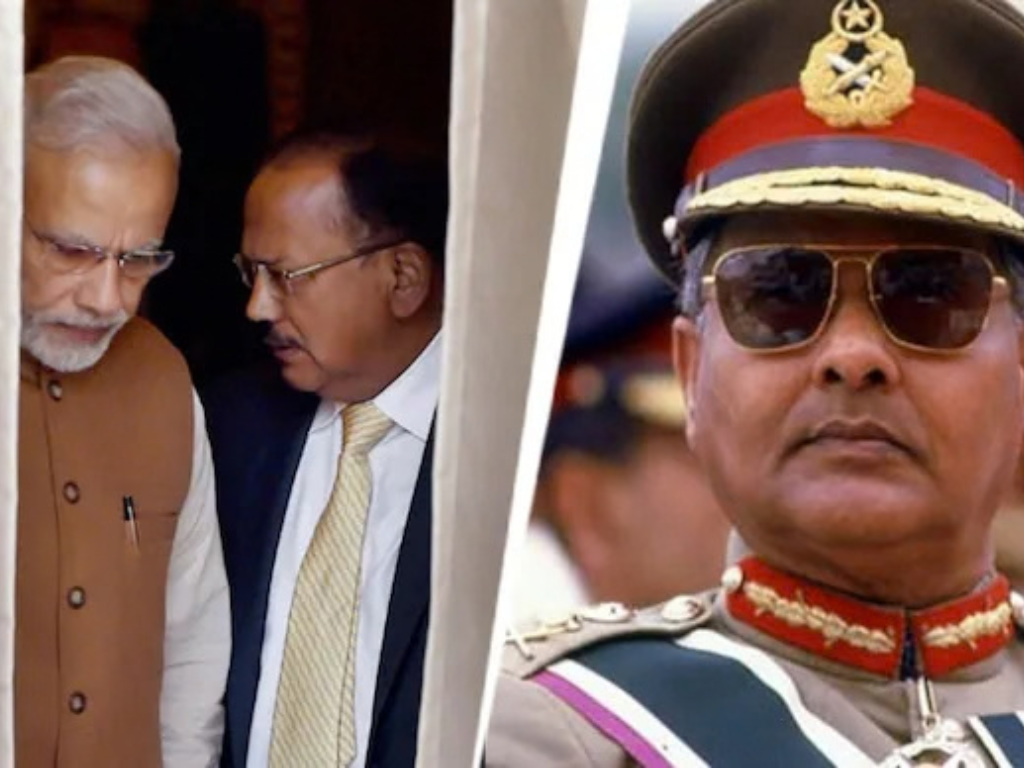
The Modi-Doval Doctrine How India Shattered Pakistan’s Nuclear Shield for Terrorism

Ten years after Indian special forces crossed the Line of Control on the night of 28-29 September 2016, the strategic landscape of the subcontinent stands fundamentally altered. What began as a limited cross-border raid in response to the Uri attack has evolved into a calibrated, multi-domain doctrine that systematically dismantled Pakistan’s long-standing assumption: that its nuclear arsenal would forever immunise state-sponsored terrorism from meaningful Indian retaliation.
For nearly three decades, Pakistan’s military establishment operated under a calculated strategy of “offensive defence.” Following its 1971 defeat and the subsequent acquisition of nuclear capability in the mid-1980s—facilitated by Chinese transfers of highly enriched uranium, weapon designs, and test data—Rawalpindi constructed a dual instrument of power. Nuclear weapons formed the shield; proxy terrorism became the sword.

Figure 1: Strategic Shift from Restraint & Nuclear Blackmail to Defensive Offense.
The Era of ‘Nuclear Weapons-Enabled Terrorism’
General Mirza Aslam Beg, who took command of the Pakistan Army in 1988 after Zia-ul-Haq’s death, institutionalised this approach. The massive Zarb-e-Momin exercises of 1989-90 coincided with the redirection of Afghan jihad veterans and ISI resources into Jammu and Kashmir. To deter Indian conventional force options, Pakistan developed Tactical Nuclear Weapons (TNWs), such as the short-range Nasr missile system, attempting to artificially lower the nuclear threshold.
Commodore C. Uday Bhaskar later captured the essence of this strategy with the term “nuclear weapons-enabled terrorism” (NWET). Under its protective umbrella, Pakistan escalated from insurgency in Kashmir to major mainland attacks: the 1993 Mumbai serial blasts, the 2001 Parliament assault, the Kaluchak massacre of 2002, the 2006 Mumbai train bombings, the Samjhauta Express attack, and the 26/11 Mumbai sieges that killed 166 people. Each time, Indian leadership exercised strategic restraint, deterred by the spectre of nuclear escalation.
|
“The Modi-Doval approach treated the nuclear threshold not as a paralysing, absolute barrier, but as a navigable space where military, economic, and strategic costs could be systematically imposed below the escalation line.” — National Security Posture Assessment |
The Paradigm Shift: Defensive Offense
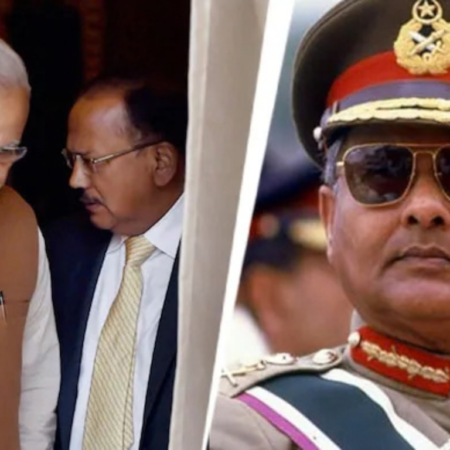
The arrival of Narendra Modi as prime minister in 2014 and the appointment of Ajit Doval as national security adviser marked a decisive break. Doval had long advocated “defensive offense”—hitting the source of the threat rather than absorbing punishment. Following the Uri attack of 18 September 2016, which killed 19 soldiers, Indian special forces conducted simultaneous raids across the LoC on 28-29 September.
Unlike earlier covert operations such as Operation Ginger in 2011, the 2016 action was deliberately owned and publicly announced by DGMO Lt Gen Ranbir Singh. The public declaration converted a tactical raid into a doctrine of intent: India had established both the capability and political mandate to operate below the nuclear threshold.

Figure 2: Key Milestones in the Execution of the Modi-Doval Counter-Terror Doctrine.
Evolution of Operations: Balakot to Operation Sindoor
The doctrine matured through subsequent major crises. After the 2019 Pulwama suicide bombing (40 CRPF killed), India conducted the Balakot airstrike deep inside Khyber Pakhtunkhwa against a Jaish-e-Mohammed facility—the first offensive use of airpower across the international boundary since 1971.
Then, in April 2025, the Pahalgam massacre of 26 civilian tourists triggered Operation Sindoor. Indian forces struck nine terrorist infrastructure nodes simultaneously, including Jaish-e-Mohammed headquarters in Bahawalpur and Lashkar-e-Taiba hubs in Muridke, deep inside Pakistan’s Punjab heartland. When Pakistan attempted aerial escalation, Indian multi-domain actions degraded their air defences and radar nodes, forcing Islamabad to seek a rapid ceasefire.

Figure 3: Spectrum of Calibrated Retaliatory Measures under the Modi-Doval Doctrine.
Comparative Strategic Matrix
|
Strategic Pillar |
Pre-2014 Era (Restraint Posture) |
Post-2016 Era (Modi-Doval Doctrine) |
|
Core Response |
Diplomatic dossiers & defensive firing on LoC |
Pre-emptive kinetic strikes & proactive deterrence |
|
Nuclear Threat |
Absolute barrier that paralyzed military options |
Navigable threshold managed through calibrated force |
|
Target Scope |
Defensive deployments on Indian side of LoC |
Deep targets (Khyber Pakhtunkhwa, Punjab heartland) |
|
State vs Non-State |
Differentiated terror groups from state sponsors |
Erased distinction: state handlers held directly accountable |
|
Non-Kinetic Levers |
Bilateral negotiations, international appeals |
FATF greylisting, MFN revocation, cyber & economic pressure |
Restoring Strategic Balance:
The cumulative effect of this ten-year evolution has been a progressive compression of the space Pakistan once enjoyed. Where earlier Indian leaders treated the nuclear shadow as paralyzing, the Modi-Doval approach treated it as navigable. Cross-border special forces raids, precision air strikes, and multi-domain operations have established that India can impose costs at levels that remain carefully below nuclear thresholds while altering the adversary’s cost-benefit calculus.
The absence of major Pakistan-sponsored terrorist attack since Operation Sindoor is the observable outcome of restored deterrence. The Modi-Doval doctrine did not abolish the nuclear reality of the subcontinent—it simply refused to allow that reality to dictate permanent Indian vulnerability, restoring a strategic balance missing since the late 1980s.
Trump Lied a Lot in His UN Speech: Here’s the Fact-Check