The annual United Nations General Assembly brings together world leaders to address the international community on wars, diplomacy, security and global economic challenges. But this year’s session has also drawn attention for an unusual feature: increasingly confrontational rhetoric, sharp exchanges between countries and even the use of animated visuals to counter opposing narratives.
One of the more striking examples came from Israel, which released a short 20-second video aimed at countries it says have repeatedly levelled allegations against it. The video features parrots repeating the phrase “blame Israel” before delivering the message that repeating a claim does not make it true.
The video quickly became part of the wider debate surrounding political messaging at the UN.
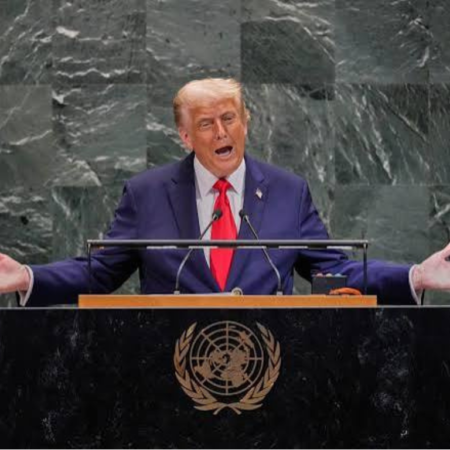
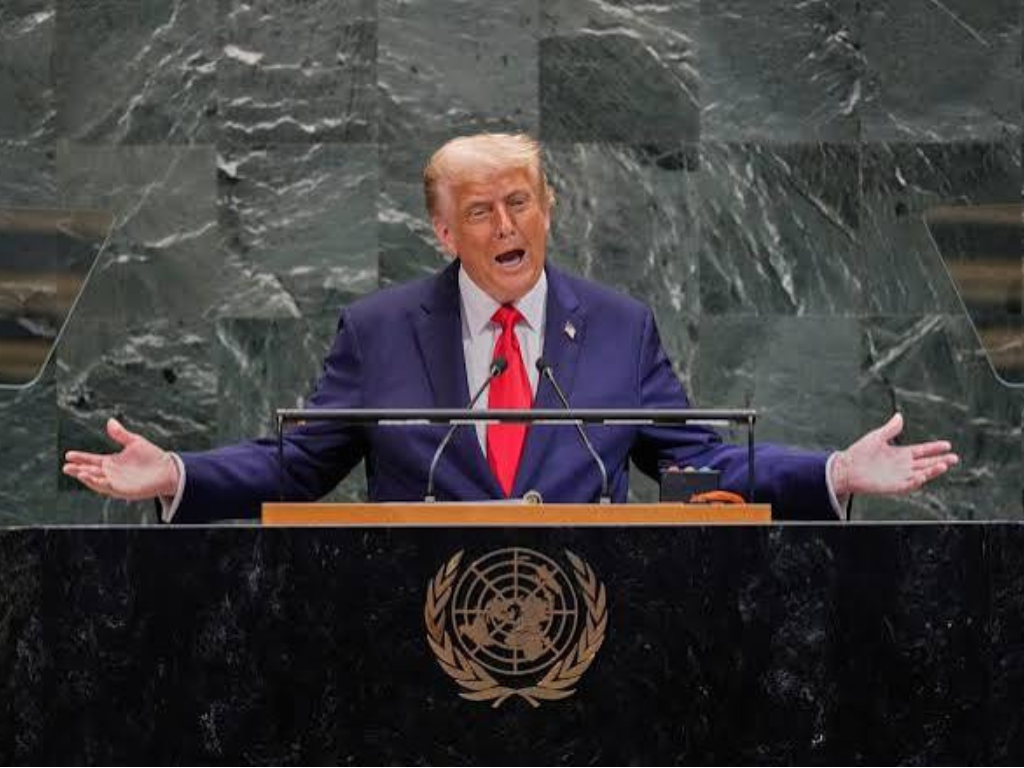
US President Donald Trump’s address, meanwhile, attracted significant scrutiny over a series of claims relating to the war with Iran, US weapons stocks, Venezuelan oil, employment, international investment and conflicts around the world.
Several media organisations and fact-checkers subsequently examined claims made during the speech, with some describing them as inaccurate, exaggerated or misleading.
US weapons stockpiles and the Iran war
One of the most consequential claims concerned America’s military capacity.
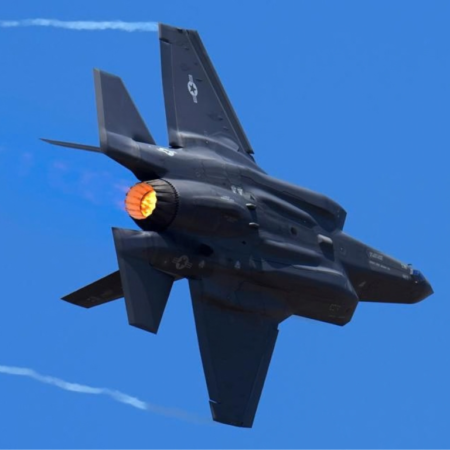
Trump said the United States had an enormous supply of ammunition and weapons and was producing them at levels not seen before. His remarks came against the backdrop of the ongoing US conflict with Iran, during which American forces have reportedly used substantial quantities of missiles and air-defence interceptors.
The issue is particularly significant because advanced weapons systems cannot simply be replaced overnight.
US military assessments and reporting have highlighted pressure on stocks of certain missile interceptors and the time required to replenish them. Production of systems such as Patriot interceptors and other advanced munitions involves complex manufacturing and supply chains.
This has also raised questions among US allies about the availability of American weapons in the event of another major conflict.
European governments have been particularly attentive to US weapons availability because American military capabilities remain an important component of NATO’s broader deterrence architecture.
However, claims that Russia would therefore necessarily launch an attack against NATO because US stocks have been depleted remain speculative. Military stockpile pressures do not, by themselves, establish that Moscow intends to initiate a conflict.
The Venezuela oil claim
Trump also made a striking claim about the combined oil resources of the United States and Venezuela.
According to Trump, the two countries together control more than 60% of the world’s oil.
The figure has prompted questions because it appears to conflate different measures of oil wealth, including reserves, production and resources.
Venezuela possesses the world’s largest proven crude oil reserves, generally estimated at around 300 billion barrels. US proven crude oil reserves, meanwhile, are far smaller.
Even adding the two countries’ proven reserves does not amount to 60% of global proven oil reserves.
The distinction is important because oil reserves are not the same thing as current production or oil physically under a government’s immediate control.
Trump’s comments came amid the dramatic escalation of US involvement in Venezuela and Washington’s efforts to gain greater influence over the country’s enormous oil sector.
The long-term consequences of increased US involvement in Venezuela remain uncertain. Any political instability, resistance to American influence or changes in Venezuelan domestic politics could affect the durability of such arrangements.
Employment claims under scrutiny
Trump also highlighted employment gains in the United States, claiming that his administration had created around one million new private-sector jobs.
Employment statistics, however, need to be assessed against the relevant time period and the broader US labour-market trend.
Job creation is influenced by numerous factors, including population growth, economic expansion, interest rates, business investment and government policy. Therefore, attributing all employment gains during a particular period directly to a president can be misleading.
The distinction between jobs created during an administration and jobs directly created because of a specific presidential policy is particularly important when evaluating such claims.
The “eight wars” and India-Pakistan claim
Another major part of Trump’s speech involved his repeated assertion that he had helped prevent or end multiple wars.
Trump has frequently claimed credit for preventing several international conflicts, including the India-Pakistan confrontation.
He has also linked the India-Pakistan conflict to the possibility of a nuclear confrontation, arguing that his intervention prevented millions of deaths.
However, the precise number of conflicts that can objectively be described as wars “stopped” by the US president remains disputed.
The same applies to the claim that tens of millions of lives were directly saved because of these interventions. Such figures depend heavily on hypothetical scenarios rather than measurable casualties.
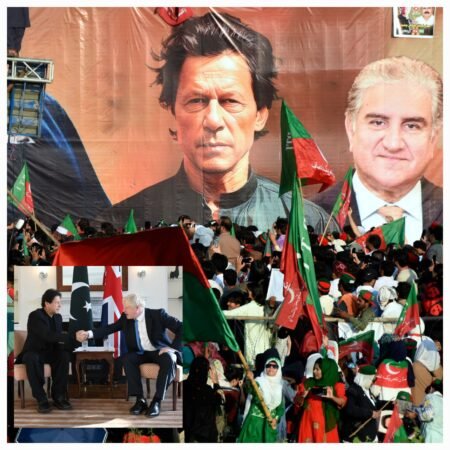
Trump’s claims have nevertheless been echoed by Pakistani Prime Minister Shehbaz Sharif, who has publicly credited the US president with helping prevent a much larger conflict between India and Pakistan.
For India, the issue is particularly sensitive because New Delhi has consistently maintained that the India-Pakistan military confrontation was resolved through direct bilateral channels and has rejected outside mediation.
$21 trillion investment claim
Trump also claimed that the United States had secured approximately $21 trillion in new investment from around the world.
This figure has attracted considerable attention because the White House’s own public investment figures have used a substantially different number.
The key issue is the distinction between announced investment commitments, pledges and money that has actually entered the US economy.
Large investment announcements can cover multiple years and may include projects that are still under consideration, planned or dependent on future conditions.
Some commitments may also have originated during the previous administration, making it difficult to attribute the entire headline figure to Trump’s current term.
Consequently, comparing a headline figure from a presidential speech with the White House’s investment database requires careful examination of what exactly is being counted.
A dramatically different UN message
Perhaps the most striking aspect of Trump’s address was not any individual statistic but the tone of his remarks about Iran.
Trump presented Tehran with a stark choice: negotiate a deal or face the possibility of overwhelming military destruction.
His remarks included a warning that Iran could be “driven into hell” if it refused to reach an agreement.
Such language is unusual in the context of a UN General Assembly speech, where leaders traditionally frame their arguments around diplomacy, international cooperation and conflict resolution—even when relations between countries are deeply hostile.
Trump nevertheless ended his remarks by indicating that he believed a deal with Iran could still be possible.
That contradiction—combining the threat of overwhelming military force with an offer of negotiation—captures the broader uncertainty surrounding Washington’s Iran policy.
Why the speech matters for India
For India, the implications extend beyond Trump’s rhetoric.
The United States remains one of India’s most important strategic and economic partners, while Washington’s relationships with Iran, Russia, Israel and Pakistan directly affect India’s security and economic interests.
A prolonged US-Iran conflict could have consequences for global energy prices, shipping routes and the broader security environment in West Asia. Any depletion of US weapons stockpiles could also influence Washington’s ability to support partners in other theatres.
At the same time, developments involving Venezuela and global oil supplies could affect energy markets.
Trump’s UN speech therefore goes beyond a collection of disputed statistics. It provides an insight into how the US administration is presenting its foreign-policy record to the world—and to American voters ahead of the country’s midterm elections.
The claims made at the UN will continue to be examined against publicly available economic, military and diplomatic data.
For a speech delivered before the world’s most prominent international forum, the central question is not simply what was said, but how those claims stand up when compared with the underlying evidence.