Nearly 2,000 Arrested as Student Unrest Grips France: What’s Behind the Protests, Macron’s Response, and What Comes Next

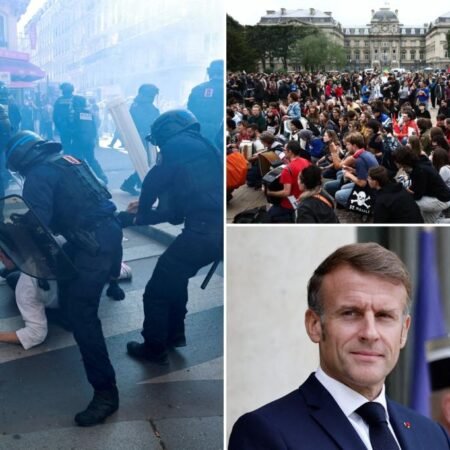
A wave of high school student protests that began in the Paris region in late September 2026 has escalated into nationwide unrest, resulting in nearly 2,000 arrests, hundreds of school closures, injuries on all sides, and clashes involving tear gas, fires, and barricades. As the movement continues into early October, questions center on the students’ core demands, President Emmanuel Macron’s response, and the likely path forward amid political tensions ahead of the 2027 presidential election.
Why the protests erupted
The unrest is driven primarily by high school students (aged roughly 15–18 in France’s lycées) demanding better learning conditions. Key grievances include overcrowded classrooms often cited as 35 students per class with insufficient chairs—chronic teacher shortages and unreplaced absences, dilapidated school buildings plagued by poor insulation, overheating, leaks, and inadequate facilities, as well as excessively long daily schedules.
Students and their unions also point to broader underfunding and a lack of resources such as nurses, support staff, and learning materials. The movement started in poorer Paris suburbs, particularly Seine-Saint-Denis, before spreading rapidly across the country.
It has partially overlapped with public-sector strikes and debates over the draft 2027 budget, which proposes only a modest (below-inflation) increase in education spending. Some university students have joined with related complaints about higher education resources.While many demonstrations involved peaceful blockades, others turned violent, with rubbish bins and barricades set alight, projectiles thrown at police, and damage to school property. Authorities say the violence has in places been amplified by non-students or agitators.
Macron’s reaction
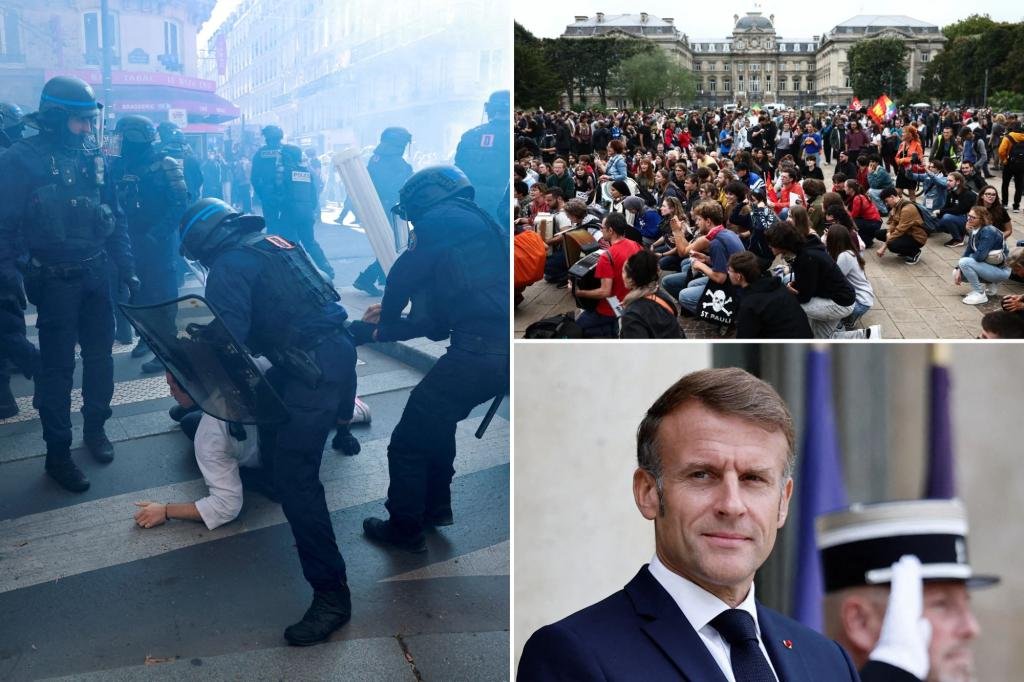
President Emmanuel Macron addressed the crisis on 30 September during a state visit to Madrid. He acknowledged the students’ frustrations, stating he “hears and understands the anxieties, sometimes the angers, that our youth can have,” including concerns over climate, technology, and geopolitics, and that the government is working to respond concretely.
However, Macron was unequivocal in condemning disorder: “None of these debates, none of these fears legitimize violence.” He stressed that “violence, whatever it is, is never legitimate” and criticized certain politicians—widely interpreted as a reference to figures from the hard-left La France Insoumise (LFI)—for appearing at schools and “exciting” students in ways that could legitimize unrest. Elected officials, he said, “are not there to stir up fears and make people commit the worst.”
Macron called for calm, emphasized that schools “are made to be open and transmit knowledge, not to be blocked or to burn bins,” expressed solidarity with families, teachers, and police, and noted that any police excesses would face investigation. His government has held crisis meetings, described the situation as shifting toward “urban violence” or a public-order issue, urged parents to keep children off the streets, and pursued mass arrests while opening limited probes into alleged police misconduct.
What happens next
As of early October 2026, hundreds of schools remain closed or disrupted, with remote learning used in many cases. Student unions continue to call for blockades, while teachers’ unions have planned a strike around 6 October, raising the prospect of a broader “convergence of struggles.” A larger youth demonstration is also expected around the same date.
The government is balancing a firm security response arrests, gathering bans near some closed schools, and discussion of parental liability for damage with offers of dialogue. Education Minister Édouard Geffray has engaged or planned meetings with student organizations, unions, and parents, and a consultation platform for student concerns has been floated.
Politically, the unrest arrives at a sensitive moment months before the 2027 presidential election, in which Macron cannot run again. It risks amplifying discontent over public spending and becoming a flashpoint between the government and the hard left.
Short-term outcomes could range from de-escalation if talks produce tangible steps on staffing and resources and violence subsides, to further disruption if strikes and blockades intensify. Damage already runs into the millions of euros in affected regions, with injuries reported among students, school staff (including dozens of headteachers), and police.
The underlying educational complaints have broad resonance in France, but the accompanying violence has hardened official resistance to disorder even as authorities signal they are listening to legitimate grievances. The coming days, particularly around the planned 6 October actions, will likely determine whether the movement fades or expands to further rock the Macron led government.