
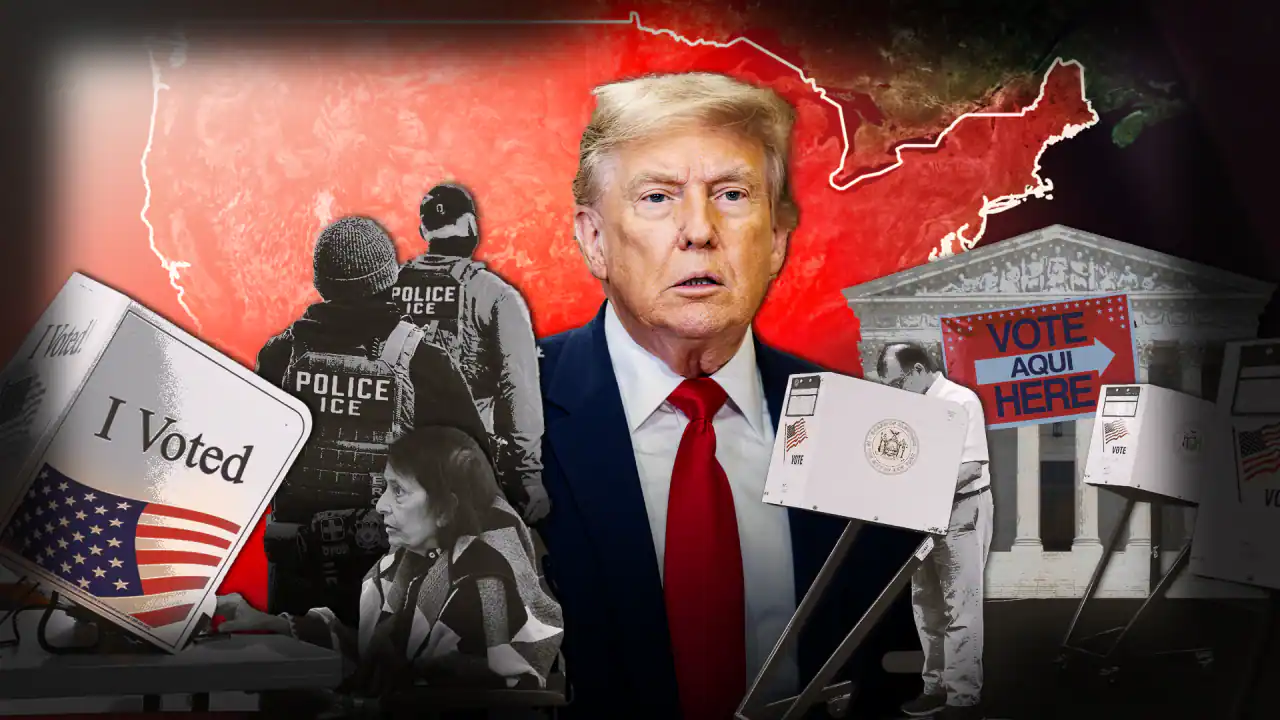
Early Voting Underway in US as Polls Point to Democrat gains and Republican Losses in Congress, How will Trump manage?

In-person early voting for the 2026 U.S. midterm elections is now already underway in several states, with the nationwide vote set for November 3. The contests will decide control of both the House of Representatives and the Senate, where Republicans currently hold majorities. With roughly 30 days remaining, national polls and election forecasts show Democrats positioned to gain ground, potentially flipping one or both chambers amid voter concerns over the cost-of-living crisis, the ongoing war involving Iran, and President Donald Trump’s immigration enforcement policies.
National Mood Favors Democrats
Recent polling averages place Democrats ahead on the generic congressional ballot by approximately 7 to 9 percentage points. One aggregator updated on October 4 showed Democrats at about 49.3 percent to Republicans’ 41.9 percent. Other trackers, including those from Silver Bulletin and similar outlets, have recorded Democratic leads in the range of 8 to 9 points in recent weeks, with some individual surveys of likely voters showing double-digit advantages.
President Trump’s job approval rating stands near 37 percent, with disapproval around 60 percent. Large majorities of voters also say the country is on the wrong track. These figures create the kind of national environment that has historically favored the party out of the White House during midterm elections.
House Outlook Strong for Democrats
Republicans currently hold a narrow majority in the House. Democrats need a net gain of roughly five seats to reclaim control. Forecasts and race ratings describe a Democratic takeover of the chamber as highly likely. Analysts have shifted multiple competitive districts toward Democrats in recent weeks, with projected net gains ranging from 5 to 15 seats in many models. Prediction markets have assigned Democratic House control probabilities well above 90 percent in some recent snapshots.
While redistricting and polarization limit the number of true toss-up seats, the broad national trend is expected to produce Democratic pickups in enough districts to change the balance of power.
Senate Remains Competitive
The Senate presents a steeper climb. Republicans hold 53 seats, meaning Democrats need a net gain of four to secure an outright majority (a 50-50 split would leave Republicans with the edge via the vice president’s tie-breaking vote). Democrats have become competitive in several states that Trump carried by double-digit margins in 2024.
Recent New York Times/Siena polls found Democratic candidates leading or essentially tied in Texas, Alaska, Ohio, Iowa, and Kansas. Other closely watched contests include Maine and North Carolina. Forecast models currently rate Democratic chances of taking the Senate between roughly even and a modest advantage, depending on the source.
How Democrats Are Pushing — and the Points Where They Are Gaining
Democrats have centered their midterm campaign almost entirely on affordability and the cost of living. Party leaders, including House Minority Leader Hakeem Jeffries and Senate Minority Leader Chuck Schumer, repeatedly emphasize high prices for groceries, gasoline, housing, energy, and everyday goods. They argue that Trump administration policies including tariffs and the prolonged conflict with Iran have driven costs higher, breaking campaign promises to lower prices quickly.
The war involving Iran has become a major Democratic attack line, framed less as pure foreign policy and more as an economic burden. Candidates in battleground states highlight rising gas and diesel prices, higher fertilizer costs for farmers, and the broader impact on household budgets.
Many ads and speeches call the conflict a “war of choice” that has failed to deliver clear benefits while raising living expenses.On immigration, Democrats are more cautious. Some candidates criticize aggressive enforcement tactics and what they describe as overreach that disrupts local economies. However, the party has largely kept the focus on kitchen-table economics.
A notable shift this cycle is the rise of anti-establishment and anti-corruption messaging. Many Democratic candidates are running ads that criticize “both parties,” portraying themselves as outsiders willing to stand up to Washington. Some have also worked to distance themselves from progressive cultural issues or publicly affirmed support for capitalism.
How Republicans Are Approaching the Elections — and What Trump Is Doing
Republicans are largely on defense, relying on a significant financial advantage and efforts to shift the conversation away from current economic pain. Party committees and allied groups have reserved roughly $1 billion in advertising from September through Election Day, outspending Democrats. Much of that money targets competitive House and Senate seats, with heavy emphasis on football broadcasts to reach male voters. Ads frequently focus on taxes, crime, border security, and cultural issues, while reminding voters why they rejected Democrats in 2024
On the cost-of-living crisis and the Iran war, Republicans acknowledge high gas and diesel prices but argue they are temporary and tied to the conflict in the Strait of Hormuz. Some vulnerable candidates in Iowa, Ohio, Michigan, and elsewhere have broken with the administration by calling for a quick end to the war so prices can fall.
Leadership figures, including House Speaker Mike Johnson, have said prices will drop once shipping lanes stabilize, with some pointing to a possible resolution after the election. The party has also tried to play limited offense by targeting Democratic-held seats in areas Trump won in 2024, though the bulk of spending remains defensive
US President Trump has taken a highly visible and personal approach. He has urged Republican candidates and voters to “pretend that I’m on the ballot,” framing the midterms as a referendum on his presidency. In September he held an unusual midterm convention centered on himself and promised aggressive campaigning in about 35 key races. His super PAC, MAGA Inc., and related groups have poured more than $100 million into advertising to support Republican candidates.
In early October, Trump launched a multi-state travel blitz, beginning in reliably Republican territory such as Texas, Oklahoma, and Alabama. Advisers have indicated that visits to the closest swing districts can be a net negative for candidates trying to win moderate voters, so the schedule prioritizes base turnout and safe areas while still aiming to influence nearby competitive races through media coverage.
Trump has repeatedly blamed the party’s difficulties on poor “public relations” and messaging rather than policy results, insisting the administration is performing strongly but has failed to sell its achievements. He continues to defend the Iran war as necessary and has suggested it could conclude shortly after the election.
Some Republican candidates have quietly distanced themselves from Trump or specific administration policies, while others fully embrace his involvement. The overall Republican strategy depends heavily on high base turnout, massive ad spending, and attempts to reframe the race around Democratic shortcomings rather than the current economic and foreign-policy environment.
Issues Driving Voter Decisions
Voters are focusing on three primary concerns. The cost-of-living crisis continues to dominate discussions, with pressure from prices for food, fuel, and housing. The prolonged conflict involving Iran has affected energy markets and become a campaign issue. Trump’s aggressive immigration enforcement, including expanded deportation efforts, remains polarizing, with supporters citing security benefits and critics pointing to labor and economic impacts.
Early voting began in states including Virginia, Minnesota, South Dakota, and Idaho in mid-September and is expanding across the country through October. Mail ballots are also circulating widely. Turnout patterns in the early period will be closely monitored for clues about the final outcome which will decide whether Trump and the Republicans continue their control over Congress and Senate or the Democrats finally dislodge their opponents and manage to seriously damage Trump’s plans.