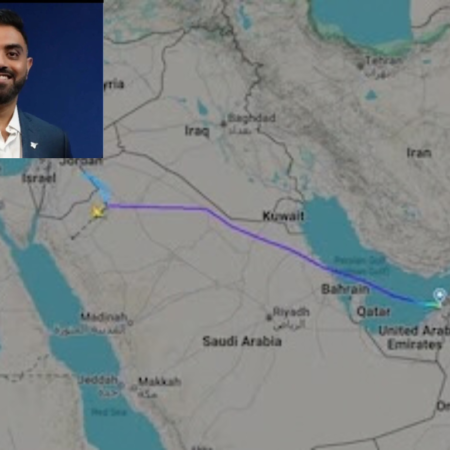

A 24-year-old Sri Lankan migrant worker is facing the death penalty in Saudi Arabia after an appellate court reportedly escalated his punishment over a Facebook comment deemed insulting to Islam and the Prophet Muhammad.
The case involving Anojan Sivarasa has triggered concern in Sri Lanka and prompted diplomatic efforts to secure clemency. His family has appealed for mercy, while religious leaders, political figures and civil society groups have urged the Sri Lankan government to intervene.
Sivarasa, who was working in Saudi Arabia, was initially sentenced by the Al-Ahsa Criminal Court on July 15 to five years in prison and a fine of 3 million Saudi riyals under Saudi Arabia’s Anti-Cyber Crime Law.
His case subsequently took a dramatic turn when prosecutors sought to have him prosecuted under Sharia law. An appellate court later increased the punishment to the death penalty, according to reports.
Facebook dispute led to arrest
The case reportedly originated from a social-media dispute in Sri Lanka.
In late June, a video showing a Muslim man kicking a dog during an incident involving Hindu pilgrims circulated on social media and triggered a heated exchange between users. During the online argument, derogatory remarks were allegedly posted about a Hindu deity.
Sivarasa responded in Tamil with a comment insulting the Prophet Muhammad. According to reports, he subsequently deleted the comment and issued an apology.
However, screenshots of the post were reportedly sent to his employer and Saudi authorities. His employer notified Saudi authorities, after which Sivarasa was arrested in July.
His electronic devices were seized and his social-media accounts were reportedly deleted.
Sivarasa’s brother, Hamsidan Sivarasa, told BBC Sinhala that people in Sri Lanka had contacted his brother’s employer regarding the post.
Family loses contact with him
Sivarasa’s family has expressed growing concern after losing contact with him.
His mother, Rasamanickam Yogalakshmi, made an emotional appeal for mercy.
“I plead for mercy for the wrongs committed by my son. Please forgive him and send him back to us,” she said, according to BBC Sinhala.
The Sri Lankan government has reportedly advised the family to refrain from making further public statements while diplomatic efforts are underway.
Sri Lankan President Anura Kumara Dissanayake met Sivarasa’s family on September 21 and assured them that the government would make every effort to obtain a pardon.
Sri Lanka’s Foreign Ministry has also confirmed that it is taking steps to assist the migrant worker.
Hindu group seeks India’s intervention
The case has also drawn attention in India.
Hindu Munnani, a Hindu organisation in Tamil Nadu, submitted a petition at the Sri Lankan Deputy High Commission in Chennai seeking intervention to prevent Sivarasa’s execution.
The organisation has also sought assistance from the Indian government.
According to the group, the social-media dispute began after derogatory remarks were allegedly made about Lord Shiva. Sivarasa responded to the remarks, after which the exchange allegedly escalated into comments concerning the Prophet Muhammad.
Hindu Munnani said Sivarasa had subsequently issued a public apology but was nevertheless imprisoned and fined.
The organisation has urged authorities to seek a stay or revocation of the death sentence.
Sri Lankan legal team heads to Saudi Arabia
A four-member Sri Lankan legal delegation is reportedly travelling to Saudi Arabia to meet Sivarasa’s local defence lawyers.
The delegation plans to discuss the case with two Saudi law firms representing him and determine what legal options remain.
Sri Lankan authorities are simultaneously pursuing diplomatic channels with Saudi Arabia in an effort to secure clemency.
The case has also received support from religious leaders across communities. Senior Buddhist leaders from the Ramanna Nikaya and Amarapura Maha Nikaya, alongside Hindu religious leaders, have submitted a memorandum to the Sri Lankan Presidential Secretariat calling for urgent intervention.
Concerns over punishment for online speech
The case has renewed scrutiny of Saudi Arabia’s treatment of online speech and severe penalties imposed for social-media activity.
Human rights organisations have previously raised concerns over the use of harsh sentences in cases involving online expression.
In 2023, Saudi citizen Mohammed bin Nasser al-Ghamdi was sentenced to death over social-media posts. The death sentence was subsequently overturned and replaced with a 30-year prison sentence, according to Saudi human-rights organisation ALQST.
Executions for blasphemy are considered relatively uncommon compared with executions related to offences such as murder and drug crimes, although rights organisations have continued to raise concerns about the use of the death penalty.
Saudi Arabia is also home to more than 10 million foreign workers, according to the International Organization for Migration. Rights groups have highlighted the particular vulnerabilities faced by migrant workers, including language barriers and difficulties obtaining effective legal representation.
For Sivarasa’s family, however, the immediate priority is preventing his execution.
With diplomatic and legal efforts now underway, the family is seeking a pardon from Saudi authorities and hoping that the death sentence will ultimately be revoked.