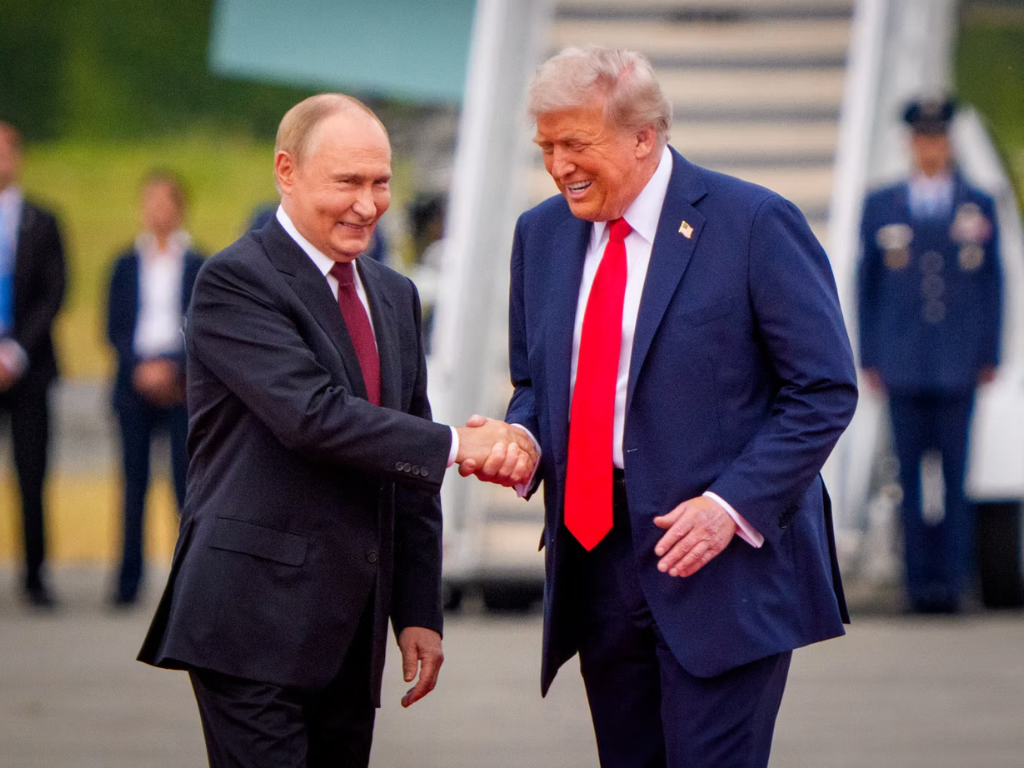
After slapping Tariffs on Half the World for Buying Russian Oil, Trump Strikes Diesel Deal with Putin as Zelenskyy Calls It ‘Gift to Putin’

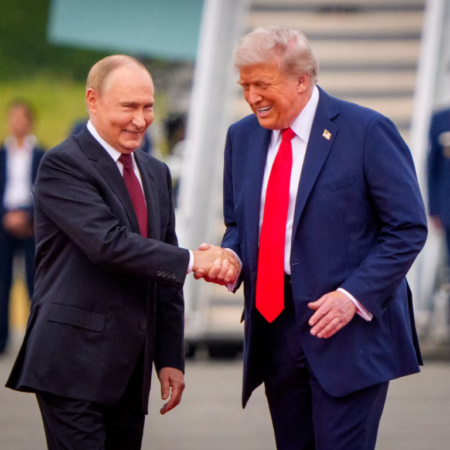
US President Donald Trump announced Friday that he has reached an agreement with Russian President Vladimir Putin for Russia to supply more than 4 million tons of diesel fuel to the U.S. and global markets, a dramatic shift aimed at lowering soaring fuel prices ahead of the November midterm elections.
In a Truth Social post, Trump said the deal followed a “highly successful” phone call. Russia will immediately supply more than 300,000 tons of diesel, followed by 500,000 tons in November and 1 million tons shortly thereafter. An additional 3 million tons would follow based on the condition of Russia’s refineries, which have been heavily damaged by Ukrainian attacks. Trump predicted the move, combined with U.S. “total control” of the Strait of Hormuz, would drive diesel prices down “in record numbers, and fast,” prioritizing relief for American farmers, ranchers, and truckers.
The U.S. Treasury Department moved quickly to facilitate the arrangement, issuing a temporary general license that waives sanctions on Russian diesel through April 2027. The license authorizes transactions involving the sale, delivery, offloading, and importation of Russian-origin diesel.
Ukrainian President Volodymyr Zelenskyy immediately condemned the deal. In a social media post, he warned that easing sanctions without a firm Russian commitment to de-escalate would only prolong the war. “Gifts to Putin will not bring peace or any benefit to the civilized world,” Zelenskyy wrote. “Russia will ‘repay’ the diesel with further terror and perfidy. Allowing Russia to sell petroleum products is an investment in a war that must be ended, not prolonged.” He called for reciprocal de-escalation rather than unilateral relief for Moscow.
Diesel prices have surged globally as Ukraine has pounded Russian refineries, prompting Moscow to ban diesel exports. Attacks by Iran and its Houthi allies on Middle Eastern refineries have further constrained supplies. The U.S. national average diesel price recently hovered near record highs around $6.28 per gallon, according to AAA data, squeezing farmers and the trucking industry.
Trump faces mounting political pressure to act on fuel costs before the midterms. Republicans are defending competitive seats in agricultural strongholds such as Iowa, where high diesel prices are hitting farmers hard. Options remain limited given the destruction of global refining capacity from the wars in Eastern Europe and the Middle East.
Last month, Trump considered a diesel export ban but backed off after warnings from the oil industry and businesses that it would raise gasoline prices. Earlier this week, he issued an executive order allowing truckers to use tax-exempt off-road diesel on highways without immediate federal penalties, though the order only defers the tax obligation and has created uncertainty about potential future payments.
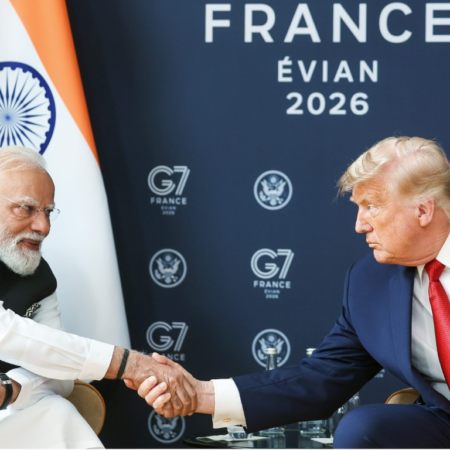
The diesel deal has drawn sharp criticism for appearing inconsistent with prior U.S. policy. Trump had previously pushed aggressive tariffs—including proposals for 100% tariffs on India and China—for purchasing Russian oil, and supported measures targeting countries buying Russian energy. Critics, including commentary circulating on social media, highlighted the contrast of now striking a direct energy deal with Moscow while having penalized other nations for similar purchases.
A Russian envoy welcomed the cooperation as beneficial for global energy markets. Analysts have noted that the announced volumes, while helpful in a tight market, represent a limited share of global diesel demand and may not produce dramatic price drops on their own.
The announcement underscores the complex trade-offs facing the Trump administration as it balances domestic economic pressures, ongoing support for Ukraine, and relations with Russia.
War Without a Front Line