War Without a Front Line

The battle lines of modern warfare have dissolved. For centuries, conflict was defined by geography, uniformed armies and clear declarations of state intent. Today the battlefield is everywhere: in the circuitry of a cheap drone, in the cockpit of a commercial airliner, in underground tunnel networks, and in the currency that underpins global energy markets. This is an age of decentralised, asymmetric and omnipresent conflict.
To grasp how far the rules of engagement have changed, consider four threads: a disturbing incident aboard a flight in the Middle East, the limits of drone warfare in the Himalayas, Iran’s survival strategy against American airpower, and the shifting foundations of the global economy. For India, surviving this reality demands a strategy that joins technological innovation, geographic realism and human resilience.
The Weaponisation of the Everyday
The new face of terror and war no longer depends solely on marginal fighters or massive hardware. It depends on access.
Take the recent incident aboard Flydubai flight FZ1073 from Dubai to Tel Aviv. Mid-flight, the aircraft’s transponder flashed a hijack code before reverting to a general emergency signal. The co-pilot, a licensed professional with high-level clearance, allegedly attacked the captain in an attempt to bring the aircraft down.

This was not a conventional military strike, yet it came just as regional wars were escalating, and it blurred the line between crime, terrorism and state-linked violence. When a trained insider can turn a cockpit fire axe, a tool built for safety, into an instrument of mass casualties, traditional security thinking breaks down. Aviation now faces a reckoning on the scale of 9/11. Screening passengers will not be enough. Security will increasingly rest on rigorous background vetting, continuous scrutiny of crew, and careful decisions about who flies together. The frontline is no longer a border. It is the vetting of civilian professionals.
High Tech Meets High Altitude
The same blurring of lines is reshaping the battlefield. We are told endlessly that cheap, disposable drones have made the tank, the fighter jet and the infantryman obsolete. That story ignores the great equaliser: geography.
Swarms of $25,000 drones can drain stockpiles of multimillion-dollar interceptors in the deserts of the Middle East or the plains of Ukraine. But technology cannot cheat physics.

India’s principal security challenges lie along the Himalayas, from Jammu northward to the Siachen Glacier and eastward into Arunachal Pradesh. There, terrain dictates reality. A drone that lifts a heavy payload at sea level may carry only a fraction of it in the thin, freezing air of Siachen. High winds, poor visibility and dense jungle blunt technological advantage. In mountain warfare, where defenders hold a formidable natural edge, nothing substitutes for boots on the ground. Technology can augment the soldier, but in the high mountains it cannot replace him.
Iran’s Mosaic Doctrine
If technology alone cannot guarantee victory, how do combatants survive overwhelming conventional power? They decentralise.

Consider Iran’s confrontation with the United States and Israel. After the 1991 Gulf War showed what American airpower could do to exposed targets, Tehran moved much of its military underground, building command centres and facilities deep enough to be beyond the reach of even the heaviest bunker-busting munitions.
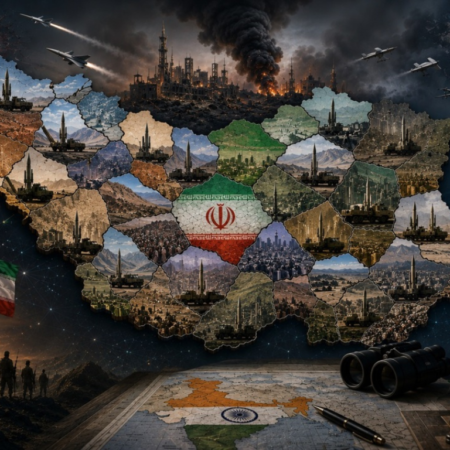
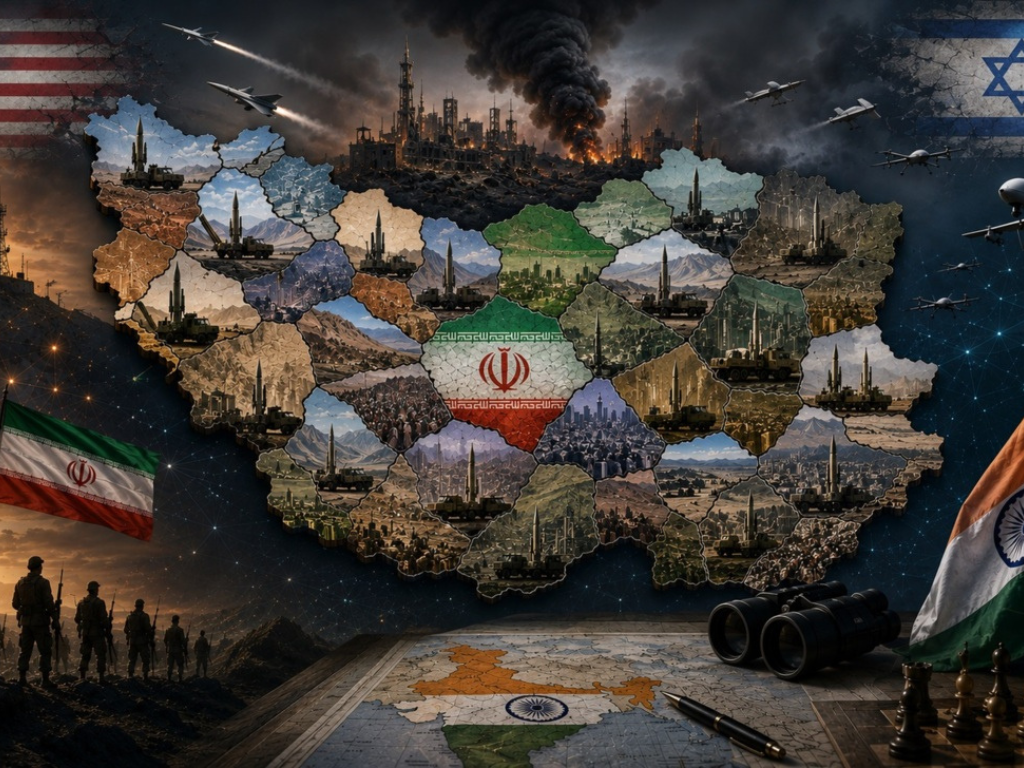
It then developed what is known as the “Mosaic Doctrine”. Assuming its top leadership would be struck on the first day of a major war, Iran divided its forces into 31 provincial commands, each with standing orders and the authority to fight without waiting for instructions from the centre. The result is 31 localised forces fighting a single, centrally designed war.
The logic mirrors that of the rogue insider: a decentralised structure sidesteps decapitation, just as the co-pilot sidestepped airport security. It also frustrates technologically superior adversaries whose own aims shift, from regime change to merely keeping shipping lanes open, and whose planning suffers as a result.
The Economic Aftershocks
Decentralised warfare inevitably spills into the global economy. Unable to match the US Navy ship for ship, Iran built what amounts to a navy of choke points, turning the Strait of Hormuz, through which roughly a fifth of the world’s oil passes, into a strategic vise.

This weaponisation of geography strains the foundations of the global economic order. The 1970s bargain that priced Gulf oil in dollars in exchange for American security guarantees is under pressure. With Hormuz threatened and the Bab-el-Mandeb at risk, a vacuum has opened. Beijing is well placed to fill it, offering Gulf states security assurances without demanding bases and gradually nudging the oil trade towards the yuan. The petrodollar’s long dominance may not survive.
For India, which imports about 85 percent of its crude, this new Great Game is a profound vulnerability. A Gulf disruption is not only a military problem. It means a weaker rupee, imported inflation, pressure on food security and millions of Indians abroad caught in a war zone.
Hold the Ground, Make at Home
Meeting this challenge requires a firm commitment to hard power and self-reliance. Diplomacy matters, but it carries weight only when backed by indigenous strength.
India must complete its shift from one of the world’s largest arms importers to a self-sufficient supplier. Progress is real: private firms are entering the fifth-generation AMCA fighter programme, artillery and transport aircraft are being built at home, and defence exports are rising alongside deeper international partnerships.
The transition must now accelerate. If Indian-origin executives can lead the world’s largest technology companies, the same talent should be given the incentives, and the sustained research funding, to design and build critical defence technologies in India.
Whether the threat is a drone swarm, a decentralised enemy command or an economic blockade, the decisive factor in every crisis is human. On that Flydubai flight, disaster was averted not by a sophisticated security algorithm but by ayoung child who heard a commotion and alerted her mother, setting off a chain of civilian courage.
Machines, drones and algorithms will shape the battlefields to come. But the people behind them, with their training, resilience and instinct, will decide who survives. War has come home, and India must be ready on every front.