Ukraine’s decision to dismantle and transfer much of its inherited Soviet-era military arsenal is emerging as one of the most consequential strategic choices in its modern history. In the 1990s, Kyiv surrendered its nuclear warheads and dismantled or transferred strategic bombers and missiles under international disarmament agreements. Three decades later, as Russia continues its military campaign against Ukraine, those decisions have acquired a troubling significance.
The controversy is not merely about Ukraine giving up nuclear weapons. It is also about what happened to the conventional military platforms that accompanied its nuclear inheritance, including strategic bombers capable of launching devastating cruise-missile attacks. According to a 2024 investigation by Ukrainian outlet Skhemy, six of the eight Tu-160 bombers transferred to Russia remained operational and were involved in military operations against Ukraine.
If these findings are accurate, they highlight an extraordinary strategic irony: military assets once stationed on Ukrainian territory became part of the arsenal used by Moscow against the country that surrendered them.
Ukraine’s Soviet Inheritance
The dissolution of the Soviet Union in December 1991 left Ukraine with an enormous military inheritance. Alongside its industrial infrastructure and conventional armed forces, the country hosted thousands of Soviet nuclear warheads, intercontinental ballistic missiles, cruise missiles and strategic bombers.
Ukraine inherited approximately 1,900 strategic nuclear warheads, alongside a substantial inventory of delivery systems. Its strategic aviation assets included Tu-95MS and Tu-160 bombers, while its missile arsenal included SS-19 and SS-24 intercontinental ballistic missiles and Kh-55 air-launched cruise missiles.
On paper, this inheritance made Ukraine one of the world’s largest nuclear-armed territories after the Soviet collapse. However, possessing nuclear weapons was not the same as having a fully independent, sustainable nuclear deterrent. Command arrangements, technical maintenance, warhead management and control over the broader nuclear infrastructure complicated Kyiv’s position.
Nevertheless, Ukraine possessed significant military assets that could have shaped its long-term security posture.
Washington and Moscow, despite their Cold War rivalry, shared a strong interest in preventing the proliferation of nuclear weapons across the newly independent Soviet republics. Ukraine consequently faced considerable international pressure to relinquish its nuclear inheritance and join the global non-proliferation framework.
The Budapest Memorandum and the Disarmament Decision
On December 5, 1994, Ukraine, Russia, the United States and the United Kingdom became parties to the political commitments recorded in the Budapest Memorandum. Ukraine agreed to accede to the Nuclear Non-Proliferation Treaty as a non-nuclear-weapon state, while the other signatories provided security assurances concerning its sovereignty, existing borders and independence.
The agreement became a defining moment in Ukraine’s post-Soviet security policy.
Under related arrangements, including the Lisbon Protocol to the START I treaty and the US-funded Cooperative Threat Reduction programme, Ukraine proceeded with nuclear disarmament and the elimination of strategic delivery systems.
At the time, Kyiv faced serious economic difficulties. Maintaining an extensive Soviet-era military infrastructure was expensive, while the country was struggling with financial instability, industrial disruption and energy dependence.
Disarmament offered diplomatic integration, economic assistance and the prospect of a more stable relationship with the international community. Yet the long-term security implications of surrendering so much military capacity were difficult to predict.
The central problem was that security assurances and a robust military deterrent were not interchangeable. The Budapest Memorandum did not provide Ukraine with an automatic collective-defence guarantee equivalent to NATO’s Article 5.
Russia’s annexation of Crimea in 2014 and its full-scale invasion in February 2022 subsequently exposed the limits of the security arrangements on which Kyiv had relied.
How Ukraine Lost Its Strategic Bombers
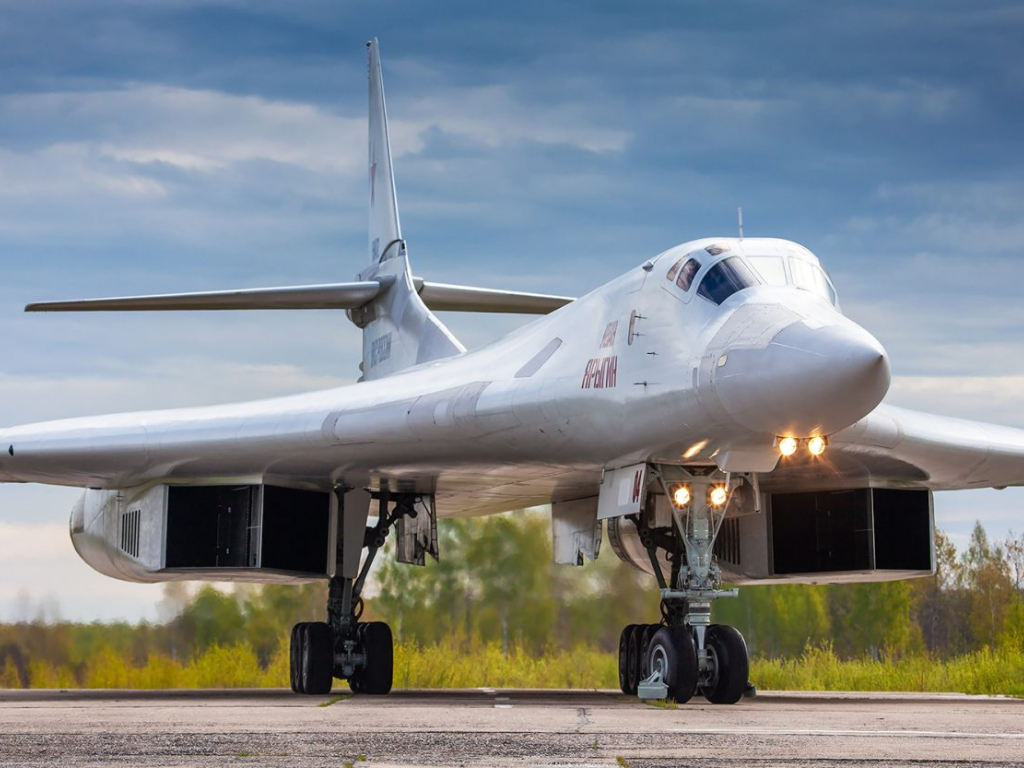
Ukraine’s strategic aviation inheritance was particularly significant. Soviet forces had stationed Tu-95MS bombers at Uzin, south of Kyiv, and Tu-160 supersonic strategic bombers at Pryluky.
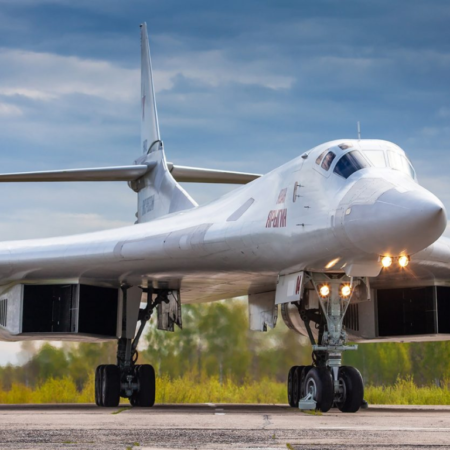
The Tu-160, known to NATO as the Blackjack, was designed for long-range missions and could carry nuclear or conventional cruise missiles. Its range, speed and substantial payload made it one of the most formidable strategic aircraft in the Soviet inventory.
Following independence, Ukraine assumed control of strategic aviation units based on its territory. However, retaining these aircraft required substantial resources, technical expertise, maintenance infrastructure and a sustainable defence budget.
Kyiv ultimately transferred some bombers to Russia as part of arrangements connected to its natural-gas debt. According to the figures cited in the report, Ukraine transferred eight Tu-160s and three Tu-95MS bombers in exchange for approximately $285 million in debt relief. Between 1999 and 2000, additional aircraft and 575 Kh-55 cruise missiles were transferred as partial payments against gas debts.
The transactions remain controversial because of the strategic value of the aircraft involved. The immediate economic benefit had to be weighed against the permanent loss of military capabilities that Ukraine could no longer readily replace.
The United States also financed the destruction of strategic bombers and missile systems under the Cooperative Threat Reduction programme. These efforts were intended to reduce the risks associated with post-Soviet weapons proliferation and implement disarmament commitments.
However, the resulting military balance was not neutral in its long-term consequences. Some aircraft were destroyed, while others were transferred to Russia, strengthening the inventory of a country that would later become Ukraine’s principal military adversary.
The Strategic Irony of the War
Russia’s use of strategic bombers to launch cruise missiles against Ukraine has brought renewed attention to the earlier transfers.
The reported finding that six transferred Tu-160 bombers remained operational in 2024 raises a difficult question: could Ukraine have preserved more of its conventional military strength while still meeting its nuclear non-proliferation obligations?
The distinction matters. Nuclear disarmament did not necessarily require Ukraine to surrender every conventional capability associated with its Soviet inheritance. Strategic bombers could carry conventional weapons, and their military utility extended beyond nuclear missions.
A different policy might have involved retaining selected aircraft, negotiating more favourable financial arrangements or investing in a smaller but sustainable long-range aviation capability. Such options would have carried significant financial, technical and diplomatic challenges, but they illustrate the choices that confronted Kyiv.
It would be simplistic, however, to assume that retaining the entire Soviet arsenal would automatically have prevented Russia’s aggression. Ukraine inherited a fragmented military-industrial system, faced severe economic constraints and lacked complete independent control over every component of its nuclear forces. Maintaining a credible deterrent would have required far more than simply keeping aircraft and missiles.
Yet the broader lesson remains compelling: disarmament decisions must account not only for immediate diplomatic gains but also for future strategic uncertainty.
A Lesson for Ukraine’s Future Security
Ukraine’s experience has wider implications for countries negotiating arms-control agreements or contemplating military reductions in exchange for security assurances.
International agreements can reduce proliferation risks, but their effectiveness also depends on credible enforcement, clear consequences for violations and arrangements that remain meaningful when geopolitical circumstances change.
The Budapest Memorandum demonstrated the limitations of political assurances when confronted with a major military power willing to violate the sovereignty of a signatory. Ukraine’s subsequent experience has strengthened arguments that states facing existential security threats must carefully distinguish diplomatic commitments from enforceable defence guarantees.
The current debate over possible ceasefire arrangements adds another dimension. Any proposal that restricts Ukraine’s armed forces must be assessed against the country’s future ability to deter renewed aggression. Limits on military personnel, missile capabilities, air defence or long-range strike systems could have lasting consequences if they are not accompanied by credible security mechanisms.
Ultimately, Ukraine’s post-Soviet disarmament was shaped by the realities of its time: economic distress, international non-proliferation priorities and the hope that cooperation with major powers would secure its independence. Judging those choices solely through the lens of today’s war risks overlooking the constraints facing its leaders in the 1990s.
Nevertheless, history has exposed the dangers of assuming that a favourable international environment will endure indefinitely.
Ukraine’s lost bombers have become a symbol of that strategic dilemma. The lesson is not that every country should retain nuclear weapons, nor that disarmament is inherently misguided. It is that military reductions must be accompanied by a realistic assessment of future threats and security arrangements capable of surviving political change.
For Kyiv, the challenge today is to ensure that any future agreement preserves the military strength necessary to defend its sovereignty. For the wider international community, Ukraine’s experience offers a stark reminder that security assurances can lose their value when they are not backed by credible mechanisms to deter aggression.