Ukraine Claims Russia’s Su-57 Fighter Jet Exploded During Engine Startup, Cites Possible Fuel Quality Issues

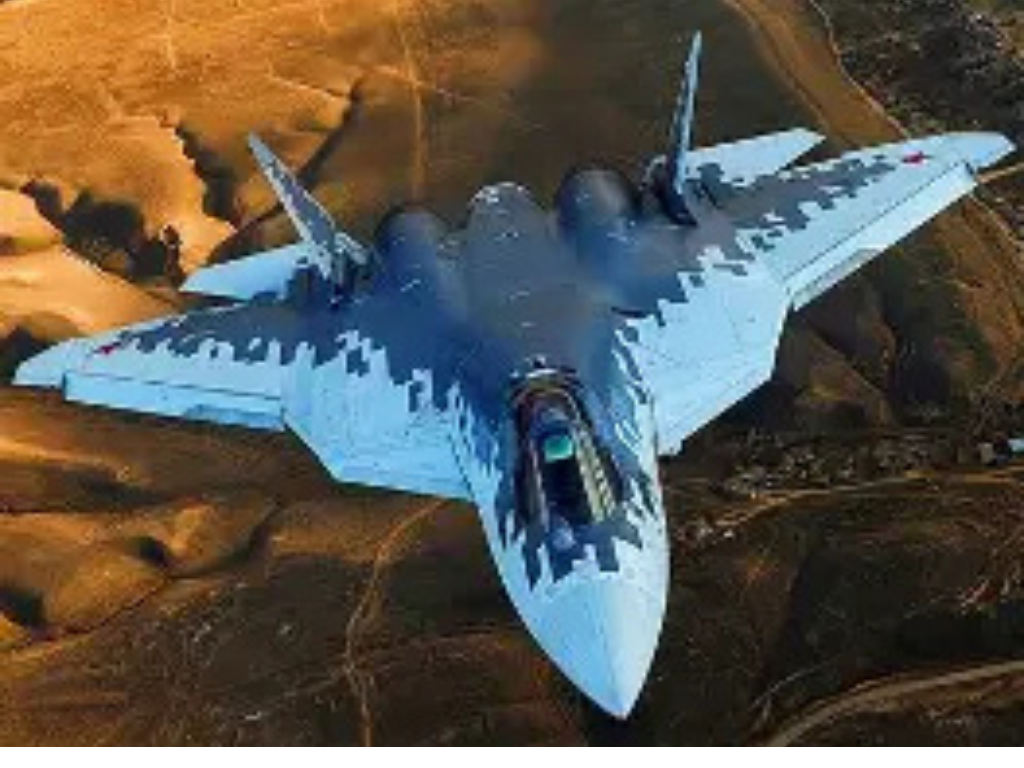
Ukraine’s military intelligence agency, known as HUR, has claimed that a Russian Sukhoi Su-57 fifth-generation fighter jet was damaged in an explosion during engine startup at Akhtubinsk airfield in Russia’s Astrakhan Oblast on October 29.
In a statement published on November 2, HUR alleged that the aircraft caught fire during the startup process and suggested that deteriorating aviation fuel quality could have contributed to the incident. The agency linked the possibility to Ukrainian long-range drone strikes targeting Russian oil refineries and disrupting domestic fuel production.
However, the alleged cause of the incident has not been independently verified. Russia’s Defence Ministry has not publicly confirmed the reported damage to the aircraft or attributed it to fuel quality issues.
According to HUR, the Su-57 involved in the incident is equipped with the AL-41F1 turbofan engine, also known as Product 117. The agency argued that inadequate fuel quality could be one of the factors behind a catastrophic engine failure.
HUR estimated the cost of the aircraft at approximately $150 million, although the actual cost of individual Su-57 aircraft is difficult to establish publicly.
Ukraine Links Su-57 Incident to Russia’s Aviation Fuel Challenges
The latest allegation comes amid Ukrainian efforts to disrupt Russia’s military logistics and energy infrastructure through long-range drone attacks on oil refineries and other strategic facilities.
In August, HUR claimed that Russia was becoming increasingly dependent on imported aviation fuel as strikes affected domestic jet fuel production. The agency also pointed to Russian efforts to secure fuel supplies through maritime imports, including shipments associated with India’s Vadinar refinery, operated by Nayara Energy.
Russia’s Rosneft holds a 49.13% stake in Nayara Energy, while Kesani Enterprises and related investors, including Russia’s United Capital Partners, hold another 49.13%.
The European Union has described the Vadinar facility as the largest Rosneft refinery in India.
These connections have brought attention to the role of international energy supply chains in sustaining Russia’s military operations. Nevertheless, there is no independently verified evidence establishing that fuel imported from India was involved in the reported Su-57 incident.
HUR’s suggestion that poor-quality fuel may have contributed to the alleged explosion remains an unverified claim. Establishing the cause would require technical evidence, including information about the aircraft’s engine condition, fuel composition and maintenance history.
Previous Ukrainian Strikes on Su-57 Fighter Jets
The October incident follows several reported attacks and accidents involving Russia’s Su-57 fleet, one of the country’s most advanced combat aircraft.
In June 2024, Ukrainian intelligence claimed that drones struck Su-57 aircraft at Akhtubinsk airfield, located approximately 600 kilometres from the front line.
HUR released before-and-after satellite imagery that it said showed blast damage and burn marks near a parked aircraft. The agency described the attack as the first known strike against a Su-57.
HUR spokesperson Andriy Yusov subsequently said that one aircraft had sustained significant damage, while another suffered lighter damage and might be repairable.
A Russian military-linked Telegram channel, Fighterbomber, also acknowledged a Ukrainian drone attack on the airfield. It reported that a Su-57 had been damaged by shrapnel and that Russian authorities were assessing whether the aircraft could be restored.
The incident demonstrated the potential vulnerability of even advanced combat aircraft when parked at airbases within the reach of long-range drones.
In April 2026, Ukraine’s General Staff and the commander of its Unmanned Systems Forces reported another attack involving Russian Su-57 and Su-34 aircraft at Shagol airfield in the Chelyabinsk region.
Ukraine’s Unmanned Systems Forces published a statement accompanied by satellite imagery and said that targeting the aircraft was important for reducing Russia’s ability to conduct long-range strikes.
The Su-34 is a major Russian strike platform capable of carrying guided bombs and missiles, while the Su-57 is designed to combine advanced sensors, low-observable characteristics and multirole combat capabilities.
Russian authorities acknowledged drone activity in the Chelyabinsk region on April 25 but did not confirm that any aircraft had been destroyed or damaged.
Su-57 Crash Reported During Training Flight
Another incident involving a Su-57 was reported on July 23, 2026, when a Russian military aircraft crashed during a training flight in the Moscow region.
Russia’s Defence Ministry said that a training and combat aircraft had crashed in an unpopulated area and that the pilot had ejected safely. The ministry did not identify the aircraft type in its initial statement.
However, Russian media outlet Kommersant, citing an unidentified source, reported that the aircraft was a Su-57 fighter jet that crashed in the Odintsovo district.
Independent Russian outlet Astra subsequently reported that the crash site was approximately six to seven kilometres from Zvenigorod, near the villages of Lutsino and Shikhovo.
Although the aircraft’s identity was not officially confirmed in the Defence Ministry statement, the reports fuelled speculation about another potential loss involving Russia’s fifth-generation fighter programme.
What the Latest Incident Could Mean for Russia’s Su-57 Fleet
The latest allegation highlights two distinct challenges for Russia: protecting high-value military aircraft from long-range drone attacks and maintaining the quality and reliability of the fuel and technical systems required for advanced combat aviation.
The Su-57 is intended to serve as a key component of Russia’s modern air combat capabilities. Damage to individual aircraft could affect fleet availability, particularly if repairs require specialised components, maintenance facilities or extended technical assessments.
However, the strategic significance of the October 29 incident remains uncertain. There is no independently confirmed assessment of the damage, and the available information does not establish whether the aircraft was destroyed, temporarily grounded or repairable.
The alleged connection between Ukrainian attacks on Russian refineries and the reported engine incident also remains unproven. While disruptions to fuel production can create logistical pressures, a specific engine failure cannot be attributed to fuel quality without supporting technical evidence.
For now, Ukraine’s statement represents an unverified claim about a potential Su-57 loss. Confirmation from Russian authorities, independently verified imagery or additional technical evidence would be needed to determine the extent of the damage and the actual cause of the incident.