Iran thanks India as the Indian Navy Rescues 20 Iranian Sailors from Somali Pirates in the Arabian Sea; what happened?

Iran has thanked India for the Indian Navy’s swift and precise operation in the Indian Ocean to rescue 20 Iranian sailors aboard the fishing vessel Azini from pirates. The Indian Navy, supported by the Air Force, conducted a coordinated 48-hour operation, highlighting India’s maritime security capabilities and humanitarian commitment.
Expressing gratitude for the rescue the official account of the Iranian Embassy posted on X, “The Embassy of the Islamic Republic of Iran in New Delhi expresses its sincere appreciation to the Government of India, the Indian Navy and the Indian Air Force for their successful operation to rescue the 20 Iranian crew members of the fishing vessel Azini from pirates” an official statement read.
“We highly commend the professionalism, courage and effective coordination demonstrated by the Indian Armed Forces, reflecting India’s strong commitment to Humanitarian Assistance and Disaster Relief (HADR) and its role in saving lives beyond borders.”
“This humanitarian operation stands as a testament to the spirit of friendship, solidarity and cooperation between Iran and India.
We extend our sincere gratitude to all those involved in ensuring the safe rescue of the Iranian crew.” the statement read.
What happened? The hijacking of Iranian fishing vessel Azini
The incident began on October 29, 2026, when the Iranian fishing vessel Azini was hijacked by an armed group of Somali pirates off the northeastern coast of Somalia.
According to reports, approximately 12 armed pirates seized the vessel. The hijacking raised serious concerns because the pirates could potentially convert the fishing boat into a so-called mother ship — a mobile base from which they could launch attacks against merchant vessels travelling through the Arabian Sea and nearby international shipping routes.
The situation was particularly concerning because the Arabian Sea connects major commercial shipping routes linking Asia, the Middle East, Europe and Africa.
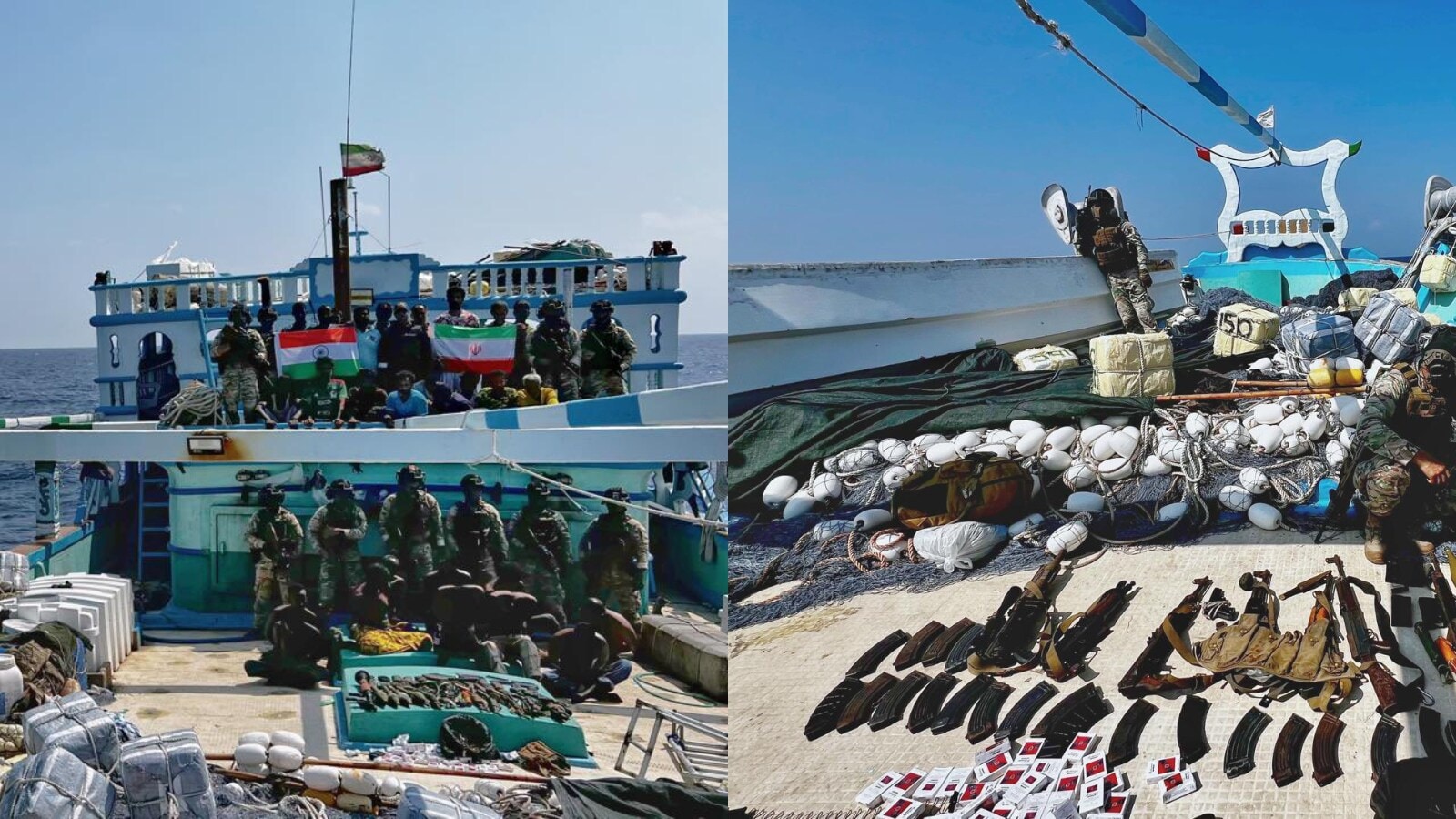
India responded to the threat. According to India’s Ministry of Defence, the Indian Navy launched a coordinated operation lasting more than 48 hours, culminating in the successful rescue of all 20 crew members on November 2, 2026. No casualties or injuries were reported.
Congratulating the Indian Navy on the successful mission, the Defence Minister of India Rajnath Sigh said that the operation demonstrated the force’s high operational readiness and its ability to respond decisively to maritime threats across the region.
In a post on X, Singh said: “My congratulations to #Indian Navy for successfully executing a meticulously coordinated 48-hour operation to rescue all 20 crew members of the pirated fishing vessel, Azini, more than 3000 km from Mumbai in the Arabian Sea, on 02 Nov 26.”
The swift localisation, interception and safe release of the crew and vessel from significantly-armed pirates, with timely support from the Indian Air Force, speak well of the Indian Navy’s high operational readiness and ability to respond decisively to maritime threats across the region,” he added.
Praising the personnel involved, the Defence Minister said: “Our brave personnel have once again demonstrated India’s ability, intent and resolve to safeguard lives, uphold maritime security and ensure stability across the Indian Ocean Region.”
Reiterating India’s commitment to maritime security, Singh also said that the country would continue to work towards ensuring safe seas and a free, open and secure Indian Ocean Region.
How did India rescue the Iranian sailors?
The operation involved multiple branches of India’s armed forces, combining naval surveillance, aerial reconnaissance and specialist marine commandos.
Here is how the operation unfolded:
1. Indian Navy warship deployed
The Indian Navy deployed a mission-ready warship to intercept the hijacked vessel.
According to defence reporting, the warship was INS Kolkata, a Kolkata-class guided-missile destroyer.
2. Aerial surveillance and tracking
The Navy employed maritime reconnaissance assets to locate the hijacked fishing vessel and monitor its movements.
Reports identify the P-8I maritime patrol aircraft and Sea Guardian drone among the surveillance assets involved.
These platforms helped maintain situational awareness over a vast maritime area, allowing the Navy to track the vessel and coordinate its response.
3. Restricting the pirates’ movements
The Navy used what the Ministry of Defence described as calibrated non-kinetic measures to contain the vessel and prevent it from escaping.
This enabled Indian forces to maintain control of the situation while preparing for the rescue.
4. MARCOS commandos brought into action
One of the most significant aspects of the operation was the deployment of Indian Navy Marine Commandos, popularly known as MARCOS.
They were supported by an Indian Air Force C-17 Globemaster III transport aircraft, which carried out a precision airdrop to deploy the commandos.
The commandos subsequently secured the fishing vessel, overcame the pirate threat and freed all 20 crew members.
The operation concluded successfully on November 2, with everyone rescued safely.
India’s growing role as a maritime security provider
India has been conducting anti-piracy operations in the Gulf of Aden and surrounding waters since 2008.
Over the years, the Indian Navy has responded to piracy incidents, escorted merchant vessels and protected international shipping.
One notable example was the March 2024 operation involving the hijacked merchant vessel MV Ruen.
The Indian Navy intercepted the vessel off Somalia, rescued all 17 crew members and secured the surrender of 35 pirates.
The rescue of the Iranian crew aboard Azini adds another significant operation to this record. India’s maritime responsibilities are particularly important because the Indian Ocean is one of the world’s most strategically significant waterways.
The region connects:
– The Persian Gulf and Strait of Hormuz.
– The Arabian Sea and Gulf of Aden.
– The Red Sea and Suez Canal.
– East African ports and international shipping routes.
– South Asia and Southeast Asian maritime trade networks.
Disruptions in these waters can affect international trade, energy supplies and commercial shipping.
India’s ability to maintain a naval presence across these routes therefore has implications beyond its own national security.
Iran and India ties
The Iranian Embassy’s public appreciation is an important diplomatic dimension of the operation.
Iran specifically thanked:
– The Government of India.
– The Indian Navy.
– The Indian Air Force.
The embassy praised the professionalism, courage and coordination of Indian personnel and described the rescue as an example of humanitarian assistance beyond national borders.
This is significant because India and Iran have longstanding diplomatic, economic and strategic connections. However the strong relationship has been strained recently by Iran apparently targeting Indian trade shiptras well as the casualties of Indian seafarers in the region’s militarized situation.
The bigger message: India’s maritime power extends beyond its shores
The rescue of the Iranian sailors aboard Azini sends an important message about India’s evolving role in the Indian Ocean.
India’s maritime strength is not measured only by its aircraft carriers, destroyers, submarines or naval inventory. It is also reflected in its ability to locate a threatened vessel, coordinate multiple military assets, deploy specialist personnel and bring an international rescue operation to a successful conclusion.
The Azini operation demonstrated the value of combining naval power, air power, intelligence, surveillance and rapid-response capabilities.
Most importantly, it showed that maritime security is not exclusively about defending borders. It is also about protecting lives, maintaining freedom of navigation and responding to emergencies in international waters.
Twenty Iranian sailors were brought to safety, a hijacked vessel was recovered, and a potential threat to international shipping was neutralised. India has been looking to streamline the region for smooth trade to continue. However, it is also upto Iran how much collateral damage Tehran can allow in the region, not only damaging its trade but also straining its relations with usually friendly countries like India.