Europe Under Cyberattack: Supermarket Freezers Hacked Across Belgium, Sweden and Multiple Countries – Could the Threat Spread Further?

Europe is facing growing concerns about cybersecurity after a series of suspected cyberattacks disrupted supermarket refrigeration systems in several countries, raising questions about the vulnerability of essential services and the safety of food supply chains.
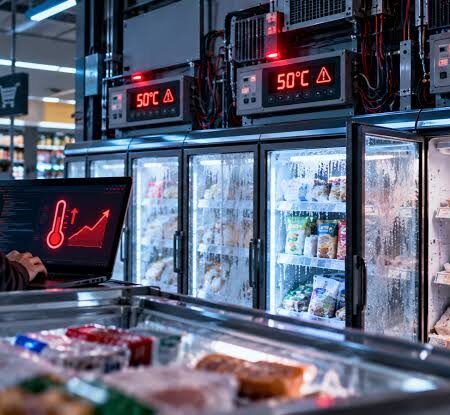
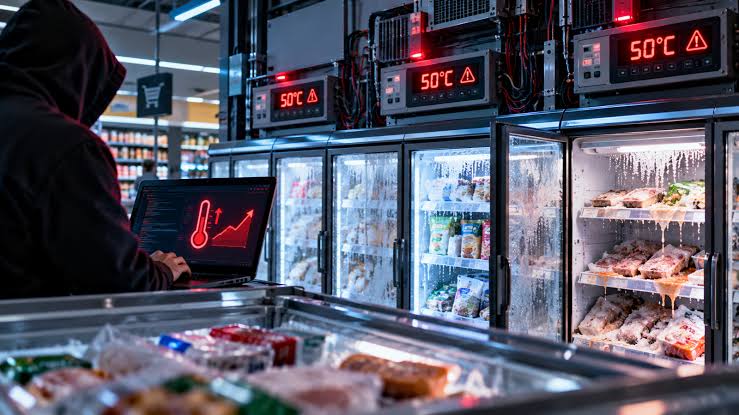
Supermarkets in Belgium, Luxembourg, Sweden and Estonia have reported incidents in which refrigerators and freezers were unexpectedly switched into defrost mode, causing temperatures to rise dramatically. In some stores, temperatures reportedly reached 50°C, threatening thousands of pounds’ worth of fresh and frozen food.
The incidents have raised an uncomfortable question: if hackers can remotely manipulate something as ordinary as a supermarket freezer, what other essential services could be vulnerable?
What exactly happened?
On 2 November, supermarket operators in Belgium and Luxembourg reported problems with their refrigeration systems. Retailers including Delhaize and Colruyt were among those affected.
In Sweden, supermarket chains ICA and Coop also reported refrigeration disruptions. Some stores had to discard spoiled food, while staff worked to restore normal operations.
Similar reports emerged from Estonia. Ireland also reported suspected cyber interference affecting refrigeration systems at 13 SuperValu stores.
The incidents follow a much larger disruption in France in October, when hundreds of supermarkets reportedly experienced attacks targeting refrigeration equipment.
The unusual feature of these incidents is that the hackers apparently did not need to steal customer information or demand a ransom. Instead, they manipulated the machinery responsible for keeping food cold.
Reuters reported that authorities had not identified those responsible and that no group had claimed responsibility.
How can hackers attack a supermarket freezer?
Modern supermarkets rely on digitally connected refrigeration equipment. These systems allow technicians to monitor temperatures, manage energy consumption and control cooling remotely.
However, connecting industrial equipment to networks and remote-access systems creates potential security weaknesses.
Investigations into the French incidents highlighted older refrigeration controllers and software that were exposed to the internet or no longer receiving security updates.
By gaining access to these systems, attackers could reportedly manipulate the defrost function.
Normally, defrosting is a routine process that prevents ice from building up inside refrigeration equipment. But if the function is activated for too long, the freezer can begin warming rather than cooling.
The consequences can be considerable:
– Large quantities of meat, dairy products and frozen food can become unsafe.
– Supermarkets may have to close affected departments or stores.
– Retailers can suffer substantial financial losses.
– Food distribution and supply chains can experience disruption.
This demonstrates that cyberattacks are no longer limited to computers, websites and financial information. They can directly affect physical equipment and everyday economic activity.
What is happening in Europe?
The supermarket incidents are part of a wider European cybersecurity challenge.
Europe’s economy increasingly depends on interconnected digital infrastructure. Transport networks, energy systems, hospitals, manufacturing facilities, warehouses and food distribution centres all use computer-controlled equipment.
The European Union Agency for Cybersecurity (ENISA) has highlighted the continuing risks from ransomware, cybercrime, cyberespionage and politically motivated cyber activity.
The concern is not simply that hackers can steal information. It is that digital vulnerabilities can interrupt services on which millions of people depend.
The supermarket incidents illustrate this problem particularly clearly: a weakness in relatively ordinary industrial equipment can create consequences across several countries.
Could these attacks spread to other European countries?
Similar attacks could occur elsewhere in Europe and there are several reasons for concern.
1. Common technology
Supermarkets in different countries often use equipment from the same manufacturers. If a particular software version or refrigeration controller contains a security weakness, other organisations using the same technology may face similar exposure.
2. Remote access
Refrigeration systems are frequently monitored and maintained remotely. Poorly secured remote connections can create opportunities for unauthorised access.
3. Outdated equipment
Industrial systems can remain in operation for many years. Some older controllers no longer receive security updates, making them more difficult to protect.
4. International supply chains
Supermarket businesses operate across national borders. A cyber incident affecting one company or technology provider can potentially create problems for operations in several countries.
However, this does not mean every supermarket in Europe is compromised or that a continent-wide shutdown is imminent.
What about other nations?
The United States is particularly interesting as there is an important connection.
Reuters reported on 29 October 2026 that the Pentagon was investigating suspicious freezer malfunctions at US military bases.
At one facility in Arizona, refrigeration equipment reportedly entered defrost mode and heated food.
Investigators are communicating with French authorities to understand whether the incidents are connected.
However, investigators have not established that the American and European incidents were carried out by the same attackers.
In the UK, supermarkets, food warehouses and distribution centres depend heavily on automated refrigeration and computer-controlled logistics.
Australian supermarkets use similar digitally managed refrigeration technology. This creates potential exposure, so Does China and many other nations.
In India, the expansion of organised retail, cold-storage facilities, pharmaceutical refrigeration and digitally managed supply chains creates similar cybersecurity considerations.
An attack exploiting a widely used technology could potentially affect businesses in different countries, depending on whether they use vulnerable equipment and how securely their systems are configured.
Is this the beginning of a larger cyberwar?
Authorities have not publicly established who carried out the supermarket attacks, whether the incidents in different countries were coordinated, or what motivated the attackers.
The absence of an identified perpetrator is important. It would be premature to blame a particular country, government or political organisation.
Cybercriminals, opportunistic hackers and politically motivated groups can all target vulnerable digital infrastructure. Determining which explanation applies requires forensic evidence.
The incidents also highlight a broader issue: cyberattacks can produce physical and economic damage without conventional weapons or military action.
What should European governments and businesses do?
The attacks underline the need to strengthen cybersecurity beyond traditional computer networks.
Governments and businesses should prioritise:
– Securing remote access to industrial equipment.
– Replacing outdated refrigeration controllers that no longer receive security updates.
– Separating industrial control systems from ordinary office networks.
– Monitoring unusual temperature changes and equipment commands.
– Establishing emergency procedures to protect food stocks.
– Sharing information about cyber incidents across national borders.
Supermarkets should also maintain independent temperature alarms and procedures that allow staff to respond quickly when automated systems malfunction.
A warning Europe cannot ignore
The supermarket freezer incidents may appear unusual, but they expose a serious weakness in modern infrastructure.
The machinery that keeps food fresh, hospitals operational, warehouses functioning and businesses running is increasingly connected to digital networks.
That connectivity brings efficiency, but it also creates new risks.
The attacks demonstrate how quickly a relatively small technological weakness can create real-world disruption.
The biggest question facing Europe is no longer whether cyberattacks can affect physical infrastructure. That has already been demonstrated.
The question is whether governments and businesses can strengthen their defences before similar attacks reach other essential sectors and countries that can lead to massive nationwide or even global issues.