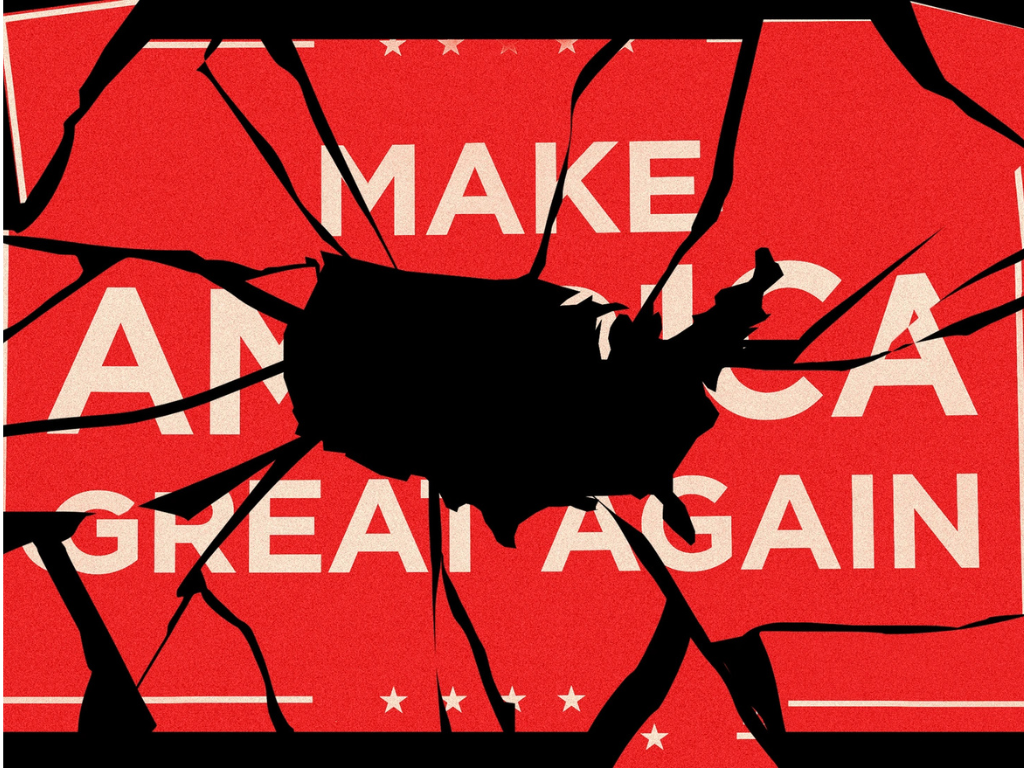

The US Republican Party has suffered a major setback in the 2026 US midterm elections, with Democrats making significant gains in Congress amid voter anger over the rising cost of living, the war with Iran, immigration enforcement and Donald Trump’s leadership. The results point to a broader rejection of the administration’s domestic and foreign policy priorities, as economic anxieties and concerns about governance reshaped voting patterns across the country.
Although the president’s party traditionally loses seats in midterm elections, the scale of the Republican defeat suggests that the backlash extended beyond the usual electoral cycle. Democrats capitalised on widespread dissatisfaction, campaigning on affordability, healthcare, corruption and the need for greater accountability in Washington.
Rising Cost of Living Becomes Republicans’ Biggest Vulnerability
The rising cost of living emerged as one of the most significant factors behind the Republican Party’s poor performance. American households have continued to struggle with expensive groceries, fuel, housing and other essentials, undermining the administration’s economic messaging.
According to the voter polling cited in the supplied reporting, 79% of respondents said inflation had caused moderate or severe financial hardship for their families over the previous year. More than six in ten also blamed President Trump’s policies for persistently high prices.
Fuel costs added to the pressure. The conflict with Iran disrupted energy supplies and heightened uncertainty around global oil markets, increasing the financial burden on American consumers.
For many voters, the central question was no longer whether the administration had delivered on its political promises, but whether their everyday lives had become more affordable. Democrats successfully turned that concern into an electoral message, linking economic insecurity to the Republican administration’s policy decisions.
Iran War Contradicts Trump’s America First Promise
The war with Iran became another major liability for Republicans. Trump had built much of his political identity around the America First agenda, promising to prioritise American interests and avoid prolonged foreign military engagements. The decision to enter a major conflict with Iran created a direct contradiction with that message.
The conflict, launched by the United States and Israel in February 2026, triggered regional instability and disrupted shipping through the Strait of Hormuz, a critical route for global oil and liquefied natural gas supplies. The resulting pressure on energy markets contributed to higher fuel prices and intensified concerns about the economic consequences of the war.
Public opposition was substantial. Polling cited in the supplied reporting indicated that 63% of respondents believed the United States had made the wrong decision by taking military action against Iran. Meanwhile, 74% said the conflict was a crucial or major factor in their congressional vote.
The war also created divisions within Trump’s political coalition. Some MAGA supporters who had backed his promises to end America’s involvement in foreign conflicts viewed the intervention as a betrayal of his electoral commitments.
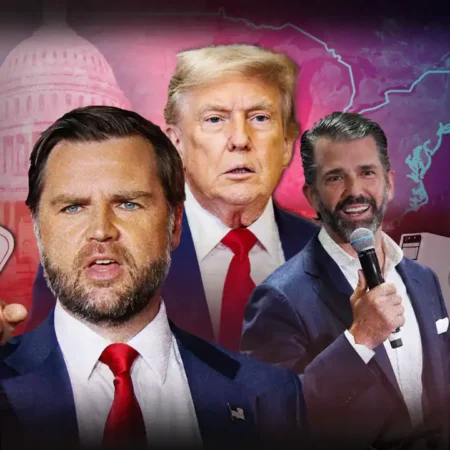
Following the Republican defeat, Vice President JD Vance identified the Iran war as one of the reasons behind the party’s poor performance, according to the NDTV report. Trump also acknowledged that the conflict had contributed to the outcome, while defending the intervention as necessary to prevent Iran from acquiring nuclear weapons.
The electoral damage illustrates how foreign policy decisions can become domestic political liabilities when their consequences are felt directly through household expenses, military risks and uncertainty over America’s international commitments.
ICE Controversies and Immigration Enforcement Alienate Voters
The Trump administration’s aggressive immigration enforcement policies also appear to have contributed to the Republican setback. Immigration had been a central issue in Trump’s political resurgence, but the implementation of those policies generated growing criticism.
The conduct of Immigration and Customs Enforcement (ICE), including allegations of excessive force and mistreatment during enforcement operations, became a source of public controversy. Such incidents intensified concerns about civil liberties, due process and the treatment of migrants and their families.
The supplied reporting cited Pew Research Center data showing that 56% of Americans held an unfavourable opinion of ICE. This broader dissatisfaction presented a challenge for Republicans, particularly in communities where immigration enforcement had become a politically sensitive issue.
For the administration, the problem was not simply immigration policy itself, but whether its enforcement methods were viewed as excessive or inconsistent with American democratic values. The issue helped Democrats mobilise voters who opposed the administration’s approach, while potentially weakening Republican support among groups that had shifted towards Trump in 2024.
Allegations of Corruption and Concerns About Governance
Concerns about corruption and the exercise of presidential power added another dimension to the Republican defeat. Critics accused the Trump administration of prioritising personal interests, weakening institutional safeguards and using government authority against political opponents.
These allegations formed part of a wider debate about accountability, executive power and the independence of public institutions. For voters already frustrated by rising prices and the Iran war, questions about governance may have reinforced the perception that the administration was disconnected from their immediate concerns.
Democratic candidates made corruption and the influence of money in politics central themes of their campaigns. In Georgia, Senator Jon Ossoff emphasised both affordability and corruption, while Abdul El-Sayed in Michigan campaigned on reducing the influence of money in politics.
The results suggest that these messages resonated with voters seeking tangible economic relief alongside greater transparency and accountability. However, the electoral outcome alone does not establish the truth of individual allegations against the administration; it demonstrates the political consequences of the broader public debate over its conduct.
Racism and the Decline in Minority Support
The Republican Party’s gains among some Hispanic and Black voters in the 2024 presidential election appeared to reverse in the midterms. This shift proved particularly consequential in competitive congressional and statewide contests.
Democrats won all three House races in the heavily Hispanic congressional districts along the Texas-Mexico border, according to the supplied reporting. An analysis by The New York Times also found a substantial movement away from Republican Senate candidates in majority-Hispanic counties compared with the 2024 presidential election.
Immigration enforcement was one factor behind the shift. The administration’s policies and rhetoric had drawn criticism from communities concerned about family separation, the treatment of migrants and the broader social consequences of aggressive enforcement.
MAGA anti-immigrant rhetoric also formed part of the political issue. Racism especially targeting immigrants particularly against Indian Americans ,contributed to concerns about discrimination and social hostility.
However, the supplied election reporting does not establish that anti-Indian racism independently drove the Republican losses. Its electoral significance would require more specific polling or voting data. The broader evidence points to a combination of economic dissatisfaction, opposition to immigration enforcement and changing political preferences among minority voters.
For Republicans, the apparent reversal of their 2024 gains raises questions about whether the coalition assembled by Trump can remain intact when campaign promises collide with the realities of governing.
Democrats Benefit From a Focused Campaign Message
Democrats also benefited from presenting a more disciplined electoral message. Rather than relying exclusively on opposition to Trump, several candidates focused on issues that voters encountered in their everyday lives: healthcare affordability, household expenses, corruption and access to essential services.
In Texas and Kansas, candidates James Talarico and Adam Hamilton used personal authenticity and discussions of faith to appeal to voters beyond traditional Democratic constituencies. In South Carolina, Annie Andrews, a former paediatrician, emphasised healthcare affordability. Abdul El-Sayed highlighted the need to reduce the influence of money in politics.
These campaigns helped Democrats compete in areas where Republicans had previously enjoyed stronger support. They also demonstrated that candidates could connect national dissatisfaction with locally relevant concerns.
Trump’s own prominence in the campaign may have compounded the Republican difficulties. By encouraging voters to treat the midterms as a referendum on his presidency, he helped nationalise contests that might otherwise have centred on individual candidates and local issues.
With his approval ratings reportedly weakening even among some Republican voters, that strategy exposed candidates to the full weight of dissatisfaction with his administration.
What the Republican Defeat Means for Trump
The 2026 midterm results represent a significant political warning for Trump and the Republican Party. The combination of economic pressures, an unpopular foreign conflict, controversies surrounding immigration enforcement and concerns about governance created vulnerabilities across several voter groups.
The outcome also demonstrates the limits of relying on cultural and ideological mobilisation when voters are increasingly concerned about material conditions. Campaign messages about national strength and border security may lose their effectiveness when households face higher bills or when foreign policy decisions appear inconsistent with earlier promises.
For Democrats, the gains provide an opportunity to challenge the administration’s agenda and strengthen their influence in Congress. For Republicans, the immediate challenge will be to address the concerns that contributed to the defeat without further alienating their existing support base.
Ultimately, the election was about more than a single policy or controversy. It reflected the cumulative effect of voter dissatisfaction with the direction of the country under Trump. Whether Republicans can recover will depend on their ability to respond to economic concerns, rebuild trust and demonstrate that their governing priorities match the expectations of the voters who elected them.
The broader lesson is clear: electoral coalitions built around strong personalities and ambitious promises can prove fragile when the costs of governing become increasingly visible in voters’ daily lives.