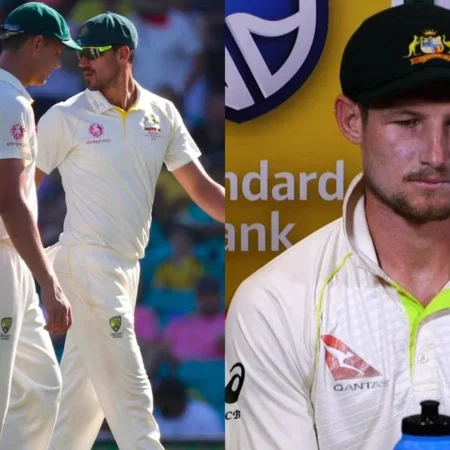
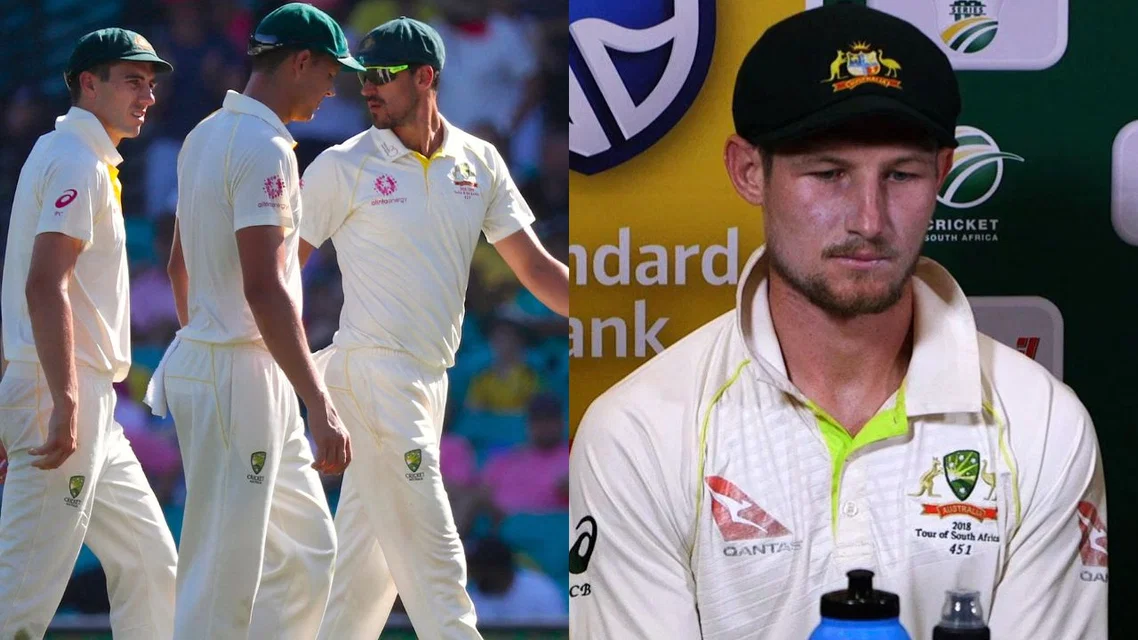

Australian cricket thought it had finally buried one of the darkest chapters in its history. Eight years after the infamous 2018 ball-tampering scandal in South Africa, the controversy known as Sandpapergate has returned, and this time it threatens to reopen questions about the honesty, culture and accountability of an entire Australian dressing room.
What was once presented as a scandal involving three players has now become a much bigger dispute. Former Australian opener Cameron Bancroft has come forward with explosive claims that the knowledge of ball tampering extended far beyond himself, Steve Smith and David Warner.
His revelations have placed current Australian captain Pat Cummins in an uncomfortable position, reopened wounds between former teammates and forced Cricket Australia to confront questions it may have hoped would never return.
So what exactly happened in 2018? Why is everyone talking about it again in 2026? And could this controversy damage Australian cricket’s reputation all over again?
What exactly was Sandpapergate?
Sandpapergate refers to the ball-tampering scandal that erupted during Australia’s Test series against South Africa in March 2018.
During the third Test at Newlands, Cape Town, television cameras captured Australian opening batter Cameron Bancroft appearing to use a small piece of yellow sandpaper to roughen the surface of the cricket ball.
The intention was to alter the ball’s condition and help Australia’s fast bowlers generate reverse swing.
In cricket, players are permitted to maintain the ball through legitimate methods such as polishing it. However, deliberately altering its surface using an unauthorised object is illegal.
Bancroft was caught attempting to conceal the sandpaper in his trousers after being confronted by the umpires.
The footage quickly spread around the world, creating an international cricket scandal.
The consequences were severe:
– Steve Smith, Australia’s captain, received a 12-month ban.
– David Warner, the vice-captain, received a 12-month ban.
– Cameron Bancroft received a nine-month ban.
– Smith and Warner were removed from their leadership positions.
The incident became one of the most damaging episodes in Australian sporting history.
Why did Australia think the scandal was over?
Following the scandal, Cricket Australia conducted an investigation into what had happened.
The investigation concluded that Smith, Warner and Bancroft were the players involved in the plan.
Smith admitted that he knew about the plan, Warner was identified as the instigator, and Bancroft was the player who physically used the sandpaper.
The three players received their respective punishments, and Australia attempted to rebuild its cricketing culture.
Smith and Warner eventually returned to international cricket, while Bancroft struggled to regain his place in the national team.
For years, the official version of events remained largely unchallenged.
But there was one question that never completely disappeared:
How could a plan to tamper with the ball have been carried out without other members of the team knowing anything about it?
That question has now returned to haunt Australian cricket.
The controversy returns: Usman Khawaja reopens old wounds
The latest chapter began with former Australian batter Usman Khawaja and the release of his autobiography, Sabr.
Khawaja made claims that challenged the original understanding of the 2018 scandal. He suggested that knowledge of ball tampering extended beyond the three players who were punished.
His account raised serious questions about whether Cricket Australia’s original investigation had uncovered the full story.
The allegations were particularly significant because several Australian bowlers had previously maintained that they knew nothing about the use of sandpaper before the incident became public.
Current Australian captain Pat Cummins strongly rejected Khawaja’s claims during a lengthy press conference in Sydney.
Cummins described the allegations as “utter nonsense” and stood by the position that he and the other bowlers had no prior knowledge of the sandpaper plot.
But the controversy was about to become considerably bigger.
Cameron Bancroft finally breaks his silence
On 18 November 2026, Cameron Bancroft published a detailed personal account that dramatically changed the conversation.
In his statement, Bancroft claimed:
“It was not just the three of us – Steve Smith, David Warner and I – who knew about me using sandpaper on the ball in South Africa. It was the whole team.”
This was an extraordinary allegation.
Bancroft admitted that he had not provided a complete and truthful account during Cricket Australia’s original investigation. He said he had withheld important details about when the sandpaper use began, how long it continued and the involvement and awareness of others.
He also described conversations involving senior members of the Australian team and coaching staff.
According to Bancroft:
– David Warner raised the possibility of using sandpaper during discussions about getting the ball to reverse swing.
– Coach David Saker and head coach Darren Lehmann were present during the discussions he recalled.
– Bancroft said he was asked to carry out the task.
– He recalled speaking with Australia’s fast bowlers about the ball’s behaviour and receiving feedback.
– He claimed the practice continued beyond the Cape Town incident and had started during the previous Test in Port Elizabeth.
Perhaps most damagingly, Bancroft said the team’s discussions and celebrations surrounding the ball’s movement made it difficult for him to accept the later claims that other players had no knowledge.
He also said Cummins’ recent press conference was the final straw that convinced him to speak publicly.
Why is Pat Cummins now at the centre of the storm?
This is where the story becomes particularly complicated. Cummins who is the current captain of the Australian cricket team was also part of the team during the 2018 South African tour. In 2021, he joined teammates Mitchell Starc, Josh Hazlewood and Nathan Lyon in a joint statement denying knowledge of the ball-tampering plot before Bancroft was caught.
Now, Bancroft’s latest account directly challenges the version of events maintained by those bowlers.
If Bancroft’s recollections are accurate, questions could arise about whether the original investigation was incomplete and whether some players have been withholding information.
For Cummins, the issue is not simply about what happened eight years ago. It is also about credibility.
As Australia’s current Test captain, he represents a team that has repeatedly attempted to move beyond the scandal and establish a different culture.
Cricket Australia is forced to respond
With the controversy gathering momentum, Cricket Australia announced on 18 November that it would establish an independent forum for players and staff involved in the 2018 South African tour.
The purpose is to give those involved an opportunity to share their experiences in a confidential and respectful environment.
The forum is expected to be independently chaired by a senior legal figure, with the process intended to be completed within approximately a month.
However, Cricket Australia’s decision comes with an important qualification.
There will be no fresh investigation and no additional sanctions arising from the forum.
The governing body says its original investigation is complete and that the new process is intended to help people share their accounts and allow the sport to move forward.
Cricket Australia chief executive Todd Greenberg also acknowledged that the culture surrounding the team in 2018 had been difficult and that the organisation itself had responsibility for the environment that existed.
That admission is significant because it shifts the conversation beyond three individual players and towards the broader culture of Australian cricket.
How this affects Australian Cricket
Australia has always been known as an extremely competitive and talented team in cricket. However it has been marred by controversies mostly due to its players having an attitude of winning by any means.
Its not as though other teams haven’t had their own issues, however Australian cricket seems to be struggling with a culture problem where its players regularly find ways to twist the rules however they can to get their wins. Whether it is the extreme sledging of other teams, drugs, racism, or adopting untoward methods to get results.
Sandpapergate was supposed to be a closed chapter in Australian cricket history.
Steve Smith served his suspension. David Warner served his suspension. Cameron Bancroft served his suspension. The players returned to cricket, and Australia attempted to rebuild its image.
But the latest revelations have shown that imposing punishments does not necessarily settle every question surrounding a scandal. Where some players scapegoated? Did the authorities decide who to throw under the bus and whom to save?
Bancroft’s decision to speak publicly, Khawaja’s account in his autobiography and Cummins’ firm denial have brought Australian cricket into another uncomfortable confrontation with its past.
It seems the biggest threat to Australian cricket may not be what happened with the sandpaper in Cape Town in 2018. It may be the possibility that the full story was never told.
And eight years later, Australian cricket now has to face the ghost of Sandpapergate once again.