Bangladesh on the Brink: Hasina’s Shadow, a Fragile New Order, and the Strain on India Ties

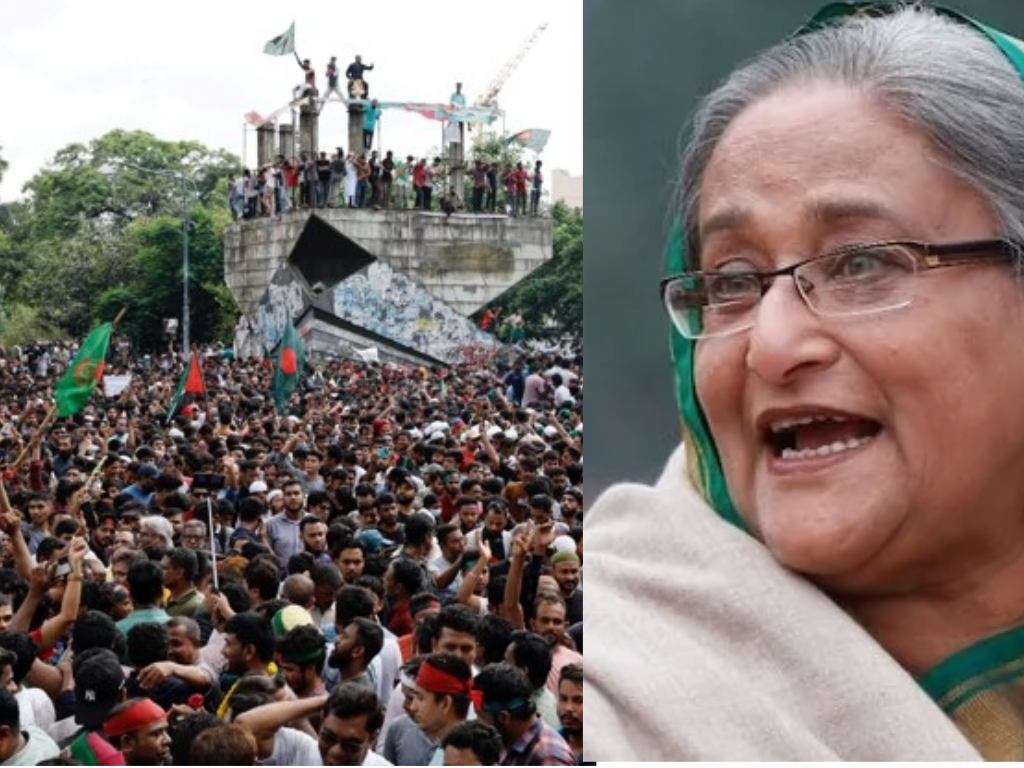
Bangladesh is once again walking a tightrope. Barely two years after the August 2024 uprising toppled Sheikh Hasina’s long authoritarian rule, the country faces a dangerous convergence of political unrest, economic fragility and diplomatic friction. The 12 February 2026 election, which brought the Bangladesh Nationalist Party (BNP) to power under Prime Minister Tarique Rahman, was meant to mark a democratic reset. Instead it has opened a new chapter of uncertainty.
The immediate cause is a date. Hasina has said she will return from exile in India in December, the month Bangladesh calls its “victory month”. Two other clocks tick towards the same weeks: a landmark water treaty with India expires on 12 December, and a government that won a landslide is struggling to hold the streets. December is fast becoming Bangladesh’s month of reckoning.
The real test is not whether one woman comes home, but whether a new political order can survive the storm without sliding back into zero-sum politics.
The woman who will not stay away
Hasina has been sentenced to death in absentia for her part in the crackdown on the 2024 protests, in which more than 1,400 people died. On 5 August, speaking by audio link from New Delhi, she said she would return in December even if it meant arrest. In later interviews she described the plan as voluntary: she and senior Awami League colleagues would come back together and present themselves before a court. “Power is not my destination,” she told AFP. She has also said she wants any death to come on her own soil.
Dhaka is in no mood to bargain. Her lawyers recently sought a new passport and national identity card through Bangladesh’s mission in New Delhi; the request was rejected outright. The government branded her a “terrorist” and insisted on extradition under the bilateral treaty. Prosecutors have said the sentence would be carried out on her return, because she failed to appeal in time and so exhausted her legal options.
Is this resolve or brinkmanship? Some analysts read it as a bid to keep a banned party alive and its base loyal rather than a death wish. Hasina says she has already held online meetings covering 125 of the country’s 300 parliamentary constituencies. The Awami League, banned under anti-terror law after her fall, is rebuilding from exile. Whatever her motive, the announcement has had one clear effect: a sharp spike in violence.
A republic of roadblocks
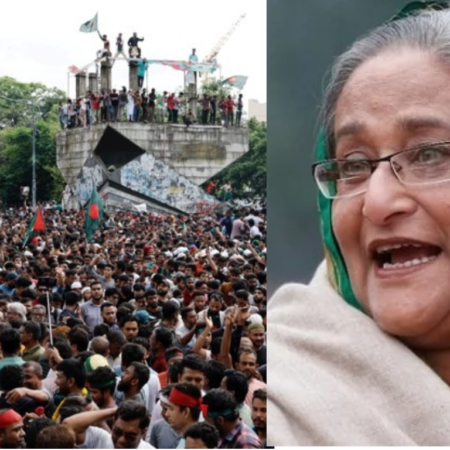
Violent protests and strikes have become a regular part of life across Bangladesh. Crude bombs, bus burnings, roadblocks, and street fights between Awami League activists, the police, and rival BNP supporters happen almost daily. At the same time, tens of thousands of garment and textile workers in Gazipur, Ashulia, Savar, and Mirpur have walked out of hundreds of factories and blocked highways. Struggling with high living costs, they want their monthly minimum wage raised from 12,500 to 30,000 taka before a new pay scale is announced in December. Instead of being settled in parliament or the courts, Bangladesh’s biggest political and economic problems are being fought out on the streets.
The fiercest political clashes are happening in the Awami League’s traditional strongholds. In Gopalganj, the political base of former Prime Minister Sheikh Hasina, protesters armed with machetes and spears attacked police vehicles, burned an armoured carrier, and tore down a monument celebrating the end of her rule. Nearby in Tungipara, her hometown, members of the banned Chhatra League student wing clashed with police and set a patrol vehicle on fire. Hundreds of supporters also blocked the Padma Bridge toll plaza, cutting off a major route to Dhaka.
Both sides blame each other for the crisis. The government accuses Awami League members of stirring up chaos—and even fueling the factory strikes—to disrupt the political schedule ahead of December. Awami League supporters say they are simply fighting to survive after facing arrests and revenge attacks since the 2024 political upheaval. Meanwhile, labor unions reject the government’s claim that the factory strikes are just political sabotage. They say desperate workers struggling to afford food and rent are being met with tear gas, arrests, and hired thugs instead of fair wages.
An economy that has not had its dividend
Stability was supposed to bring a rebound. It has not. The World Bank’s October 2026 update cut its FY27 growth forecast for Bangladesh by 1.2 percentage points to 3.4%, well short of the government’s 6.5% target and the weakest in South Asia bar Afghanistan. The Asian Development Bank has also trimmed its own forecast, to 4%. Years of alleged looting under Hasina have left a banking system in deep distress, and the damage is now visible in the numbers.
| Indicator | Earlier | Latest |
| Non-performing loan ratio | 20.2% (Dec 2024) | 33.2% (Jun 2026) |
| Real GDP growth | 5.8% (FY23) | 3.4% (FY27 forecast) |
| Government debt, % of GDP | 38.9% | 40.5% |
Private-sector credit growth has fallen to its lowest in 33 years, gas and electricity shortages are disrupting factories, and garment-sector strikes continue. Exports fell 7.07% year on year in May. Inflation stood at 8.63% in May, eroding real incomes. Bangladesh is also due to graduate from least developed country status this month, a milestone arriving in a far weaker economy than anyone planned for. Remittances have offered some relief.
The politics of reform is no easier. Promises tied to the July Charter and the constitutional changes approved by referendum remain stuck in disagreement between the BNP and opposition forces including Jamaat-e-Islami, which is positioning itself as a more coherent alternative on some reform issues. A public that expected more from the post-uprising transition is running short of patience.
The India dimension: a treaty, a fugitive and a thin layer of trust
Nowhere is the fallout more delicate than in relations with India. Hasina’s continued presence in India, her virtual media interactions from Delhi and Dhaka’s repeated extradition demands have become the central irritant. India maintains that the matter is legal and procedural, while publicly stressing its wish for a “positive, constructive and forward-looking” relationship. Consular dialogues have been postponed, high-level visits remain elusive, and anti-India rhetoric has found new oxygen in Bangladeshi politics, over water, transit corridors and perceived interference.
The water clock. The Ganga Water Treaty, signed on 12 December 1996 for 30 years, expires on 12 December 2026, four days before Victory Day. Dhaka wants a new deal that covers climate change and the whole river basin, and a guarantee clause on dry-season flows. BNP leaders have said the relationship with India “will depend on” renewal. In India, the other side of the argument is heard too: Bihar, among others, says its own interests were ignored in 1996, and the government faces pressure from allies there. Delhi’s own signals link progress to a visit by Tarique Rahman, which has yet to happen. Dhaka has meanwhile pressed ahead with its Padma Barrage project, a hedge against an uncertain treaty.
A hedge in every direction. Tarique Rahman has prioritised outreach to China, Türkiye and others while skipping early engagement with India. Bangladesh’s strategic autonomy is understandable. Yet Dhaka still depends on India for water, energy and trade; it sought extra refined fuel through the India-Bangladesh Friendship Pipeline, and Foreign Minister Khalilur Rahman visited Delhi in April to repair ties. Dhaka’s foreign ministry has said it supports extradition through legal channels and that the Hasina question need not become a confrontation. Both sides have kept functional channels open on trade, railways and water, but trust is thin.
India’s dilemma. Hosting Hasina after her flight in 2024 was consistent with historical ties and humanitarian considerations. It has also complicated the reset with a BNP government that is less instinctively aligned with Delhi than the Awami League was. India’s concerns are real: stability on its eastern frontier, the Rohingya issue, border management and connectivity projects critical to the Northeast. An unstable or openly hostile Bangladesh would complicate regional strategy at a time when Chinese influence is already expanding in South Asia.
The way forward: restraint from every side
History offers a cautionary note. Bangladesh has oscillated between flawed democracy, authoritarianism and military intervention, and the 2024 uprising raised hopes of breaking that cycle. Realising them requires something each actor finds hard: restraint. The BNP government must put institutional reform and inclusive politics ahead of revenge, move the July Charter reforms forward with its opponents, and repair the banks before they drag down the rest of the economy. On the other hand the Awami League must abandon street violence if it seeks any path back to legitimacy. A party that wants to contest the legality of its ban cannot do so by burning buses.
India and Bangladesh must insulate core interests, namely trade, water, security and people-to-people ties, from domestic turbulence. Settling the Ganga treaty before 12 December, or at least agreeing a bridging arrangement, would be the clearest proof that the relationship is bigger than one fugitive.
Hasina’s threatened return may or may not materialise. The real test is whether Bangladesh’s new political order can weather the storm without sliding back into the zero-sum politics that has repeatedly set the country back. For both Dhaka and New Delhi, the stakes are too high for miscalculation. Stability in Bangladesh is not merely a Bangladeshi interest; it is a regional necessity.