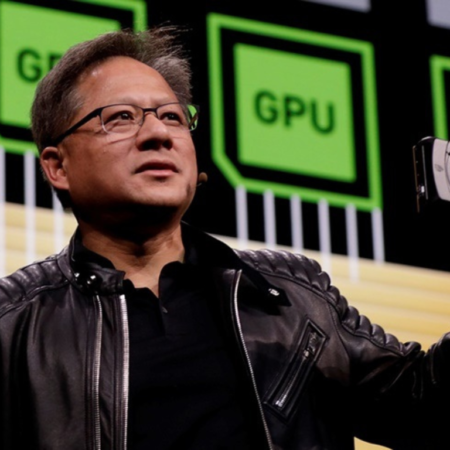
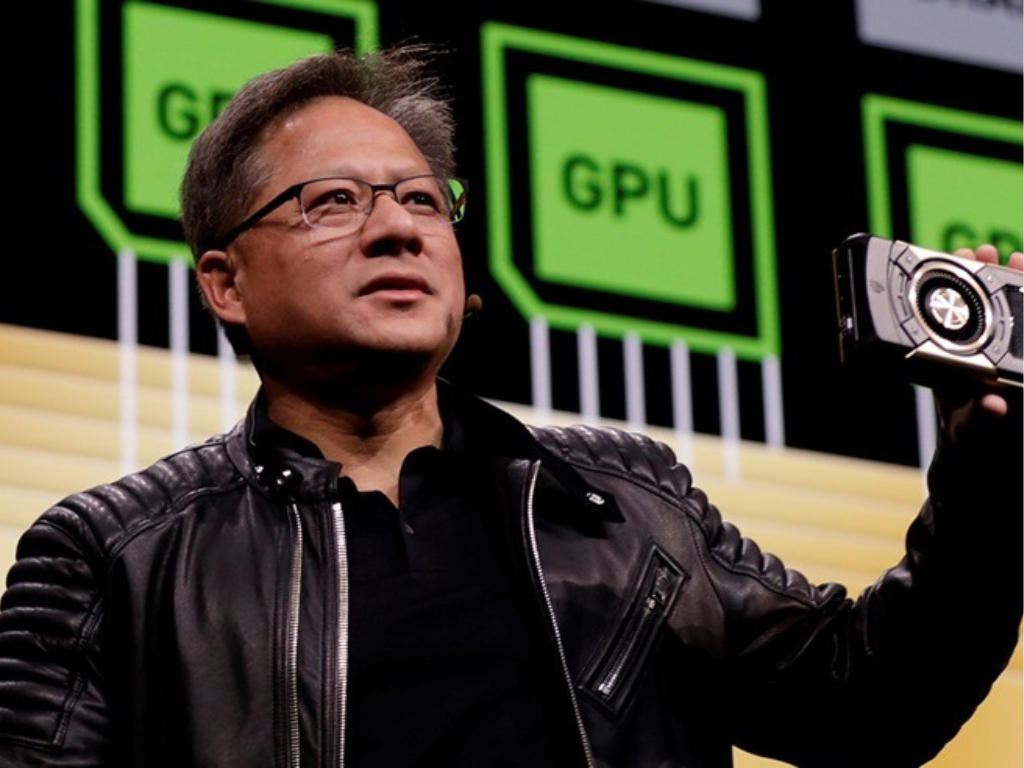

Recently Jensen Huang took X and said that he would be honoured to return to the post if the chipmaker’s board decides it is in the best interest of the company, while admitting to serious mistakes in his personal life.
Over the past week, I’ve been overwhelmed by the love and support of friends, industry colleagues, and people I’ve never met. Thank you to everyone who has shown kindness to my family and me. It means the world to me.
I came to the United States 53 years ago, and becoming an…
— Jensen Huang (@JensenHuang) November 17, 2026
Since his departure, Nvidia’s employees, investors, business partners and customers have called for him to return as CEO, and many continue to reach out to him directly, he said.
“If the Board of Directors decides that my return is in the best interest of our shareholders, our employees, the company, and America, I would be honoured to answer these calls and return as CEO… I did not live up to the standards expected of everyone at Nvidia, and I have made serious mistakes in my personal life. I created problems for the Board that I deeply regret,” Huang said, adding that he owns his mistakes completely and is committed to cooperating with the board’s independent investigation.
More than 1.98 lakh people, including over 10,024 who say they are current Nvidia employees, had signed an open letter seeking Huang’s reinstatement as of early Wednesday, according to the campaign website standwithjensen.com. Tesla CEO Elon Musk is among the signatories.
The Nvidia Controversy and alleged Chinese access to restricted artificialchips is rapidly turning into one of the biggest technology and national security scandals in the United States.
What initially appeared to be an investigation into the possible diversion of advanced Nvidia chips to China has now expanded into a political confrontation involving the Trump administration, senior government officials, intelligence agencies and influential AI companies.
At the centre of the controversy is Singapore-based technology company Megaspeed and its former executive Alice Huang, who has reportedly attracted the attention of US intelligence agencies over suspected links with Chinese espionage operations.
The scandal has also raised questions about whether America’s export-control framework was adequately enforced, whether political relationships influenced regulatory decisions, and whether the growing competition between Nvidia and AI companies such as Anthropic is shaping Washington’s technology policy.
The developments have taken a dramatic turn following Jensen Huang’s resignation as Nvidia’s chief executive on November 11, 2026. The company’s board has subsequently confirmed that it does not intend to reinstate him.
The Megaspeed Connection: How the Nvidia Chip Diversion Investigation Began
The central issue concerns the movement of advanced Nvidia chips through Southeast Asian data centres.
Washington had imposed restrictions on the export of certain advanced AI chips to China because of concerns that Beijing could use them to strengthen its military capabilities, intelligence infrastructure and advanced computing ecosystem.
However, US investigators reportedly identified suspicious activity involving Megaspeed, a Singapore-based data-centre company that had been associated with Nvidia’s supply chain.
According to the US Department of Commerce and Department of Justice, the Commerce Department initiated an investigation into Megaspeed in 2024 after identifying suspicious activity through semiconductor diversion monitoring.
In May 2025, investigators requested records from Nvidia concerning direct and indirect sales to Megaspeed. A month later, Nvidia placed the Singaporean company on its internal ‘no-sell’ list.
US authorities, working alongside Singaporean law enforcement officials, also conducted an on-site inspection at Megaspeed in June 2025 and interviewed its then-CEO, Alice Huang.
The Justice Department subsequently assumed the lead role in the criminal investigation.
These developments establish that US authorities had identified potential export-control concerns involving Megaspeed well before the controversy became public. However, the government has not publicly established that every suspected diversion route or allegation involving the company is proven.
Jensen Huang’s Resignation: Personal Scandal Meets National Security Concerns
The controversy became even more consequential after Jensen Huang resigned from Nvidia on November 11, 2026.
Reports by The New York Times and other media organisations alleged that Huang had maintained a personal relationship with Alice Huang, the former Megaspeed executive who was reportedly under US intelligence scrutiny over suspected connections with China’s intelligence apparatus.
According to reporting, Jensen Huang had initially described his interactions with Alice Huang as professional. However, he subsequently acknowledged personal misconduct to Nvidia’s leadership and admitted that he had made serious mistakes in his personal life.
The Nvidia board accepted his resignation from the positions of president, CEO and board member. CFO Colette Kress was appointed interim CEO, while Harvey Jones became chairman.
In a subsequent statement, the board confirmed that it had no intention of reinstating Huang. It also announced the appointment of executive search firm Heidrick & Struggles to identify a permanent successor.
Huang, meanwhile, expressed regret and said he would cooperate with the board’s independent investigation. He also indicated that he would be willing to return if the board considered his reinstatement to be in the company’s best interests.
The controversy has created an unusual situation for Nvidia. Huang was not simply an executive running a technology company; he was central to its corporate strategy, relationships with governments and position in the global AI industry.
His departure has therefore raised concerns about corporate governance, leadership continuity and the future direction of the world’s most influential AI chipmaker.
Howard Lutnick Under Scrutiny as Washington Investigates Megaspeed
Another important dimension of the controversy involves US Commerce Secretary Howard Lutnick.
The Commerce Department is responsible for enforcing export controls on sensitive American technologies. Consequently, questions about its handling of the Megaspeed investigation have become politically significant.
US Treasury Secretary Scott Bessent has reportedly criticised the Commerce Department’s handling of the matter. According to media reports, Bessent questioned why Megaspeed had not been placed on an export-control blacklist earlier, despite concerns raised by multiple government agencies.
There have also been questions about reported financial connections involving Lutnick’s family and Cantor Fitzgerald, the financial services company he previously led, and Southeast Asian data-centre investments.
However, the existence of financial connections does not independently establish that Lutnick interfered with an investigation or deliberately facilitated semiconductor diversion.
The Commerce and Justice departments issued a joint statement on November 16, subsequently updated on November 17, defending the government’s enforcement record.
The statement maintained that Commerce had initiated its investigation in 2024, requested information from Nvidia in May 2025, placed Megaspeed on the no-sell list in June 2025 and conducted an on-site inspection with Singaporean authorities.
The agencies also said they would pursue the full extent of the law against Megaspeed for any criminal conduct that may have occurred.
The government statement has not, however, answered every question about the subsequent handling of the investigation or the allegations concerning political and corporate influence.
Anthropic’s $1.63 Million Washington Lobbying Connection
Perhaps one of the more politically interesting developments is the growing scrutiny of Anthropic’s lobbying activities in Washington.
According to federal lobbying disclosures examined in recent reporting, Anthropic has paid two politically connected lobbying firms a combined $1.63 million since April 2025.
The firms are Continental Strategy and Ballard Partners.
Continental Strategy reportedly received $740,000 from Anthropic. Its Washington managing partner, Alberto Martinez, is listed on the firm’s quarterly lobbying disclosures for the AI company.
The firm’s filings for April-June 2026 identified the National Security Council among the offices it lobbied, while its July-September filing listed the State Department.
Both institutions fall within the sphere of influence of Secretary of State and National Security Adviser Marco Rubio.
Anthropic also paid $890,000 to Ballard Partners. The firm has connections to Susie Wiles, President Donald Trump’s former chief of staff, who previously served as its managing partner.
Ballard’s lobbying disclosures identified the White House, National Security Council, Pentagon and Office of the Director of National Intelligence among the government offices it contacted on Anthropic-related matters.
These disclosures have attracted attention because of the broader dispute over American AI policy, semiconductor exports and national security.
However, an important distinction must be maintained: the lobbying filings do not identify Nvidia, Jensen Huang or the Megaspeed investigation as subjects of the firms’ lobbying activities. Nor do they establish that Anthropic influenced the investigation or Huang’s departure.
The disclosures demonstrate Anthropic’s substantial Washington lobbying presence, not proof of a coordinated effort to remove Nvidia’s former CEO.
Marco Rubio’s Role and the Battle Over AI Chip Exports
Marco Rubio has emerged as another important figure in the controversy.
According to reporting cited in the recent coverage, Rubio prepared a national security memorandum on March 30, 2026, drawing on intelligence assessments concerning Alice Huang and the potential security implications of the Megaspeed relationship.
The memorandum reportedly presented the intelligence findings in stronger terms and was circulated among senior government officials.
There are also reports that Jensen Huang attempted several times to secure a meeting with Rubio but was unsuccessful.
The disagreement reflects a larger policy divide within Washington over whether American companies should continue selling advanced AI chips to China under controlled arrangements or whether stricter restrictions are necessary to protect US technological superiority.
Nvidia has historically argued that maintaining access to international markets is important for American competitiveness. Its leadership has also warned that excluding China from American technology could accelerate the development of competing Chinese semiconductor ecosystems.
Anthropic, meanwhile, has advocated stronger restrictions on the transfer of advanced computing capabilities to China.
This difference has placed the two companies on opposite sides of an increasingly important policy debate.
Trump Administration Closes Overseas Data-Centre Loophole
Another significant development came on November 16, when the Trump administration moved to close a regulatory loophole that reportedly allowed Chinese companies to access restricted Nvidia computing capabilities through data centres located outside China.
The issue is particularly important because restricting the physical export of semiconductor chips does not necessarily prevent foreign entities from accessing their computing power.
A Chinese company could potentially rent computing capacity from a data centre in Singapore, Malaysia or another country without physically importing the restricted chips into China.
This creates an enforcement challenge for American regulators.
The distinction between physical chip exports and remote access to computing infrastructure has become increasingly important as AI models require enormous computing resources.
The new regulatory action signals that Washington is attempting to extend its export-control framework beyond the physical movement of semiconductors to include access to computing capacity.
For American policymakers, the challenge is to prevent China’s access to strategically sensitive computing resources without unnecessarily damaging US companies’ international business interests.
Nvidia’s Future and the Bigger AI Power Struggle
The developments surrounding Megaspeed have placed Nvidia under unprecedented scrutiny.
The company has established a National Security and Export Control Oversight Committee comprising independent directors, external advisers and legal counsel to strengthen its engagement with US government agencies.
Meanwhile, Jensen Huang has been asked to appear before congressional committees in December, alongside Nvidia General Counsel Tim Teter. Howard Lutnick has also agreed to testify.
These hearings could provide greater clarity about the company’s relationship with Megaspeed, the government’s investigation and the administration’s handling of export-control concerns.
The implications extend beyond Nvidia.
The controversy highlights how semiconductor manufacturing, AI infrastructure, intelligence gathering and geopolitical competition are increasingly interconnected.
Nvidia’s chips are central to the global AI ecosystem. Any disruption to its leadership or supply-chain relationships could have consequences for technology companies, investors and governments worldwide.
At the same time, Anthropic’s expanding lobbying presence raises questions about how competing AI companies are engaging with policymakers as Washington determines the future of American AI regulation.
The central question is no longer simply whether restricted Nvidia chips reached China through Southeast Asian intermediaries. It is whether the United States can maintain a credible export-control system when its technology companies, political leadership and national security interests have competing priorities.
The Nvidia-Megaspeed controversy could ultimately become a defining test of America’s ability to protect its technological advantage while managing the commercial and political interests surrounding the global AI industry.