Bangladesh finds 150 Chinese streamers filming Dhaka slums claiming its India, why China has a poverty porn addiction?

An investigation in Bangladesh has exposed Chinese livestreamers filming impoverished neighbourhoods, humiliating residents and allegedly passing off Dhaka as New Delhi. But the bigger question is why poverty, humiliation and racial stereotypes have become such profitable entertainment for sections of China’s online audience.
There is something deeply disturbing about strangers entering a poor family’s neighbourhood, pointing a camera at their home, documenting their everyday struggles and broadcasting the footage to millions of people who may never know the difference between curiosity and exploitation.
That is precisely the controversy emerging from Bangladesh.
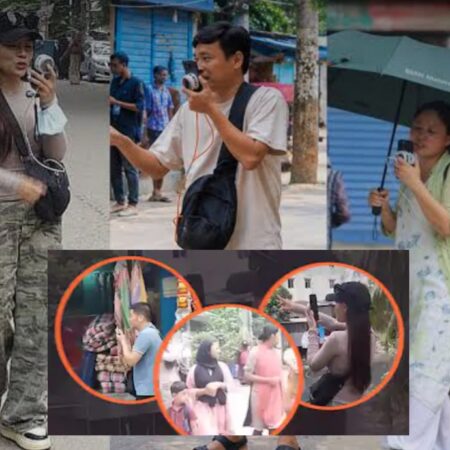
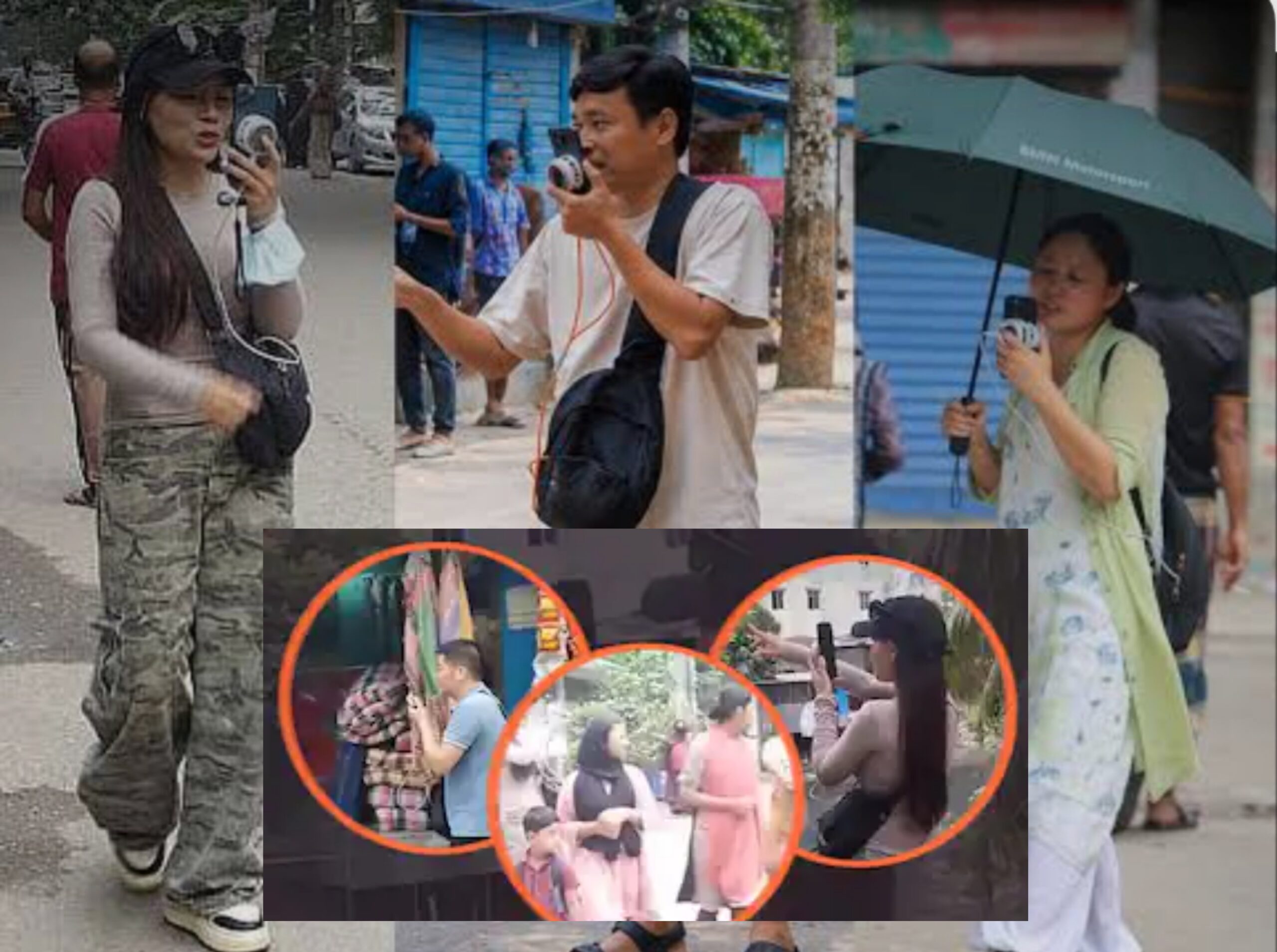
An investigation published by Bangladesh’s Prothom Alo on 6 November 2026 has revealed that Chinese nationals have been filming in some of Dhaka’s poorer neighbourhoods, particularly Uttara’s Sector 12 and the adjoining Tekpara area. Residents estimate that more than 150 Chinese nationals have been involved in the activity, although the actual number remains unverified.
They reportedly livestream for hours, sometimes entering residential homes and private spaces. More disturbingly, some have allegedly presented the neighbourhoods as parts of New Delhi, India, while making derogatory remarks about the people living there.
Imagine being a poor Bangladeshi resident, struggling with the ordinary difficulties of life, only to discover that your neighbourhood has become a spectacle for foreign audiences, with your identity and nationality misrepresented for entertainment.
This is not simply a question of offensive content. It is a question of dignity, consent, exploitation and the growing commercial value of humiliation.
Why is poverty so profitable?
China has always been a very insecure and envious nation, it has a severe complex due to the fact that it has no democracy and real freedom for its people. When its citizens get exposed to content from around the world, China has a major dilemma: if their citizens find successful models of democracy as aspirational ideas, what happens to the Communist Party?
To downplay such ideas China resorts to many ugly means, poverty porn is one of them. Spreading the addiction of poverty porn among its public, training them to enjoy the suffering of others with the end conclusion as: look how lucky you are to be under the CCP otherwise this would be your fate.
China also has one of the world’s largest livestreaming and social-commerce ecosystems. Platforms such as Douyin and WeChat have created an environment to profit in. In an increasingly crowded digital marketplace poverty offers a ready-made spectacle and a huge reach to mind wash its people.
A poor neighbourhood, a dilapidated house, a crowded street or a family struggling to make ends meet can be turned into emotionally charged material. The creator becomes the narrator, the camera becomes the instrument of power, and the people being filmed become characters in a story they never agreed to participate in.
The more shocking the footage, the greater its potential to attract attention.
There is also a psychological appeal. Showing audiences another society’s poverty can create a sense of relative prosperity, superiority and national pride. Viewers are invited to compare their own circumstances with those of people portrayed as less fortunate.
The creator makes money from the spectacle, the platform benefits from engagement, and the audience receives entertainment built around someone else’s hardship.
In this business model, poverty is not necessarily something the creator wants to alleviate. It is something the creator needs to keep displaying.
China’s double standards: Why is its national image sacred, but India’s fair game?
Perhaps the most revealing aspect of the Bangladesh controversy is not simply what Chinese livestreamers are doing. It is what China’s response, or apparent lack of one, tells us about the country’s approach to controlling its digital ecosystem.
Consider what happened to Kylian Mbappé. In October 2026, the French football superstar found himself at the centre of a controversy after joking about an internet meme depicting him as Mao Zedong. The response was extraordinary. Chinese companies terminated sponsorship relationships, social media platforms restricted his accounts, and China Media Group suspended broadcasts of Spain’s La Liga.
Chinese institutions and commercial organisations demonstrated that they could act rapidly and decisively when content was perceived to insult China’s national image.
Now consider the allegations emerging from Bangladesh. Prothom Alo has reported on large numbers of Chinese nationals filming impoverished Bangladeshi neighbourhoods, allegedly misrepresenting them as Indian locations and making degrading comments about the people living there.
This activity is not entirely new. Earlier reporting by Bangladeshi media had also documented Chinese vloggers filming in Dhaka’s low-income neighbourhoods.
The contrast raises an uncomfortable question. If Chinese authorities and platforms can respond so forcefully to a footballer’s joke about Mao, why has comparable urgency not been evident in addressing the repeated exploitation of foreign populations through degrading and potentially misleading content?
It would be naive to suggest that Chinese authorities have no capacity to monitor or regulate their domestic digital platforms. China’s internet operates under extensive state regulation, and the Mbappé controversy is a recent illustration of how quickly commercial and media institutions can respond to politically sensitive issues.
And the issue extends beyond India. Earlier investigations documented Chinese influencers producing racist content involving African communities, including videos that portrayed Africans as backward and dependent on Chinese benefactors.
Taken together, these incidents deserve examination as a pattern of digital exploitation rather than isolated controversies.
Why should China’s historical figures, national symbols and political sensitivities receive such aggressive protection, while the dignity of poor Bangladeshis, Indians and Africans appears to receive considerably less attention?
If national dignity is a legitimate principle, it cannot be applied exclusively to select countries.
The dignity of a family living in a Dhaka slum deserves protection just as much as the dignity of a Chinese public figure.
China cannot reasonably demand that the world respect its sensitivities while treating the sensitivities and dignity of other societies as disposable entertainment.
China has seen this phenomenon before: Africa
The Bangladesh controversy is particularly concerning because it resembles an earlier phenomenon documented across several African countries.
In July 2022, investigative publication Rest of World published an extensive investigation into Chinese influencers producing racist and degrading videos featuring African people.
The investigation examined more than two dozen popular accounts operating across countries including Zambia, Guinea, Tanzania, Mozambique and Kenya.
Some creators portrayed Africans as backward, impoverished and dependent on Chinese generosity. Others filmed degrading performances involving local women and children, presenting themselves as wealthy benefactors bringing civilisation, money and opportunity to supposedly helpless communities.
One influencer, operating in Zambia, reportedly sold approximately $22,000 worth of products during a single 4.5-hour livestream.
The videos were not simply about documenting African poverty. They frequently constructed a particular relationship between the Chinese creator and the African subject: one was wealthy, modern and powerful; the other was poor, helpless and dependent.
The creator could then present himself as a saviour.
This is what makes the business model particularly troubling. Poverty becomes the backdrop for a performance of superiority.
The BBC’s investigation, Racism for Sale, also exposed the exploitation of African children in videos produced by a Chinese national in Malawi. Children were reportedly made to repeat racist statements in Mandarin without understanding what they were saying.
The resulting international outrage prompted Chinese social media platforms to restrict some of this content.
These earlier investigations demonstrate that the Bangladesh controversy is not occurring in an entirely unfamiliar digital environment. There is documented precedent for creators monetising racial inequality and poverty for Chinese audiences.
Is this about making China look superior?
For a country whose international identity is increasingly associated with constantly showcasing a mega facade of ultimate economic development, technological advancement and geopolitical influence, images of poverty elsewhere can serve a particular psychological and nationalistic purpose.
China does not showcase its own huge poverty which still exists, there are hordes of videos that have leaked out of China, showcasing the stark and shocking impoverished places in the country, the oppression of minorities and the inhuman subjugation of entire regions and communities. However China puts all of these under the carpet, pretending they do not exist, instead China showcases itself only as some mega universal empire with some Star Wars style tech.
When local audiences repeatedly see other countries portrayed as dirty, backward, disorderly and impoverished, and their own country being shown as a sci fi super nation the contrast can reinforce a false perception of their own country’s superiority.
This is especially relevant when the content is presented through a national lens.
The deliberate misrepresentation of locations raises a legitimate question about whether some creators are exploiting existing prejudices about India to attract viewers.
The Bangladesh livestream controversy raises a much bigger question: why does India repeatedly become the subject of misleading, fabricated or deliberately manipulated content circulating in parts of China’s digital ecosystem?
The alleged practice of filming impoverished neighbourhoods in Dhaka and presenting them as New Delhi is particularly revealing. It suggests that, for some content creators, the objective is not necessarily to document reality but to manufacture an image that an audience is trained to believe.
Why would anyone do this?
There are several possible explanations.
First, nationalist entertainment. Negative portrayals of India can appeal to audiences who consume geopolitical rivalry as entertainment. In an environment where national pride is frequently expressed through comparisons with other countries, humiliating a geopolitical competitor can become a commercially attractive proposition.
Second, algorithmic incentives. Outrage, ridicule and shocking imagery generate engagement. A video supposedly exposing the supposed miserable conditions of India’s capital will attract considerably more attention than an ordinary travel livestream. The creator benefits from views, comments, gifts and potential commercial opportunities. Nowadays many websites like X have a plethora of racist grifters who profit from such content exclusively.
Third, geopolitical narratives. India and China compete for influence in Asia, international markets, strategic partnerships and diplomatic standing. Negative portrayals of India can reinforce existing stereotypes and shape perceptions among audiences unfamiliar with the country’s actual social and economic diversity.
If a creator deliberately films Bangladesh and tells viewers that the footage depicts India, the deception is not merely about geography. It is about manufacturing evidence for a preconceived narrative.
The uncomfortable question is whether this kind of content is becoming part of a wider digital ecosystem in which India’s image is deliberately targeted.
India has its fair share of issues like any other nation. It is still a developing country, however it is also true that it is now one of the biggest economies in the world. India’s extreme poverty rate fell from 27.1% to 2.6% between 2011 and 2023, according to the World Bank’s October 2026 Poverty and Equity Brief. This is an incredible achievement as it is considered one of the fastest poverty declines in the world in recent history.
Yes there are still many issues in the country but that’s true for every other nation too. Is the USA not rife with gun violence, school shootings, fentanyl addictions etc. Is there not the issue of epstein files which have still not been completely revealed? Is the UK not suffering from grooming gangs, there seems to be a new Prime Minister in the country every few months. Are the riots in France something normal? Is China not an autocratic nation? Has its people not been caught honeypotting american people of influence? What is happening to the uyghurs and Tibetans?
How many international live streamers is China allowing to freely record the Tibetan regions or the Uyghur reeducation camps?
Perhaps the most revealing aspect of this Bangladesh episode is that the creators did not even travel to India to find negative content. They simply filmed another country’s poor neighbourhoods and relabeled the suffering.
When a country becomes so useful as a villain in someone else’s digital narrative that even another country’s poverty can be passed off as its own, the issue is no longer simply about livestreaming. It is about the industrialisation of misinformation.
The psychology of poverty porn
Why would anyone enjoy watching another country’s poorest people struggle?
The answer is not unique to China.
Western television, travel documentaries and social media have long commercialised poverty in countries such as India, Bangladesh and several African nations.
Slum tours, poverty documentaries and sensationalist travel content have sometimes turned disadvantaged communities into tourist attractions.
But the Chinese livestreaming phenomenon introduces another layer: the ability to manufacture a narrative in real time.
A creator can point a camera at a stranger’s home, invent or exaggerate a description of the surroundings, make a degrading comment and immediately receive reactions from an audience.
There is little room for the subject to respond, correct the narrative or explain the circumstances.
The audience sees the poverty. It rarely sees the structural reasons behind it.
It does not see the economic inequality, historical circumstances, political decisions or infrastructure challenges that shape a neighbourhood.
Instead, it sees a simplified story in which poor people become objects of ridicule.
This is poverty porn in its most recognisable form: the transformation of human suffering into consumable entertainment.
And it is important to recognise that the problem is not showing poverty. Investigative journalism, documentary filmmaking and humanitarian reporting must be able to document difficult living conditions.
The problem is stripping people of their dignity, misrepresenting their circumstances and profiting from their vulnerability without meaningful consent.
The uncomfortable question of consent
Perhaps the most disturbing allegations in the Prothom Alo investigation concern privacy.
Residents reportedly complained that some Chinese nationals entered their homes and began filming. Some alleged that cameras were taken into private spaces, including bathrooms.
A person’s economic circumstances do not make their privacy less valuable.
A family living in a tin-roofed house has precisely the same right to dignity as a family living in a luxury apartment.
Being poor does not mean surrendering control over one’s image.
The fact that some Bangladeshi residents were reportedly employed as local guides, receiving Tk 700–800 a day, also illustrates the economic imbalance involved.
These arrangements may provide income to local people, but payment to a guide does not automatically constitute consent from every person being filmed.
Nor does it establish that residents understand where the footage will be published, how it will be presented or what commercial purposes it will serve.
Bangladesh needs answers about the filming, the platforms distributing the content, the people commissioning it and the safeguards protecting residents.
A poor Bangladeshi family cannot compete with a livestreamer who controls the camera, the language, the editing and the narrative.
A resident who does not understand Chinese cannot easily challenge what is being said about them to an audience thousands of kilometres away.
And once a misleading video circulates, the people featured in it may never even know what story has been told about their lives.
This is an extraordinary imbalance of power.
Bangladesh should investigate the activities, establish the identities and commercial affiliations of those involved, enforce privacy and filming laws, and ensure that residents have accessible ways to report violations.
Social media platforms should also investigate misleading location claims, discriminatory content and recordings made without consent.
Ultimately, the question is not whether China is wealthy enough to look down on poorer countries. It is why certain content creators believe that portraying other human beings as inferior is a viable business strategy.
A country’s poverty should not become another country’s entertainment.
And a person’s hardship should never be an invitation for strangers to humiliate them for profit. China should know that it is not immune to ridicule and such acts only drive a shameful image of its own people rather than the ones being filmed, for the ones being filmed are poor victims of circumstances but those streaming their plight can only be seen as extremely vile individuals with highly sinister backings.