Indonesia Seizes Bangladesh-Bound Cargo Ship Carrying Chinese Chemicals That Could Make 100 Missiles

Indonesian naval authorities have seized a cargo vessel travelling from China to Bangladesh after discovering 405 tonnes of sodium perchlorate, a strategic chemical used in rocket and missile propellants. The shipment reportedly contained enough material to potentially manufacture up to 100 missiles, according to an Indonesian Navy commander.
The Comoros-flagged vessel, identified as MV Star Line, was intercepted in Indonesian waters off Belawan, North Sumatra, on November 7 while travelling from Lianyungang Port in China to Mongla Port in Bangladesh.
The Indonesian Navy publicly disclosed details of the seizure on November 20.
405 Tonnes of Strategic Chemical Discovered
During an inspection of the vessel’s 36 containers, Indonesian naval personnel discovered that 15 containers were carrying approximately 405 tonnes of sodium perchlorate.
The chemical is a powerful oxidising agent used in industrial applications and in the production of rocket and missile propellants.
Rear Admiral Deny Septian, commander of Indonesian Navy Regional Command I, reportedly stated that the seized quantity could potentially be used to manufacture up to 100 missiles.
Authorities also discovered 54 pallets containing millions of unregistered blank 4G LTE SIM cards aboard the vessel, raising additional questions about the nature and purpose of the shipment.
Suspicious Ship Movements Triggered Naval Inspection
According to reports, the vessel made an unscheduled stop in Indonesian waters, reportedly to refuel.
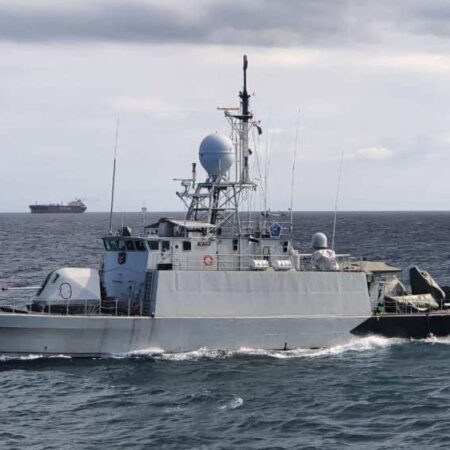
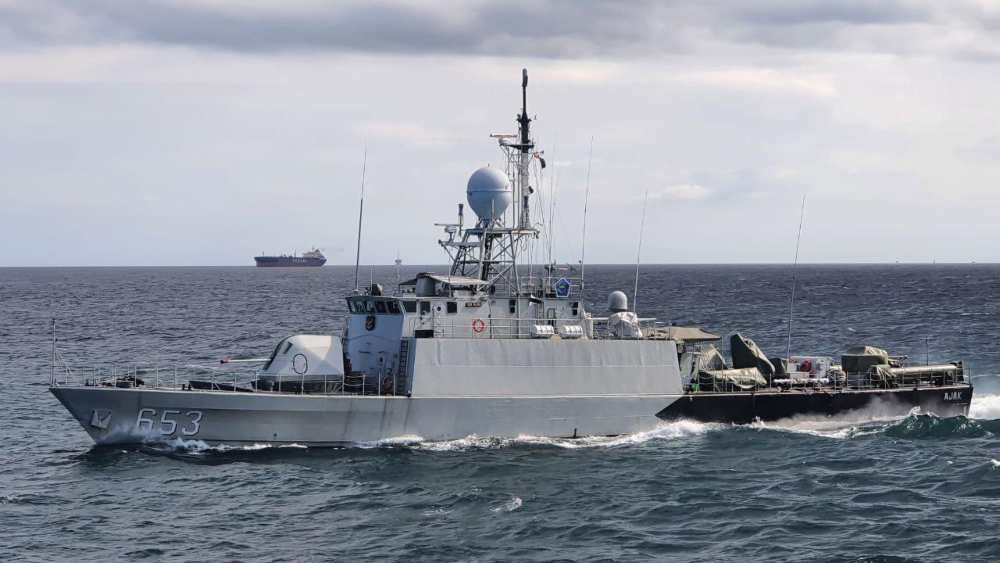
The Indonesian naval patrol vessel KRI Sigalu-857 noticed unusual navigation patterns and attempted to contact the cargo ship.
After the vessel allegedly failed to respond to radio communications, naval personnel decided to conduct an inspection.
Investigators subsequently identified discrepancies in the vessel’s registration documents and cargo declarations. Its registration status was reportedly listed as suspended despite documents indicating validity until October 2027.
These irregularities prompted Indonesian authorities to detain the vessel for further investigation.
Questions Over the Intended Recipient
The seizure has raised questions about the ownership, origin and intended destination of the sensitive chemical consignment.
Although the vessel was travelling towards Bangladesh’s Mongla Port, Indonesian authorities have not yet publicly identified the Bangladeshi importer, shipping company or final owners of the cargo.
Investigators are examining the crew, shipping documentation, cargo manifest and possible violations of maritime regulations.
Authorities are also looking into whether the vessel complied with international requirements governing the transportation of hazardous materials.
What Is Sodium Perchlorate?
Sodium perchlorate is an industrial chemical with applications in several sectors, including laboratories and aerospace-related manufacturing.
It acts as an oxidising agent and is used in the production of certain rocket and missile propellants. However, the chemical is not itself a missile fuel or an explosive.
Large quantities require specialised safety measures because of the potential fire and explosion hazards associated with its oxidising properties.
Investigation Continues
The Indonesian Navy’s seizure has drawn attention to the movement of strategically sensitive industrial chemicals through international shipping routes.
The discovery of hundreds of tonnes of sodium perchlorate alongside millions of unregistered SIM cards has added further complexity to the investigation.
For now, the intended recipients and the ultimate purpose of the shipment remain unclear. Indonesian authorities are continuing their investigation to establish who was responsible for the cargo and whether any maritime or other legal violations occurred.
The case remains under investigation, and no confirmed evidence has yet established that the chemical shipment was intended for military use in Bangladesh or was it a transit route for another destination.