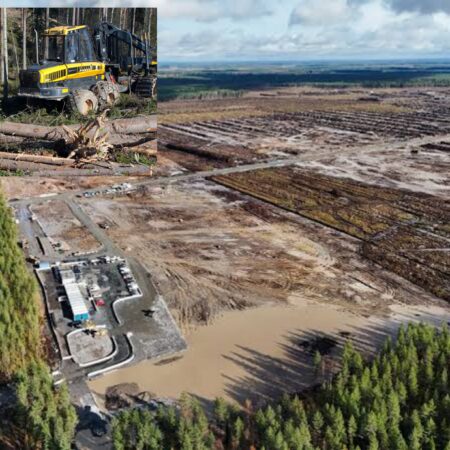
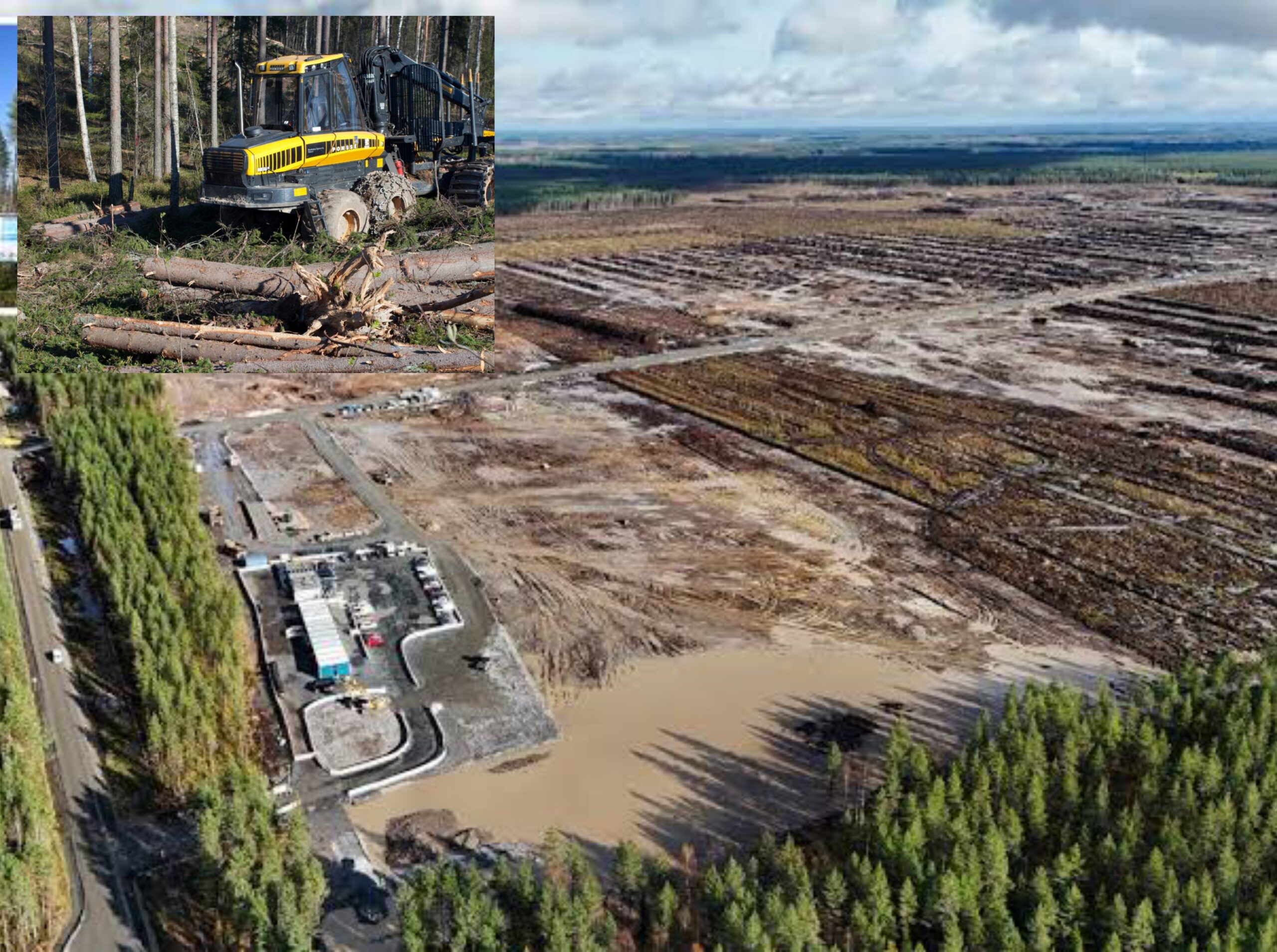

Google’s expansion of artificial intelligence infrastructure in Finland has become the centre of a major environmental controversy after an estimated 400,000 trees were reportedly cut down across two proposed data-centre sites before the required environmental impact assessments were completed. The clearances have raised concerns about forest destruction, water quality, wildlife displacement and the balance between technological development and environmental protection.
The controversy centres on Muhos and Otanmäki in northern Finland, where extensive forest clearance was carried out in preparation for new data centres. Finnish authorities have ordered a temporary halt to environmentally significant preparatory work while the required assessments are completed. The dispute has now become a wider debate about how Finland should manage the rapid growth of energy-intensive AI infrastructure.
How much forest has been cleared?
According to estimates reported by The Guardian and other news organisations, the scale of the destruction is substantial:
Muhos: An estimated 250,000 trees were felled across approximately 330 hectares of forest.
Otanmäki: A further estimated 150,000 trees were reportedly cut down, with the affected area described in reports as just under 200 hectares.
Together, these estimates amount to around 400,000 trees across hundreds of hectares. The tree counts are reported estimates rather than an official count published by the Finnish regulator.
The work reportedly involved not only cutting trees but also removing topsoil, constructing access roads and altering drainage systems. These activities can cause long-term changes to habitats, soil conditions and the movement of water through the landscape.
The central legal concern is that extensive preparatory work proceeded before the mandatory environmental impact assessment process had been completed. Finland’s Licensing and Supervision Authority subsequently ordered the suspension of significant site-preparation work at the two planned data-centre locations.
Wildlife displacement: Wolves and birds affected
One of the most troubling aspects of the controversy is the reported displacement of wildlife. Forests provide shelter, food, breeding grounds and movement corridors for numerous species. Removing large areas of woodland can force animals to search for new habitats, bringing them closer to roads, farms and residential areas.
Residents of Otanmäki have reported that wolves began appearing in the village after the surrounding forest was cleared. Anni Ranta, a local resident, told The Guardian that wild animals had left the forest. Local conservationists have also raised concerns about three-toed woodpeckers that nested in the affected woodland.
The consequences could extend beyond individual animals. Forest fragmentation can disrupt breeding, feeding and migration patterns, while the loss of vegetation may affect insects, birds, soil organisms and other wildlife that depend on the forest ecosystem.
“We had wolves coming into the village because all the wild animals moved out of the forest,” 53-year-old Otanmäki resident Anni Ranta told the Guardian. “They fled.”
Though Ranta’s family has called the area home for generations, the tumult has her considering whether to move out of Otanmäki for good.
“I don’t want them here,” she continued, speaking of Google’s data centers. “I don’t want them in Finland at all. I don’t like the whole idea of AI and the world changing and the way it’s changing. It’s going too fast, too soon.”
Antti Jakonen, a resident of Muhos, put it in even starker terms. “It has been done in the wrong way. American style. No sense. No sense at all,” he told the Guardian.
Water pollution and concerns for local communities
The environmental concerns extend beyond the loss of trees. Residents near Muhos have reported brown, muddy water flowing from the cleared site into a stream connected to the Oulujoki River. At Otanmäki, residents have also described changes in stream water following the forest clearance. Such reports have raised questions about sediment runoff, drainage and possible effects on aquatic ecosystems.
Finland’s environmental authority has also raised concerns about water management at the Muhos site. The local geology presents additional risks because disturbing certain soils can potentially release acidic compounds and metals into drainage water. The regulator has requested a water-management plan that includes independent monitoring.
For nearby residents, the concerns are practical as well as environmental. People have raised questions about construction noise, the future character of their communities and the long-term consequences of hosting large industrial facilities.
Public reaction has included anger, concern and demands for greater accountability. The Finnish Association for Nature Conservation has criticised the scale of the clearance and questioned how the work could proceed before the necessary environmental assessments were complete.
According to The Guardian, a petition demanding stronger regulation of data centres and financial compensation for affected communities had attracted more than 93,000 signatures by 22 October 2026. The controversy has also prompted debate about whether Finland’s environmental rules adequately address the speed and scale of modern data-centre development.
Google’s response and Finland’s legal action
Google’s Finland country manager, Antti Järvinen, apologised for the forest clearances. He said the company had acted according to its understanding of the legislation at the time. Google has also stated that it will comply with the authorities’ requirements.
The company has proposed planting trees across 130 hectares at Muhos and says it is working to protect water quality. Conservationists have questioned whether this proposal is sufficient to address the damage caused by clearing approximately 330 hectares at that location.
Replanting can help restore vegetation over time, but newly planted trees cannot immediately replace the ecological functions of an established forest. Recovery depends on the species planted, soil conditions, water management, habitat connectivity and the time required for a functioning ecosystem to develop.
Finnish authorities have ordered a temporary suspension of environmentally significant preparatory work at the planned Muhos and Kajaani–Otanmäki sites until the required environmental impact assessments are completed. The assessments are intended to help establish the potential environmental effects and the measures needed to address them.
The legal issue is therefore not simply whether trees were cut down, but whether the work complied with the applicable environmental requirements and whether adequate assessment took place before extensive changes to the land.
What is the future of Google’s data-centre plans?
As of 25 October 2026, the temporary suspension of significant site-preparation work is a major obstacle to the projects, but it does not by itself mean that the data centres have been permanently cancelled. Planning, assessments and regulatory decisions will shape what happens next
Several developments will be important in the coming months:
Completion of environmental assessments: The findings may identify further risks, necessary safeguards or changes to the proposed developments.
Regulatory decisions: Authorities will need to determine whether and under what conditions significant work can resume.
Water monitoring and restoration: Independent monitoring could help establish the extent of any water-quality impacts and whether remedial measures are effective.
Community pressure: Public demands for compensation, stronger regulation and transparent decision-making may influence the debate over future projects.
Economic and political considerations: Finnish officials will have to weigh potential employment, tax revenue and investment against environmental impacts and the demands placed on infrastructure.
Google’s broader investment programme in Finland is valued at €13 billion and forms part of its expansion of digital and AI infrastructure. The outcome of the disputed projects could therefore have implications beyond the two locations, particularly as Finland considers how to regulate a growing number of proposed data centres.
The bigger question: Can AI development be environmentally responsible?
Data centres are essential to many online services and AI systems, but they require land, electricity, cooling infrastructure and reliable water management. As demand for computing grows, the environmental footprint of these facilities deserves closer scrutiny.
The Finnish controversy illustrates why environmental assessments must be more than a procedural formality. They can help identify sensitive habitats, examine alternative sites, assess water and energy demands, and establish safeguards before irreversible changes occur.
It also raises questions about corporate responsibility. Large technology companies can bring investment and technical expertise to a region, but the benefits need to be weighed against the costs borne by local people and the natural environment.
Ultimately, the issue is not whether technological progress should stop. It is whether that progress can be achieved while respecting environmental law, protecting wildlife and ensuring that local communities share in the benefits without bearing unacceptable costs.