Pakistan Drone deal with US company which has Trump Family investment link raises ‘appeasement tactics’ question of “short cut route” to get White House access

Pakistan has struck a Defence deal with a United States drone company which has been financially linked to American President Trump family members.
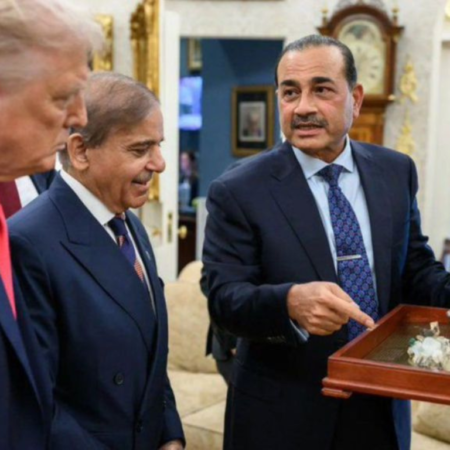
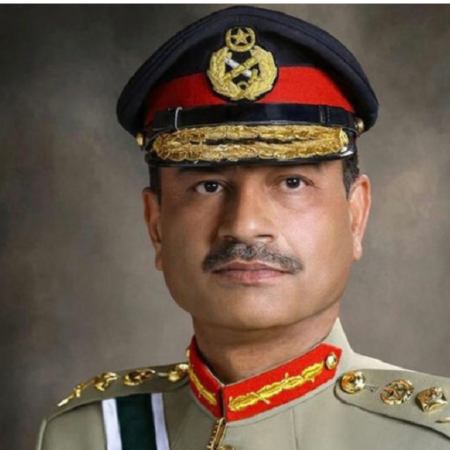
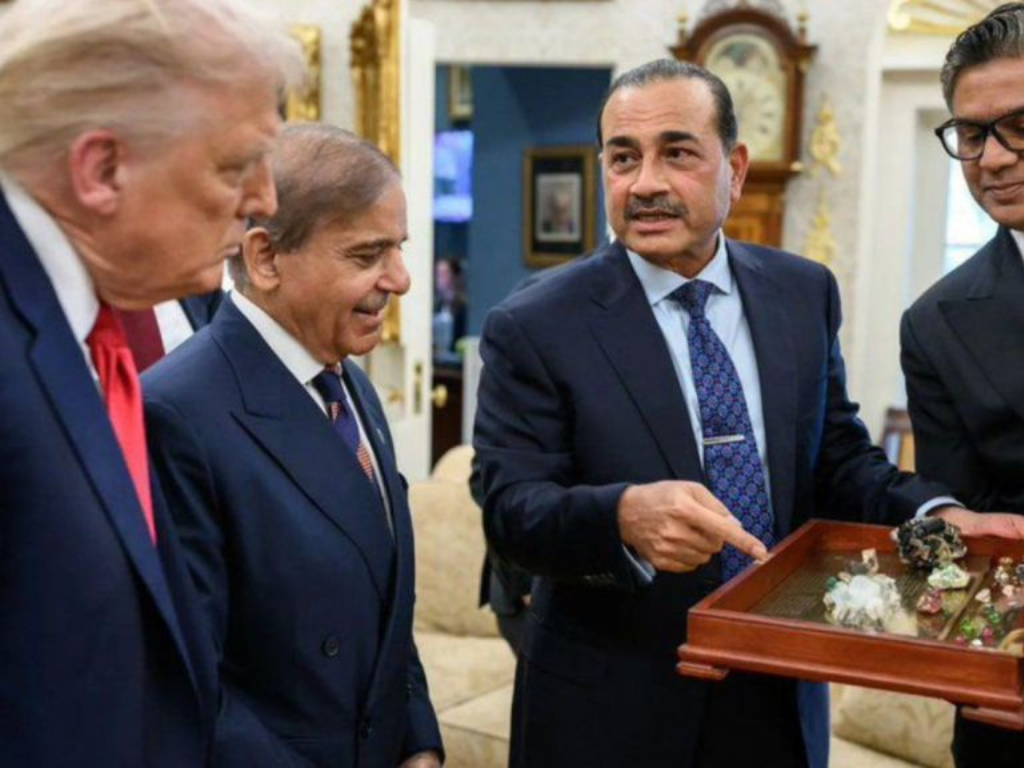
The company, Powerus, signed a memorandum of understanding with Pakistan’s army in September 2026 following a meeting between its representatives and Pakistan’s army chief, Field Marshal Asim Munir. The agreement provides a framework for the sale of drone-related technology and potential joint manufacturing in Pakistan. The financial value of the initial order has not been publicly disclosed.
The deal has attracted particular attention because of Powerus’s connection to Donald Trump’s sons, Donald Trump Jr. and Eric Trump.
What is the Pakistan-US drone agreement?
Powerus is a relatively new American defence technology company specialising in autonomous drones and drone-interceptor technologies.
As per the report, Powerus plans to establish a longer-term relationship with Pakistan that could eventually include localised manufacturing. The company has also received an initial order from Pakistan, although neither the precise value nor the complete details of the systems involved have been publicly released.
For Pakistan, the agreement comes at a time when Islamabad is attempting to diversify parts of its defence supply chain.
China remains Pakistan’s dominant defence supplier. The Financial Times reported that roughly 80% of Pakistan’s military imports currently come from China. A greater US defence relationship could therefore give Islamabad access to another source of unmanned and counter-drone technology.
The agreement also reflects Washington’s renewed engagement with Pakistan’s military establishment after years in which the bilateral relationship had been considerably more complicated.
Why is the Trump family connection making buzz ?
The controversy is not simply about drones.
Powerus is preparing to merge with Nasdaq-listed Aureus Greenway Holdings. Donald Trump Jr. and Eric Trump have investments connected to Aureus through an investment vehicle known as American Ventures. The merger is expected to create a publicly traded company combining Aureus and Powerus.
That financial connection has naturally raised questions because the company is now seeking defence business with Pakistan while members of the US president’s family have an investment interest in the corporate structure surrounding the company.
However, Indian Express reported that the Trump sons are expected to hold a stake in the merged entity but described them as passive investors who do not control the company’s operations or contract decisions. Powerus’s leadership has also said that its business success is based on the company’s capabilities rather than its political connections.
Powerus “Simultaneous” drone deals to both India and Pakistan
There is another important part of this story.
Months before the Pakistan agreement, Powerus had already entered into an agreement with Indian defence company Paras Defence in June 2026.
That agreement involves the manufacturing and commercialisation of Powerus’s Guardian-1 counter-drone system in India. The value of the Indian arrangement has not been publicly disclosed.
This means that the same US company has established defence-related relationships with both India and Pakistan.
However, the two agreements are not necessarily identical.
The Indian agreement specifically refers to the Guardian-1 counter-drone system, while the Pakistan memorandum does not publicly specify the exact system or disclose its financial terms. India Today also cautioned that it is too early to conclude that the arrangements are equivalent.
Why drones matter to Pakistan
Drones have become one of the most important technologies in modern warfare.
The wars in Ukraine and the Middle East have demonstrated how relatively inexpensive unmanned systems can be used for surveillance, precision strikes, battlefield reconnaissance and counter-drone operations.
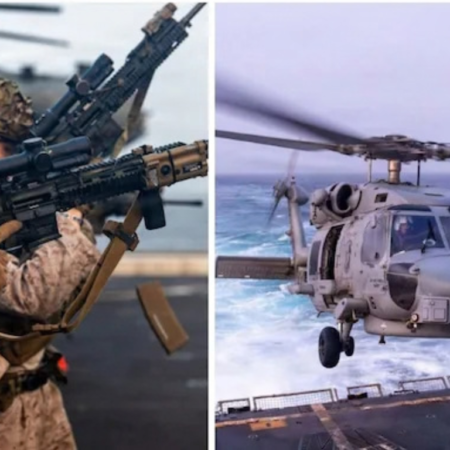
Powerus has developed technology that includes drones and drone interceptors. The company reportedly produces thousands of interceptors every month and recently secured a $90 million contract involving the US Air Force. It has also licensed Ukrainian drone technology, drawing on experience developed during the Russia-Ukraine war.
For Pakistan, developing access to such systems could have implications beyond conventional procurement. Local manufacturing could potentially help Islamabad build domestic capabilities while reducing dependence on foreign suppliers for certain categories of unmanned technology.
At the same time, Pakistan’s military relationship with China remains substantial. Therefore, a US-Pakistan drone partnership should not automatically be interpreted as Pakistan abandoning Chinese defence technology.
A bigger US-Pakistan reset?
The drone deal is part of a broader improvement in US-Pakistan relations.
Recent developments have included cooperation involving defence technology, oil and gas infrastructure protection and other commercial initiatives. The relationship has also benefited from the growing political engagement between Trump and Munir.
For Washington, deeper defence engagement with Pakistan could provide greater strategic access and influence in a region where China remains a major player.
For Islamabad, closer relations with Washington could provide access to American technology, investment and diplomatic leverage while maintaining its longstanding relationship with Beijing.
But the Trump-family investment connection adds another layer to the story.
The central question is therefore not simply whether Pakistan is buying American drones. It is whether the growing overlap between political networks, private investment and defence business will generate greater scrutiny of how such deals are structured and approved.
Implications for India
Earlier, there was an unwritten understanding that countries supplying weapons to India would generally avoid major defence deals with Pakistan. Russia, for example, has historically avoided significant arms deals with Pakistan, given its position as a major defence supplier to India.
In the case of this drone deal, however, India may need to draw a clear red line, particularly as Operation Sindoor remains active and the possibility of future confrontation continues to exist. These drones, which Pakistan is procuring, could potentially be used against India as well as against Afghanistan.
For India, this also highlights the critical need to invest further in drone technology and strengthen indigenous capabilities, as drones have become increasingly important to national security and modern warfare.
India also needs to raise these concerns with its American partners and communicate the potential security implications of such defence transfers.