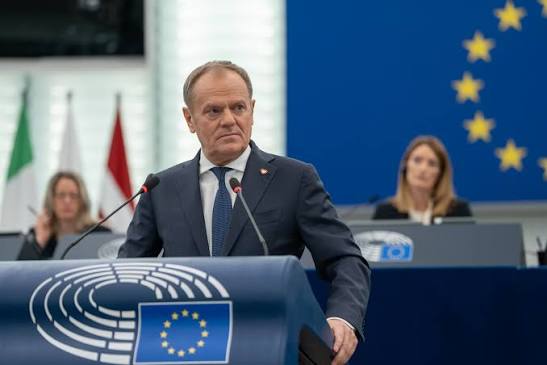
Poland holds emergency security meet on asassination plot against PM Donald Tusk and his defence minister, red alert for NATO?

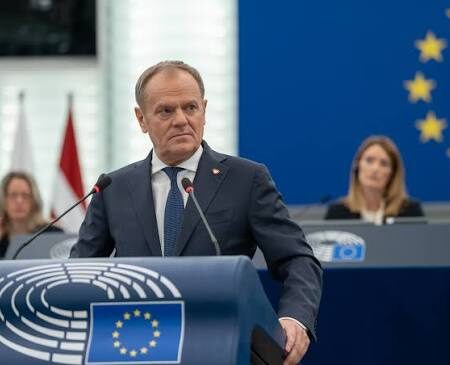
Poland has stepped up security measures following reports of a potential assassination plot targeting Prime Minister Donald Tusk and Defence Minister Władysław Kosiniak-Kamysz, prompting an emergency response from the country’s security agencies.
Polish authorities confirmed that information concerning a possible attack on the two senior government officials had been forwarded to the police through the State Protection Service (SOP), which is responsible for protecting key state figures. The warning prompted a coordinated response involving police, intelligence officials and the Interior Ministry.
Security Agencies on High Alert
Jacek Dobrzyński, spokesperson for the coordinator of Poland’s special services, described the reported threat as extremely serious. He indicated that authorities believed there was a high probability that the threats could be carried out.
The emergency response brought together representatives of the police, the Internal Security Agency and the State Protection Service. Officials did not immediately disclose the precise nature of the alleged plot, the identity of any suspects or whether a specific attack had been planned.
Prime Minister Tusk was reportedly informed of the threat on Sunday morning. Government officials stressed the seriousness of the situation as security agencies worked to assess the available information and determine the appropriate protective measures.
Rising Security Concerns in Poland
The latest warning comes amid growing concern over violent incidents and potential security threats in Poland. Authorities have recently faced a series of violent attacks at schools in the country’s central Mazovia region, including incidents that resulted in deaths and injuries.
The government has also expressed concern about online content glorifying violence and the possibility of copycat attacks. These developments have intensified public debate over domestic security, law enforcement and the prevention of politically motivated violence.
Poland’s strategic position on NATO’s eastern flank has added another dimension to its security concerns. Since Russia’s full-scale invasion of Ukraine in 2022, Polish officials have repeatedly warned about possible hybrid threats, including sabotage, disinformation and other activities intended to undermine national security.
Poland has experienced intense political polarisation in recent years, with threats and inflammatory rhetoric directed at public officials. In August 2026, police detained a 23-year-old man accused of calling for the assassination of senior Polish politicians. Such incidents illustrate the risks associated with politically motivated threats, although there is no confirmed link between that case and the latest warning.
Implications for Poland’s Political Stability
Any credible threat against a country’s prime minister and defence minister raises serious questions about the protection of senior officials and the security of national institutions. In Poland, the reported threat is particularly significant because the two officials occupy central positions in the country’s political leadership and defence policy.
Poland’s response is expected to focus on protecting its political leadership, identifying the source of the threat and preventing any potential attack.
First, the State Protection Service may review the security arrangements surrounding Tusk and Kosiniak-Kamysz. Depending on the assessed risk, authorities could introduce additional protective measures for the officials and review security at government buildings and public appearances. The precise measures adopted have not been publicly disclosed.
Second, police and intelligence agencies will seek to establish who issued the warning and whether it contains credible information about a planned act of violence. Investigators may analyse digital communications and other available evidence to identify suspects and determine whether anyone has taken concrete steps towards an attack.
Third, the Internal Security Agency and other relevant services may intensify intelligence-sharing and counterterrorism coordination if the information suggests a wider threat. If sufficient evidence is obtained, authorities could pursue arrests and criminal proceedings under Polish law.
If evidence of foreign involvement emerges, Poland could consider additional counterintelligence measures and consultations with its European and NATO partners.
Implications for NATO and European Security
The reported threat has significance beyond Poland’s domestic politics. As a member of NATO and a major supporter of Ukraine, Poland occupies a strategically important position in European security.
An attack on the country’s prime minister or defence minister could create a serious political and institutional crisis, particularly during a period of heightened tension between Russia and Western countries.
If investigators establish that an organised foreign operation was responsible, Poland could seek closer intelligence cooperation with allied governments and consider coordinated diplomatic or security measures.
Nevertheless, a reported threat against political leaders does not automatically activate NATO’s collective-defence provisions. Any alliance response would depend on the circumstances, the available evidence and the relevant treaty framework.
For now, the central facts remain limited: authorities have received a serious warning and initiated a security response, but no publicly confirmed assassination attempt or responsible party has been established.
Poland’s immediate priorities are clear: protect its leadership, investigate the threat thoroughly and prevent violence. The findings of the investigation will determine whether the incident represents an isolated threat or a more serious challenge to the country’s national security.