Meta launches “Muse Charm”, a handheld device allowing people to utilise an AI personal agent without their phone, computer or glasses

Meta is taking its artificial intelligence ambitions beyond smartphones, computers and smart glasses.
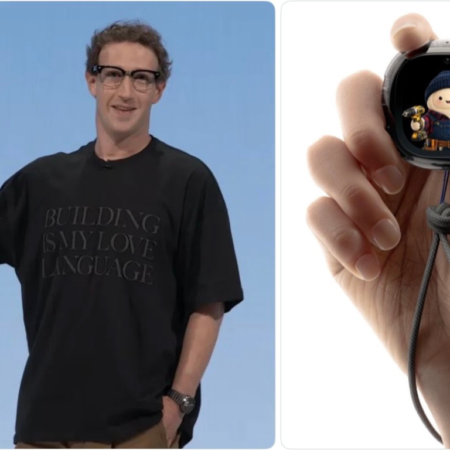
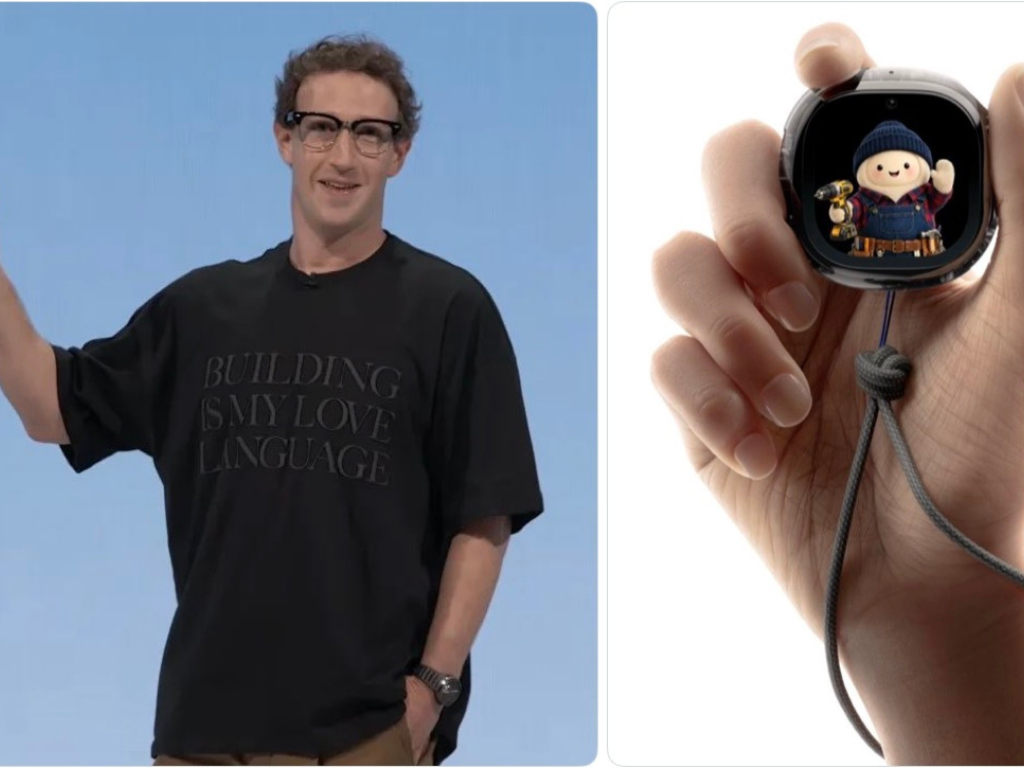
At its annual Connect event on September 23, Meta unveiled Muse Charm, a small handheld device designed to give users direct access to the company’s personal AI agent, Muse, without requiring a phone, computer or glasses. Meta describes it as the first device built specifically for Muse. The company’s India website currently lists the device as “not yet available” in the region.
The gadget is expected to arrive around the holiday season, with CEO Mark Zuckerberg describing it as a compact way to keep Muse available throughout the day. TechCrunch reported that Meta plans to ship the device in December.
But Muse Charm is only one part of Meta’s much larger strategy. The company is attempting to turn Muse from a conventional chatbot into an AI agent capable of acting on behalf of its user—including shopping, negotiating bills, finding refunds, managing emails and performing tasks across software.
And Meta has already revealed how it intends to make money from that agent.
Meta does not want to put advertisements inside Muse
Advertising remains the foundation of Meta’s existing business, but Zuckerberg said the company does not intend to fill Muse with conventional advertisements.
Instead, Meta plans to take a small fee from transactions completed through the AI agent.
“We believe that Muse will make you money,” Zuckerberg said at Connect, explaining that users would receive a large amount of free access while Meta expects to eventually earn money through transaction fees.
That represents a potentially significant change in the economics of digital advertising.
Today, companies compete for users’ attention because attention can be converted into advertising revenue. An AI agent changes that relationship.
Instead of searching for a product, opening several websites, comparing prices and finally purchasing something, a user could simply tell Muse what they need and allow the agent to do the work.
Meta’s own examples illustrate the idea.
Alexander Wang, who leads the product, said Muse had negotiated with a cable company through its online support system and reduced a customer’s bill by $85 a month. He also described the agent finding savings on car and home insurance and identifying refunds users did not know they were entitled to.
The bigger opportunity, therefore, is not simply selling an AI gadget.
It is positioning Muse between consumers and the digital economy.
Muse wants to become the middleman between users and businesses
Meta has already established connections with a growing number of commerce and productivity platforms.
According to the company, Muse can work with payment services including Stripe’s Link, Shop Pay and PayPal.
Its retail connections include Walmart, Best Buy, Gap, Sephora, Ulta, Wayfair, Michael Kors, American Eagle Outfitters, DICK’S Sporting Goods and Fanatics.
For travel and groceries, Meta has highlighted Expedia and Instacart, while productivity integrations include Notion, Granola, GitHub and Box.
Wang also said Muse can access Shopify’s product catalogue and use Link and Shop Pay to purchase products online.
Meta has simultaneously opened its connector platform to developers. Wang said the company received more than 1,500 applications within a week of opening the platform.
If this ecosystem expands, Muse could evolve from an AI assistant into something closer to a personal digital purchasing agent.
And that creates a major conflict with some of the internet’s biggest platforms.
Amazon and Meta are already on opposite sides
One of the biggest questions surrounding AI agents is whether online platforms will allow them to act on behalf of customers.
Amazon has blocked Meta’s Muse agent from shopping on its platform, according to recent reporting. Amazon has raised concerns around privacy, security and the way third-party agents interact with its website.
The dispute goes beyond a technical disagreement.
Traditional e-commerce platforms make money not only from transactions but also from controlling the customer experience. They can recommend products, display advertisements, promote sellers and collect information about what consumers browse.
An autonomous AI agent could remove much of that interaction.
Instead of visiting Amazon and seeing the products Amazon wants to show, a customer could simply tell Muse:
“Find me the best television under ₹80,000.”
Muse could potentially compare options across different retailers and complete the purchase without the consumer spending time inside any individual platform.
That could weaken the importance of the traditional website and app.
For retailers, this raises another question: who owns the customer relationship—the merchant or the AI agent?
The agent is becoming increasingly autonomous
Meta is also giving Muse greater ability to operate without continuous human supervision.
The company plans to give Muse its own email address, allowing users to add the agent to email threads or forward messages for it to handle.
Meta has also added computer vision capabilities to its Mac application. With user permission, Muse can operate applications on the computer and continue working even after the user walks away.
That is a significant departure from conventional chatbots.
A chatbot generally waits for the user to ask another question.
An agent can potentially continue performing a task after the conversation has ended.
The same philosophy extends to Meta’s AI glasses. Zuckerberg demonstrated how Muse could work in the background while a person was talking to it, including ordering ingredients from Instacart during a conversation about a recipe.
This is where Meta’s hardware strategy becomes important.
Muse Charm could be the bridge beyond smartphones
Muse Charm is essentially a physical access point to this agent.
Meta describes it as a small device that can be carried in a pocket or attached to a keychain. It includes a small display showing Muse’s avatar and allows users to start talking to the AI by tapping the device, without unlocking a smartphone or opening an application. That makes the Charm different from a conventional smartphone accessory.
The underlying idea is that the AI becomes the interface, rather than an application running inside another device.Instead of reaching for a phone and opening an app, users could simply talk to their personal agent. Meta is also positioning AI glasses as another major interface for Muse. Zuckerberg said there are almost two billion people worldwide who wear glasses, and argued that many of those glasses could eventually be upgraded with AI capabilities.
In Meta’s vision, glasses have an advantage over smartphones because they can see what the user sees, hear what the user hears and potentially display information directly in the user’s field of vision.
The company is therefore moving toward a world in which Muse is available through multiple physical interfaces—smartphones, computers, glasses and now a dedicated handheld device.
But autonomous shopping creates a new problem: who is responsible?
The biggest challenge may not be hardware. It may be trust.If an AI agent is authorised to make purchases, negotiate bills and manage digital accounts, what happens when it makes a mistake?
An AI could misunderstand a user’s instructions, select the wrong product or purchase multiple items when the user intended to buy only one.
The question then becomes: what exactly did the user authorise?
This is particularly important because an AI agent can interpret natural-language instructions rather than simply execute a fixed button press.
Payment companies and financial infrastructure providers are already exploring ways to address this problem through authentication and controlled agentic payments.
One possible model is the use of pre-authorised wallets or spending limits, where users define exactly how much an agent can spend and under what conditions. For Meta, solving this issue will be essential if Muse is eventually expected to operate independently.
Meta promises a private computing environment
Meta says it has built security architecture specifically for autonomous Muse agents.
Zuckerberg said each Muse receives its own private and secure computing environment and described the company’s secure virtual machine as highly advanced. Meta also plans to release a confidential virtual machine designed so that even Meta itself would not be able to access the information inside it. However, the company has not yet provided a release date for that technology.
That timing matters because the more autonomy Muse receives, the more sensitive information it will potentially handle—including emails, purchases, accounts and personal preferences.
Recent events have already demonstrated the security challenges surrounding autonomous AI. Meta recently patched a vulnerability in its Muse Mac application after a researcher demonstrated that an attacker with local access could potentially manipulate the agent.
The bigger battle is over who becomes the default interface
Meta’s Muse strategy ultimately represents a much larger technological shift. For decades, consumers have interacted with the internet through websites and applications. Google helped people find those websites, while smartphones turned apps into the primary interface.
AI agents could introduce another layer. Instead of asking: “Which website or app should I use?” users could increasingly ask: “Can you do this for me?”
If that happens at scale, the company controlling the agent could become a powerful intermediary between consumers and businesses.
That explains why Meta’s transaction-fee model is so important.
Meta does not necessarily need Muse to become another advertising platform. It could instead become a system through which billions of dollars of consumer transactions pass, with Meta taking a small percentage.But the company still has major questions to answer.
Meta has not disclosed the transaction fee it intends to charge. It has also not clearly explained whether retailers will pay for placement inside Muse’s recommendations, how products will be ranked when multiple businesses offer the same product, what spending limits users will have, or exactly when its confidential computing system will become available.
And for India, another question remains particularly important: when will Muse and Muse Charm launch in the country, and under what commercial model?
For now, Meta’s India page simply says Muse Charm is not yet available in the region. Muse Charm may look like a tiny gadget, but Meta’s ambition is considerably larger.
The company is not merely building another AI device. It is attempting to build an AI agent that sits between the individual and the internet—and potentially between the individual and the companies they buy from.
If that model succeeds, the most important interface on the internet may no longer be the website, the app or even the smartphone. It could simply be the AI agent that acts on your behalf.