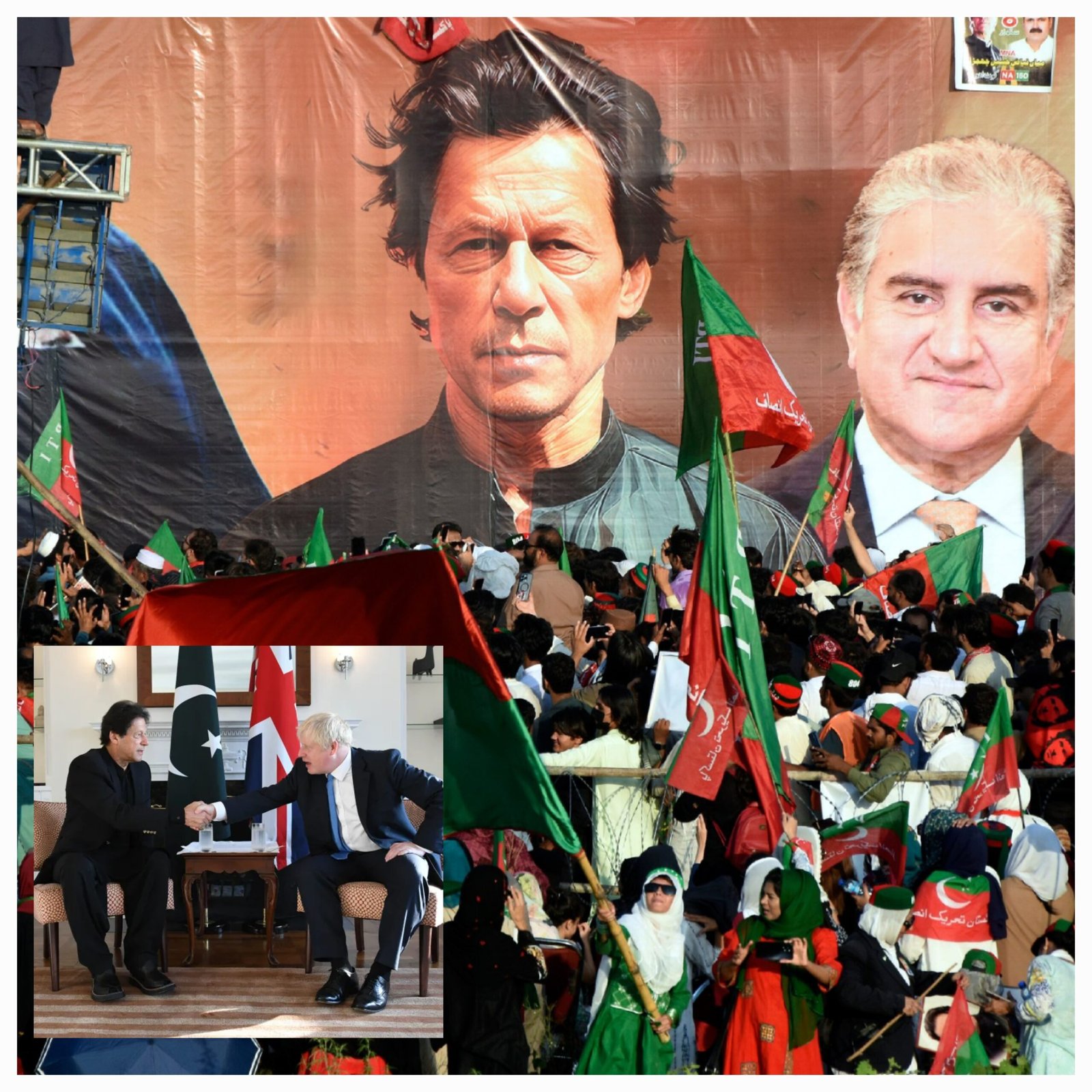
Boris Johnson attacks Asim Munir calls for UK intervention to save Imran Khan as Pakistan braces for massive protests

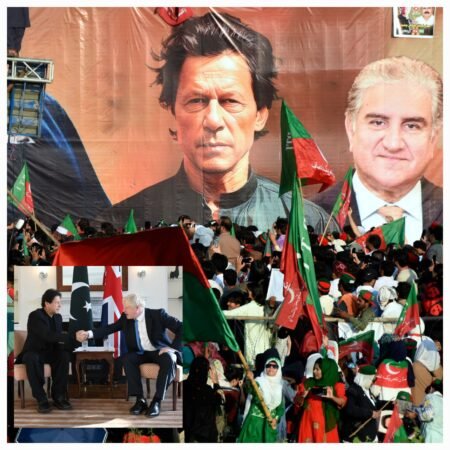
Pakistan is once again reeling from the effects of jailing former Prime Minister Imran Khan as another long march from his supporters threaten to rock the current regime. The March now scheduled begin on October 4, 2026 with Khan’s party Pakistan Tehreek-e-Insaf (PTI) to press for Khan’s release and what the party calls restoration of constitutional supremacy.
With the initial date of September 27 postponed to October 4 after internal consultations, as Khyber Pakhtunkhwa Chief Minister Sohail Afridi announced the shift. Party figures framed the delay as a strategy to “wear down” the federal government, noting they could still move earlier if conditions allowed. Spokespersons questioned how long authorities would keep the country restricted.
The former Prime Minister Imran Khan is widely recognized as the most popular leader in Pakistan where many believe he has been wrongly framed, charged and detained in a corruption case since August 5, 2003. Khan apparently had fallen out with the behind-doors military regime and wanted to run the country as its recognized democratic leader without their interference. However in Pakistan leaders are expected to be just rubber stamps, as the military regime runs the nation from behind the curtain. Khan’s defiance ended up with him in Adiala jai, Rawalpindi.
He and his supporters describe the abhorrent conditions as punitive solitary confinement, often more than 22–23 hours a day in isolation with limited family or lawyer access for extended periods, restricted reading material, and inadequate medical care. Health concerns include significant vision loss in one eye (central retinal vein occlusion, with reports of around 80–85% loss attributed partly to delayed treatment), fluctuating blood pressure, palpitations, headaches, anxiety, and mental stress linked to isolation.
Demands of the March
The PTI leadership expects to make a serious impact on the ruling regime with leader Sohail Afridi initially claiming the party aimed to mobilize four million people to march toward Islamabad to bring their political struggle to a conclusion.
The federal government has already deployed over 22,000 security personnel and blocked major entry points into the capital with shipping containers. Government officials and political opponents argue that heavy restrictions will severely limit how many protesters can actually reach the capital Islamabad.
The march has listed its demands:
1. The immediate Release of Imran Khan and PTI Leaders: The foremost objective is pressing for the absolute freedom of Imran Khan, whom the party maintains is a political prisoner held on fabricated charges. They are also demanding the immediate release of his recently detained sisters (Aleema, Uzma, and Noreen) and other party members.
2. The party continues to contest the legitimacy of the current ruling coalition government, demanding accountability for what they claim was widespread rigging and a “stolen mandate” during the February 8 elections.
3. The protest demands “constitutional supremacy” and the absolute restoration of an independent judiciary. Specifically, they are protesting against the recent 26th Constitutional Amendment, which granted legislators enhanced powers over the appointment of top judges.
4. In the days leading up to the march, leadership of Khan’s part have demanded Medical Treatment, Immediate transfer of Imran Khan to Al-Shifa Hospital due to concerns over his health, including specialized care for an eye condition and prison Access
5. Restoration of unrestricted family and legal visits, following claims that Khan has been subjected to prolonged isolation.
Khan’s family detained sons terrified of the regimes treatment
Imran Khan’s sons, Sulaiman (29) and Kasim (from his first marriage to Jemima Goldsmith and based in London), have publicly voiced deep fears for his life and well-being. In interviews (including with Al Jazeera and others around late August 2026), they described him as “agitated” and suffering “severe anxiety” after limited contact. Sulaiman said: “He’s been mentally tortured with this solitary confinement.” Kasim noted: “His heart rate spikes considerably in his cell. He’s having palpitations due to severe anxiety.”
They alleged conditions in a small cell without adequate air conditioning in summer, restricted books, and isolation exceeding 23 hours a day. More starkly, they claimed authorities were “blatantly trying to kill him in there” or “slowly killing” / “slowly suffocating” him to silence him, linking it in some statements to a “personal vendetta.”
They have called for independent medical checks, questioned why court-ordered private hospital transfers were not fully followed (he was taken briefly to a government facility instead), and noted visa issues blocking their own visits. Kasim has also highlighted the recent detention of relatives, saying family members were “ripped from their homes in the middle of the night by masked men.”
Khan’s wife, Bushra Bibi, is also jailed at Adiala Jail, serving sentences in related corruption cases (including seven years in one reference and later 17 years alongside Khan in the Toshakhana-II case). Courts have addressed claims of her isolation as well, ordering that she not be kept in solitary confinement and allowing limited meetings between the couple under prison rules. She has faced her own health concerns and restricted access
Three of Khan’s sisters—Aleema Khan, Dr. Uzma Khan, and Noreen Niazi—were detained in mid-to-late September 2026 under the Punjab Maintenance of Public Order Ordinance for 30 days each and shifted to Kot Lakhpat Jail in Lahore. The detentions came just before the original march date; authorities cited risks to public order and past protest-related activities. PTI and family members condemned the moves as illegal political victimization and an attempt to silence vocal advocates for Khan’s release. Nephews were also briefly taken in some raids but later released. The sisters have previously described his isolation and health decline after rare visits
Boris Johnson wants UK to intervene
former UK Prime Minister Boris Johnson wrote a column for the British newspaper, Daily Mail, voicing concern for Pakistan’s Imran Khan and his three-year long incarceration. Terming the imprisonment as a ‘global scandal’, Johnson urged Britain to ‘use its influence’ to help free Khan.
‘At the moment I am afraid that it looks as though the Pakistanis are actively hoping that he will die in jail. That would be a serious stain on the country’s reputation,’ Johnson writes.
Defending Khan, Johnson writes that nothing he has said or done during his term justifies the way he is being treated by the current dispensation in Islamabad. ‘You can object to some of the attitudes he struck, and to his teenage anti-Americanism, but nothing he said or did can conceivably justify the brutality with which the Pakistani generals are treating the former PM.’
He alleges that the former PM is being incarcerated because the current rulers fear his popularity. ‘What the Pakistani generals fear is that if they let him out, his millions of fans in Pakistan will simply bear him aloft to a tumultuous victory in the next available election. That is why they are treating him with such cruelty.’
‘The Field Marshal (Asim Munir) has nothing to fear from a 73-year-old man in poor health, and it would be the obvious and humane thing to let Imran out, and if necessary keep him under house arrest pending his appeal,’ he adds.
The former PM also turned his criticism towards the British government, arguing that London had failed to speak forcefully enough about Khan’s imprisonment despite Britain’s longstanding ties with Pakistan.
He also pointed to Khan’s connections with Britain, including his education at Royal Grammar School Worcester and Oxford University, as well as his years playing county cricket for Worcestershire and Surrey. His two sons are British passport holders.
“After three years of watching Imran in torment, it is time for us to stop pussy-footing around, use our leverage and call for his release,” Johnson wrote.
Massive Costs of Lockdowns and Protests
Meanwhile Pakistan’s economy, already under pressure, faces heavy daily losses from protest-related disruptions and the countermeasures used to contain them. Finance Minister Muhammad Aurangzeb warned that protests and sit-ins could cost around Rs 120 billion per day (services sector ~Rs 86 billion, industry ~Rs 25 billion, agriculture ~Rs 9 billion, plus revenue impacts), describing them as “self-inflicted pain” amid external pressures. Earlier estimates for similar PTI actions put daily economic hits higher in some reports (e.g., Rs 190 billion covering GDP, exports, FDI, and provincial effects)
Direct security and management costs add up: past multi-year protest handling in Islamabad exceeded Rs 1.35 billion; individual campaigns involved hundreds of millions for container rentals, vehicle/fuel for forces, meals for personnel, and damage repairs. Businesses in Islamabad/Rawalpindi have reported multi-billion-rupee losses from road closures, internet/mobile restrictions, and shutdowns. Critics note that the lockdowns themselves (containers blocking trade routes, congestion, lost transport revenue) compound the economic hit.
These cycles of mobilization, heavy security responses, family detentions, and economic disruption continue to define Pakistan’s polarized politics. As the October 4 date approaches, PTI insists on Khan’s (and relatives’) release and better treatment, while the government prioritizes order. The human toll on Khan, his jailed wife and sisters, and the anxiety of his sons abroad. The clash between the regime and the public has been going on since Imran Khan’s imprisionemnet and now perhaps it time for one mega showdown.