Election Commission Rift Puts CEC’s Powers Under Scrutiny : What Supreme Court Said About a ‘Superior’ CEC

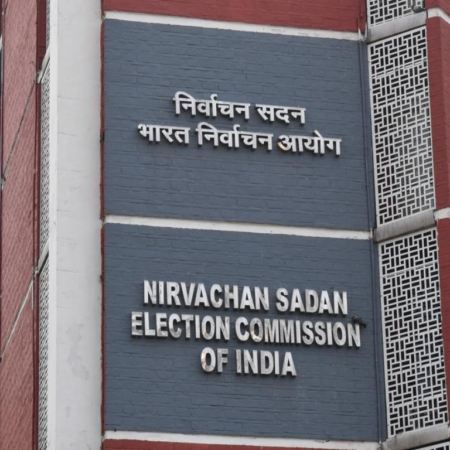
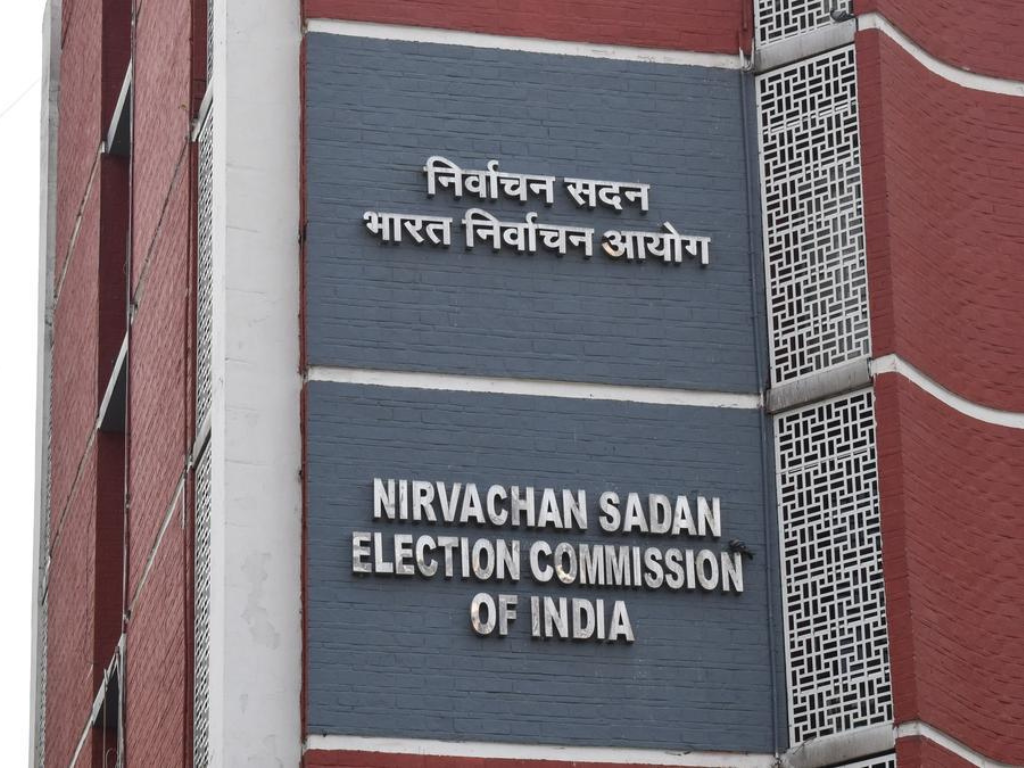
A new controversy due to an Indian express investigation report about the Election Commission of India has brought an old constitutional question back into focus: How much power does the Chief Election Commissioner have inside a three-member Election Commission?
The issue has emerged amid reports that Election Commissioners Sukhbir Singh Sandhu and Vivek Joshi formally objected to several decisions taken during the Election Commission’s work, including the Special Intensive Revision (SIR) of electoral rolls.
According to the Indian Express investigation, the two Election Commissioners recorded objections on at least 14 times over a 10-month period. It reported that some of the objections concerned decisions allegedly taken without their knowledge or approval. The Election Commission has said that differing views are part of its decision-making process.
The controversy has acquired greater significance because the Election Commission is constitutionally responsible for supervising electoral rolls and conducting elections. Under Article 324 of the Constitution vests this authority in the Election Commission as an institution and first among the equal rather than expressly making the CEC the sole decision-maker.
Why the SIR controversy have taken centre stage ?
The latest dispute comes as the Election Commission is undertaking the Special Intensive Revision of electoral rolls.
The exercise has already generated political controversy, with opposition parties questioning the manner in which electoral rolls are being revised. The BJP and the Election Commission have rejected allegations that the exercise is intended to manipulate voter lists in favour of the ruling party.
The reported internal objections have added another layer to the controversy. One issue highlighted in the reports concerns changes associated with Form 6, the form used for inclusion of names in electoral rolls. It is reported that Election Commissioner Sukhbir Singh Sandhu recorded an objection describing a change as “unauthorised and illegal” and called for its removal.
Former Chief Election Commissioner O.P. Rawat also questioned the legality of the change, while former CEC S.Y. Quraishi supported the argument that a change to the relevant form required an amendment to the rules.
These are, however, disputed interpretations and should not be treated as a judicial finding that the Election Commission acted illegally.
The constitutional question: Is the CEC the boss of the other commissioners?
This is where a 1995 Supreme Court judgment becomes important. The Election Commission was not always a three-member body. In 1993, two Election Commissioners were appointed alongside then CEC T.N. Seshan. Seshan challenged the arrangement, arguing that the additional appointments diluted the authority of the CEC.The dispute eventually reached the Supreme Court.
In its July 14, 1995 judgment in T.N. Seshan, Chief Election Commissioner of India v. Union of India, a five-judge Constitution Bench upheld the multi-member structure of the Election Commission. More importantly, it rejected the idea that the CEC could simply have the final word over the other Election Commissioners.
The court made a particularly significant observation: if the CEC were treated as “superior” in the sense that his decision was always final, the other Election Commissioners could become “non-functional or ornamental.”
The judgment said Election Commissioners are part of the Election Commission and therefore must have a meaningful role in decision-making. It rejected the proposition that their function was merely to advise the CEC.
What happens in case the commissioners disagree?
The Supreme Court recognised that disagreements can occur within a multi-member institution.Its solution was the rule of majority.
The 1995 judgment noted that while the Commission should ideally function collectively, a majority mechanism would operate if consensus could not be achieved. That principle remains relevant to the current controversy.
The Election Commission today consists of CEC Gyanesh Kumar and Election Commissioners Sukhbir Singh Sandhu and Vivek Joshi. The legal framework governing the Commission provides for decisions through unanimity where possible and by majority where members disagree.
This means that a disagreement between the CEC and the other two commissioners does not automatically establish that the CEC has acted unlawfully. The crucial questions are how the decision was taken, whether the statutory procedure was followed, and whether all members were allowed to participate in the decision-making process.
Why is the Supreme Court’s old warning in the picture now?
The significance of the 1995 judgment goes beyond the personalities involved.
The Supreme Court was dealing with a broader institutional principle: when an institution has been deliberately designed as a multi-member constitutional body, the additional members cannot be reduced to ceremonial or advisory positions.
The court reasoned that Article 324 envisaged a Commission consisting of the CEC and other Election Commissioners. Therefore, the latter had to have a say in decision-making.
That reasoning is now being examined against reports of repeated internal objections within the current Commission.
The reported objections do not by themselves establish that the constitutional structure has been violated. But they have revived a fundamental institutional question: Does the Election Commission function as a genuinely collegiate body when its members disagree, or does the CEC exercise disproportionate practical influence over its functioning?
That question is particularly important because the Commission exercises extensive authority over electoral rolls, election schedules, political parties, candidates and the conduct of elections.
The controversy is not entirely new
Internal disagreement within the Election Commission has occurred before.
During the 2019 Lok Sabha elections, Election Commissioner Ashok Lavasa dissented from the majority view in complaints concerning alleged Model Code of Conduct violations involving senior political leaders. The disagreement eventually became public and raised questions about how minority views within the Commission should be recorded.
The history of the Election Commission therefore shows that disagreement among its members is not, by itself, unprecedented.
The present controversy is different in one important respect: the reported objections have emerged alongside an already contentious voter-roll revision exercise, making the internal functioning of the Commission a matter of intense public scrutiny.
A question of institutional checks and balances
The controversy ultimately goes beyond the current disagreement between three individuals.
The Election Commission was created as an institution in which substantial electoral powers are exercised collectively. The Supreme Court’s 1995 ruling specifically rejected the proposition that the CEC’s position as chairman gives him an overriding decision-making authority over the other commissioners.
At the same time, the existence of dissent does not mean that every decision opposed by an Election Commissioner is invalid. A multi-member institution is expected to accommodate disagreement, with the applicable legal framework determining how the final decision is reached.
The central issue, therefore, is institutional procedure.
Were all commissioners informed? Were their objections considered? Was the decision taken according to the applicable rules? And where consensus was impossible, was the majority mechanism properly followed?
Those questions will determine the legal and constitutional significance of the current controversy.
For now, the reported rift has brought renewed attention to a warning issued by the Supreme Court more than three decades ago: the Election Commission’s multi-member structure has meaning only if all its members have a real role in decision-making.