After targeting Russian oil depots in Krasnodar, Ukraine to unleash a 50,000 strong ‘Army of Robots’

On September 28, the Security Service of Ukraine (SBU) said that its drones struck four oil depots in Russia’s Krasnodar Krai. The Lukoil-Yugnefteprodukt oil depot in Pavlovskaya was also hit, with a fire breaking out at the facility. The Angelinskaya oil depot in Staronizhestebliyevskaya was also reportedly struck and caught fire.
The SBU described the facilities as important parts of the fuel infrastructure used to store and supply petroleum products to Russian forces. Ukrainian officials have said such strikes are intended to disrupt fuel logistics. Ukraine has been specifically targeting Russia’s oil industry as it believes if Moscow’s oil trade is damaged it would permanently dismantle its ability to continue the war.
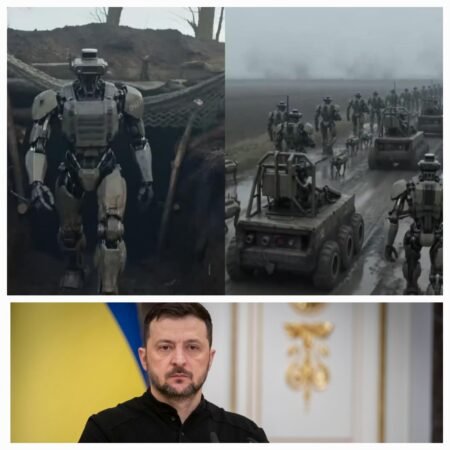
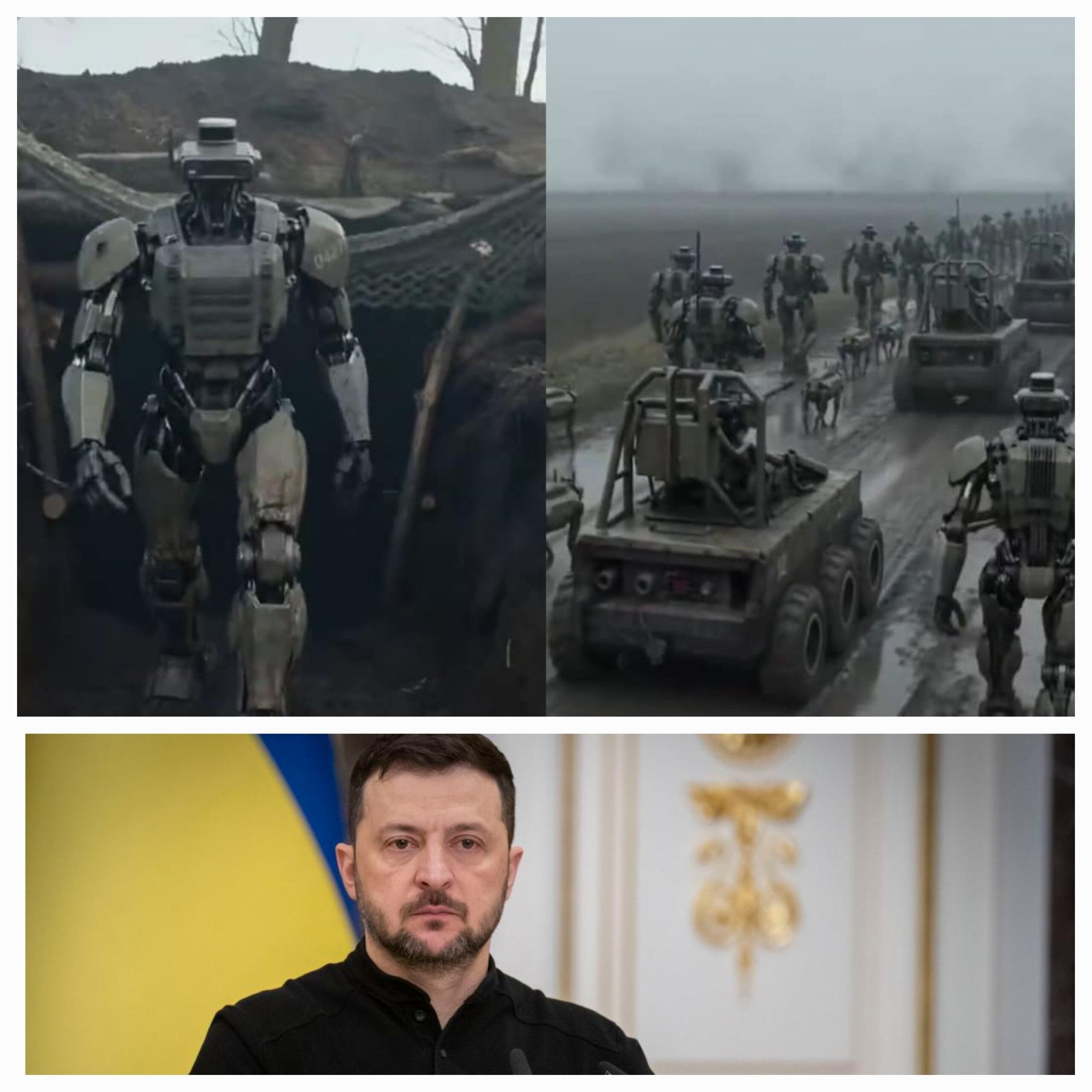
Ukraine is now looking at more technological options as it plans to field tens of thousands of unmanned ground vehicles, turning remote-controlled robots into the new frontline “cavalry” in a war defined by drones, attrition, and manpower shortages. The push, accelerated throughout 2026 and capped by a fresh private-sector initiative called the “Army of Robots,” aims to keep Ukrainian soldiers out of the deadliest zones while forcing Russia to adapt or fall further behind.
From logistics haulers to combat platforms
What began as experimental supply runners has become a systematic effort to replace human exposure with machines. Ukraine’s unmanned ground vehicles (UGVs) wheeled and tracked platforms of varying sizes now perform the most dangerous tasks: hauling ammunition and food across the “kill zone,” evacuating the wounded, laying or clearing mines, patrolling, holding positions for days or weeks, and conducting direct assaults with machine guns, grenade launchers, explosives, or flamethrowers.
Ukraine President Volodymyr Zelenskyy set an ambitious target of at least 50,000 UGVs in 2026. In the first half of the year alone, the military contracted roughly 25,000 systems double the total ordered in all of 2025. Hundreds of Ukrainian companies now produce hundreds of different models. The number of units employing them rose from 67 in late 2025 to 167 by early spring 2026. Mission counts climbed steadily: more than 9,000 in March, over 10,000 resupply and evacuation runs in April, and cumulative figures exceeding 50,000 by mid-year in official tallies.
Commanders describe the robots as force multipliers that absorb risk. One UGV held a frontline position alone for 45 days. In several documented cases, Ukrainian forces captured Russian positions using only ground robots and aerial drones, with no infantry entering the objective; Russian soldiers have even surrendered to the machines. Dedicated UGV battalions and mixed “drone assault units” that integrate aerial drones, ground robots, and limited infantry are now standard in some formations.
The new “Army of Robots”
The latest chapter opened on 26–27 September 2026, when former Defense Minister Mykhailo Fedorov the architect of Ukraine’s highly successful 2022 “Army of Drones”, announced the “Army of Robots” at the IT Arena conference in Lviv. Modeled on the drone program that helped make unmanned aerial systems responsible for the vast majority of Ukrainian strikes, the initiative is a private ecosystem rather than a single company. It seeks to fund startups, run rapid R&D and field tests with the military, and scale whatever works
Fedorov envisions humanoid robots handling simple, repeatable tasks, reloading machine guns, swapping batteries, installing sensors, operating alongside existing UGVs and drones toward greater autonomy. Early goals include a humanoid robot killing a Russian soldier within six months and a fully unmanned assault within a year. The project is backed by investors including Palantir CEO Alex Karp and is framed explicitly as a response to Russia’s ability to copy Ukrainian innovations. “The answer is not more people on the front lines, but full autonomy,” the initiative’s materials state.
What it means for the war
The robots address a brutal reality: persistent FPV and other drones have created a wide kill zone, often stretching 10–20 kilometers or more, in which any human or vehicle movement is extremely hazardous. Traditional infantry assaults and last-mile logistics have become prohibitively costly in lives.
By sending machines first, Ukraine preserves scarce manpower while maintaining pressure on Russian positions.The operational shift is significant. Logistics that once required armored vehicles or foot soldiers now run largely on robots in many sectors, with the stated goal of 100 percent robotic frontline resupply.
Combat roles are expanding: robots hunt infiltration groups, suppress positions, and enable “robot-first” attacks that keep Ukrainian infantry farther back. Commanders in formations such as the 3rd Army Corps speak of eventually replacing up to a third of frontline infantry with technology in the hardest sectors
This does not mean robots will replace soldiers entirely. Complex decisions, holding captured ground, and tasks beyond current machine capabilities still require people. The systems remain mostly remote-controlled, vulnerable to electronic warfare, terrain obstacles, and counterstrikes.
Yet the combination of mass, low cost (dozens of robots for the price of one armored vehicle), and attritability is changing the calculus of endurance and selective offensive action.
Russia’s response
Moscow is not standing still. Russian forces field their own UGVs including the Kuryer/Courier, Impulse-M, Varan, and Omich models for logistics, evacuation, reconnaissance, and limited combat. At least 20 types have been documented in action, with serial production under way and a broader national robotics program in place. Each Russian grouping organizes local production, and the systems perform many of the same high-risk roles as their Ukrainian counterparts.
Ukraine currently holds the edge in numbers, tactical innovation (including air-dropped kamikaze robots behind Russian lines), and integration with aerial drones. Ukrainian drones have struck more than 3,000 Russian ground robots in 2026 alone. Analysts note that Russian communications limitations and slower scaling have constrained wider use, though the gap is narrowing as both sides treat ground robots as essential on a drone-saturated battlefield. Clashes between opposing unmanned systems are expected to become more common.
Ukraine’s robot army is the logical next step after its aerial drone revolution: a pragmatic, technology-driven answer to manpower constraints and the lethal geometry of modern warfare. It will not end the war by itself, but it is already reducing the human cost of holding the line and raising the price of Russian advances. As Fedorov’s new initiative pushes toward greater autonomy, the front is becoming a testing ground for a future in which machines, not men, take the first step into the kill zone.