The pictures and videos emerging from Riyadh, reportedly targeted by Houthi attacks this week, should unsettle anyone who still believes that Saudi Arabia sits behind an impregnable American security umbrella. Ballistic missiles struck King Khalid International Airport and Abha International Airport. Flights were cancelled, passengers were stranded, and the kingdom’s carefully cultivated image of invulnerability took a visible hit. Three people were killed and dozens injured in the initial strikes. Advisories from both India and the United States urged caution. And yet, the loudest silence came from the much-celebrated Mecca Pact.
Saudi Arabia remains the wealthiest and most influential power among Sunni states. It spends billions on advanced weapons, hosts American forces, and projects itself as a stabilising force in the region. Yet none of this prevented Houthi missiles from reaching the kingdom’s key infrastructure. The question that now hangs in the air is simple and uncomfortable: how much real power does Riyadh actually possess when put to the test?
The background is not new. Yemen has long been divided between the Shia Houthi movement, backed by Iran, and Sunni groups supported by Saudi Arabia. Control of the strategic Bab al-Mandeb Strait has remained a constant prize. The Houthis view every Saudi-backed offensive inside Yemen as a direct provocation. Their response, repeated over the years, has been to strike Saudi territory, targeting airports, oil facilities, and military sites. The latest wave of attacks, which reportedly intensified in early October, fits a familiar pattern. What has changed is the political context in which these attacks are taking place.
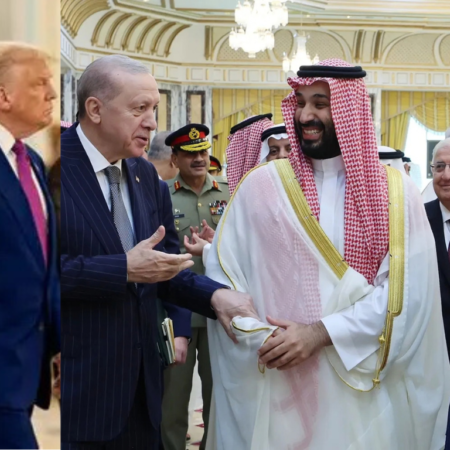
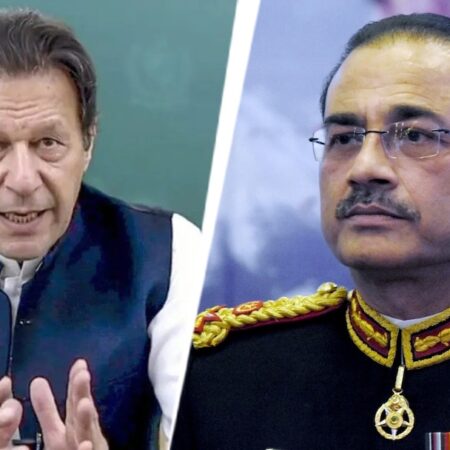
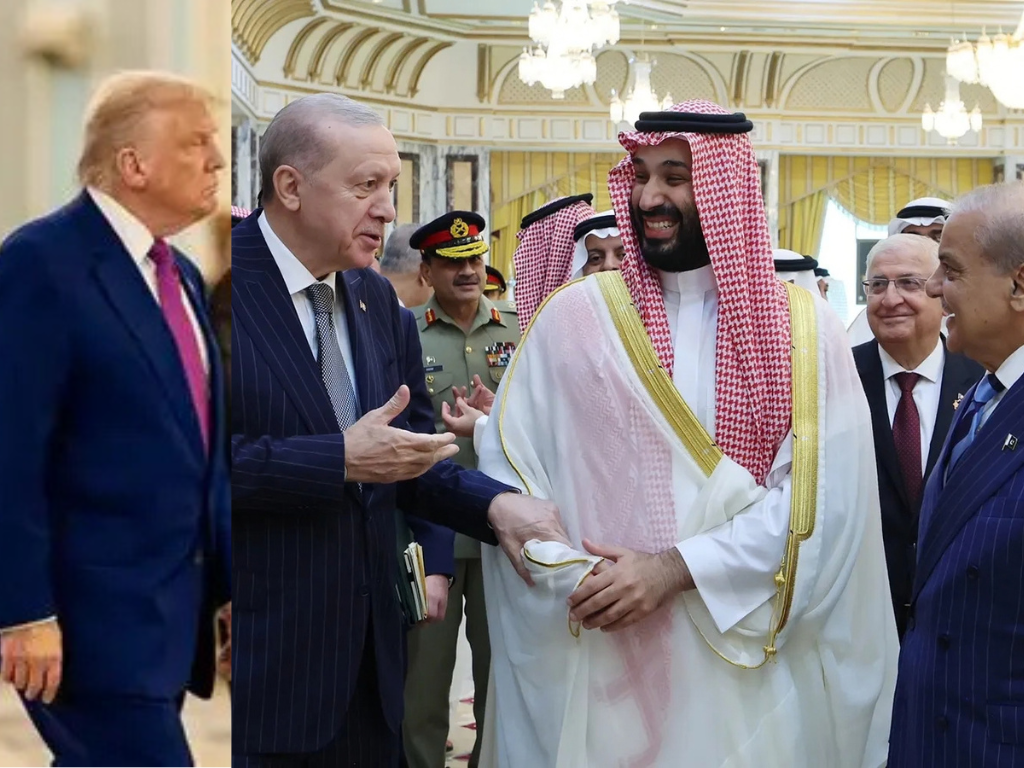
In August 2026, Saudi Arabia, Pakistan, and Turkey signed the Mecca Joint Defence Agreement. Its language was ambitious: an attack on one would be treated as an attack on all. In Indian commentary, the pact was greeted with a mixture of alarm and fascination. Suddenly, Pakistan appeared to have secured a powerful new partner. The optics suggested the emergence of a more assertive Muslim security architecture. The reality, so far, has been more modest.
When the foreign ministers of Pakistan and Turkey travelled to Riyadh on October 5, they offered solidarity and discussed joint mechanisms. They spoke of intelligence-sharing, early-warning networks, air-defence cooperation, and the deployment of defensive systems. They did not announce the deployment of combat troops to Yemen or an immediate military response under the pact’s collective-defence clause. The attacks reportedly continued after the meeting, and the Houthis appeared unimpressed.
Pakistan already maintains several thousand troops in Saudi Arabia under longstanding bilateral arrangements. These forces have historically performed training and internal security roles rather than participating in forward combat operations. Turkey, meanwhile, has been careful to describe the Mecca agreement as defensive rather than offensive. Both countries have political and economic reasons to avoid being drawn into a prolonged quagmire in Yemen. As a result, the pact, at its first serious test, appears more like a framework for consultation, intelligence-sharing, and military cooperation than a fully operational military alliance.
This gap between rhetoric and delivery matters. Saudi Arabia’s vulnerability is not merely a military problem; it is also a political one. If the kingdom cannot reliably defend critical infrastructure, including its main airports, despite American protection and the backing of new regional partners, questions will inevitably arise about the durability of the security order it has sought to build. For Pakistan, the episode undermines the narrative that the Mecca Pact has dramatically altered the regional balance. For Turkey, it reinforces the impression that Ankara prefers calibrated support over an open-ended military commitment.
The Houthis, meanwhile, continue to demonstrate that geography and determination can offset technological superiority. Operating from Yemen, they have repeatedly demonstrated their ability to strike deep inside Saudi territory. Iran’s long-term investment in Houthi capabilities may be paying dividends at a time when Tehran faces mounting pressures of its own.
However, questions remain about the technology behind the missiles used in attacks on Saudi Arabia. Some assessments suggest that their capabilities may be more advanced than Iran’s known arsenal in certain respects, raising questions about the sources of the technology and the extent of external assistance. Who, then, is supplying the Houthis with the technology and expertise required to sustain these capabilities? This remains an important question, but any conclusions about the origin of specific weapons or the involvement of outside actors require credible evidence.
At the same time, reports and speculation have circulated about an alleged understanding between the United States and the Houthis under which American bases and Israel would be spared from attacks. If such an arrangement exists, its implications for Washington’s Gulf partners would be significant. It could raise questions about whether American priorities are shifting and whether Saudi Arabia and its Gulf allies are being left more exposed to regional threats.
Another theory circulating in some media discussions is that Washington is using security pressure to push Saudi Arabia towards recognising Israel under the Abraham Accords framework, with the prospect of stronger security guarantees forming part of the broader equation. Under this interpretation, the United States could be seeking to reshape regional security arrangements by linking Saudi-Israeli normalisation with future defence commitments. However, these claims remain speculative and should not be treated as established fact without credible supporting evidence.
When it comes to the Mecca Pact, none of this means the agreement is meaningless. Intelligence cooperation, air-defence integration, and political signalling all have strategic value. But the initial developments following the Riyadh strikes have highlighted the pact’s potential limitations. Collective-defence language sounds impressive until the missiles actually fly. At that point, the difference between a statement of solidarity and a willingness to fight becomes impossible to ignore.
Saudi Arabia is under real pressure. The disruption at Riyadh’s airport is only the most visible symptom. The deeper test is whether the kingdom’s new partners are prepared to share the risks in proportion to the commitments they made in Mecca. So far, their response appears cautious at best. In geopolitics, caution can easily be mistaken for weakness when the next missile is already in the air.