Ramappa Temple: The Ancient Indian Technique That Could Make Modern Buildings Earthquake-Resistant

An ancient construction technique developed during the Kakatiya dynasty in present-day Telangana is drawing attention for its potential applications in modern earthquake-resistant construction. Known as the sandbox technique, the method involves preparing a foundation pit with a mixture of sand, lime, jaggery and other materials before constructing a building above it.
The technique was reportedly used in the construction of the Ramappa Temple and the Thousand Pillar Temple, two prominent examples of Kakatiya-era architecture. Their foundations have attracted the interest of civil engineering researchers seeking to understand how traditional Indian construction methods could help reduce the impact of seismic vibrations.
How the Sandbox Technique Works
The technique involves digging a pit for the foundation and filling it with a specially prepared mixture containing sand, lime, jaggery and other materials. According to researchers, the granular layer can act as a cushion by absorbing or dissipating some of the vibrations generated during an earthquake before they reach the structure above.
The principle has similarities to modern base-isolation systems, which use specially engineered bearings or flexible components to limit the transfer of ground motion to buildings. However, the traditional sandbox method differs from contemporary systems and requires further scientific evaluation before its effectiveness can be established across different building types.
In a study reported in 2018, Dr Venkata Dilip Kumar Pasupuleti, then an assistant professor at Mahindra École Centrale in Hyderabad, investigated the potential of the technique. Preliminary laboratory experiments using a small sandbox prototype indicated that dry sand reduced the impact force of vibrations by approximately 60 per cent.
The finding offered an initial indication of the technique’s potential, but it did not establish that buildings using such foundations would experience a corresponding reduction in earthquake damage.
Ramappa Temple’s Engineering Features
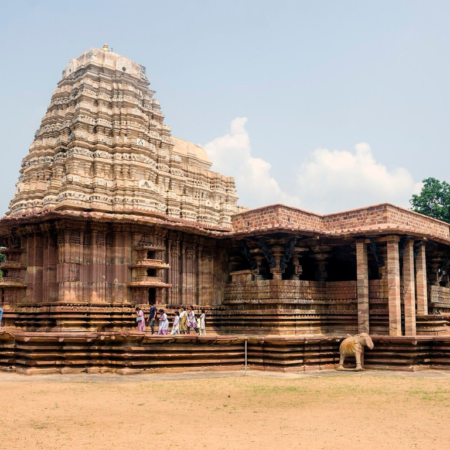
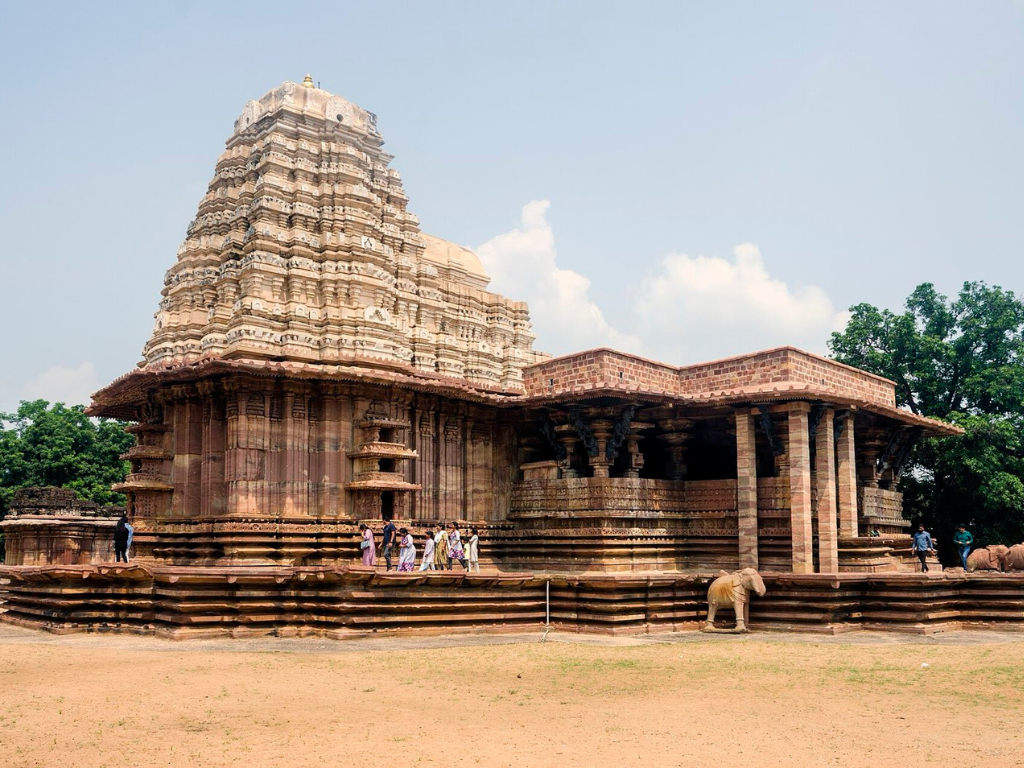
Built around 1213 CE under the patronage of Kakatiya ruler Ganapati Deva, the Ramappa Temple is recognised for its architectural design, intricate stone carvings and distinctive construction techniques. UNESCO inscribed the temple on its World Heritage List in 2021.
Besides its foundation, the temple features lightweight porous bricks in its tower. These bricks reduce the weight of the upper structure compared with heavier conventional masonry, potentially lowering the inertial forces generated during an earthquake.
Together, the lightweight superstructure and the foundation technique offer researchers an opportunity to examine how traditional builders addressed structural weight and ground movement.
The Thousand Pillar Temple in Hanamkonda, another important Kakatiya-era monument, is also associated with the use of sandbox foundations.
Potential Applications and Limitations
Researchers have suggested that the technique could eventually inform affordable construction, particularly for suitable low-rise buildings in earthquake-prone areas. The use of locally available materials could also make it an area of interest for cost-conscious construction.
However, the method is not yet an established substitute for modern earthquake-resistant engineering. Its performance depends on factors such as soil conditions, foundation design, building weight and the characteristics of seismic ground motion.
Further laboratory testing, computer modelling, structural validation and standardisation would be necessary before the technique could be adopted on a wider scale. Its suitability for tall buildings and complex structures would also require separate assessment.
The Kakatiya-era sandbox technique highlights the potential value of examining India’s traditional architectural knowledge through modern scientific methods. While more research is needed to establish its practical applications, the foundations of these historic temples offer a promising subject for studying the relationship between traditional construction and seismic resilience.
Why the US and Mecca Pact nations Abandoned Saudi Arabia?