Trump Threatens to Strike Iran’s Pickaxe Mountain Nuclear Site Again: What We Know

Donald Trump’s repeated warnings about Pickaxe Mountain suggest that the United States may not consider its campaign against Iran’s nuclear programme complete. Despite claiming that earlier American strikes had crippled Tehran’s nuclear infrastructure, the US president has continued to identify the suspected underground complex near Natanz as a potential target. His latest remarks have revived questions about Iran’s surviving nuclear capabilities, the effectiveness of American bunker-busting weapons and the possibility of another military escalation in the Middle East.
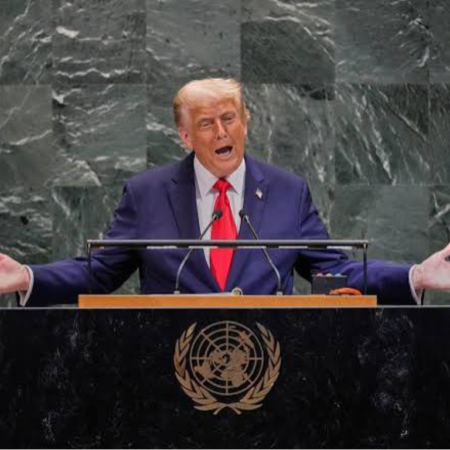
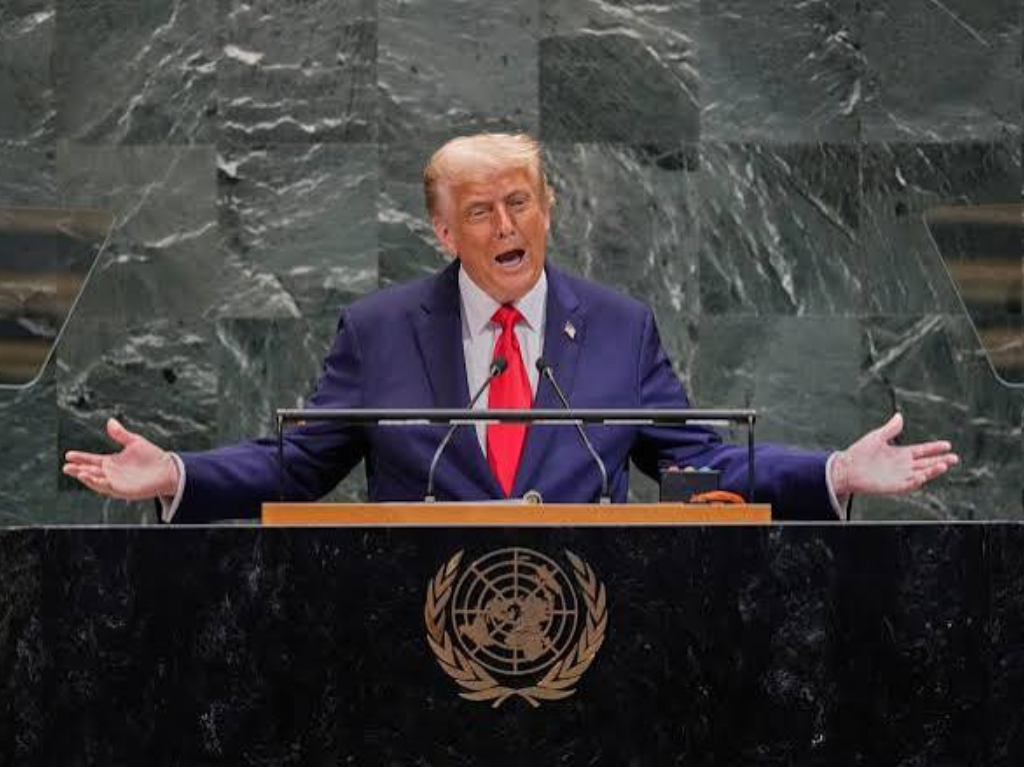
Speaking to reporters at his Florida residence on Saturday, Trump said the United States had knocked out much of Iran’s military capability but still needed to “take care of” one or two remaining targets. He specifically mentioned Pickaxe Mountain, suggesting that Washington could strike the site within minutes.
“You probably could look at Pickaxe Mountain, and you have to take care of that,” Trump said.
The remarks are significant because they indicate that Washington continues to view the facility as a potential vulnerability in its effort to prevent Iran from developing nuclear weapons. However, the precise status of the site, its operational capabilities and the location of Iran’s remaining enriched uranium stockpile remain matters of uncertainty.
Trump’s Repeated Warnings Signal That Pickaxe Mountain Remains a Priority
Trump’s latest comments are part of a series of increasingly explicit threats directed at Pickaxe Mountain throughout 2026.
On July 13, during an appearance on the Hugh Hewitt Show, Trump described the facility as a possible target for a powerful strike directed at its entrance. He said the site was on Washington’s list of potential targets and warned that an attack could take place relatively soon.
Just over a week later, on July 21, he told reporters that the United States would hit the area “pretty soon, and very heavily.” He also addressed reports that Iran might have moved centrifuges to the facility, arguing that the location of nuclear material mattered more than the movement of equipment alone.
On July 28, Trump again warned that the United States would strike Pickaxe Mountain if Tehran failed to reach a deal with Washington. His remarks suggested that the potential attack was being considered not merely as a military operation but also as leverage in negotiations over Iran’s nuclear programme.
The rhetoric intensified on September 9, when Trump warned Iran against expanding activity at the site. On October 16, he said Washington was examining the possibility of striking the mountain, adding that the United States could destroy the target quickly without resorting to nuclear weapons or deploying ground troops.
The consistency of these warnings suggests that Pickaxe Mountain occupies a distinct place in Washington’s assessment of Iran’s post-strike nuclear infrastructure. It may represent a facility that American officials believe remains insufficiently neutralised, even after the earlier bombing campaign.
Nevertheless, presidential threats should not be treated as proof that an attack has been authorised or that the United States possesses complete intelligence about the facility.
What Makes Pickaxe Mountain Different From Natanz and Fordow?
Pickaxe Mountain, also known as Kuh-e Kolang Gaz La, is an underground tunnel complex near Iran’s Natanz uranium enrichment facility in Isfahan province.
Construction reportedly began around 2020, following an explosion that damaged an above-ground workshop at Natanz used to assemble advanced centrifuges. Iranian officials subsequently described plans to build a replacement facility deep inside a mountain.
The location is strategically significant because underground construction can make sensitive nuclear infrastructure more difficult to detect, monitor and destroy through conventional air strikes.
The International Atomic Energy Agency (IAEA) has acknowledged Iran’s stated intention to conduct nuclear-related activities at the site and has observed construction through satellite imagery. However, the agency has also indicated that it lacks sufficient information to establish all the details of the facility.
This distinction is crucial. Evidence of construction does not, by itself, establish that uranium enrichment is taking place there. Nor does it confirm that the complex currently houses operational centrifuges or a stockpile of enriched uranium.
Iran has repeatedly rejected allegations that the facility is being used for prohibited nuclear activities. In July 2026, Foreign Ministry spokesman Esmaeil Baghaei said no nuclear activity was taking place at Kolang Mountain, describing American attention to the site as a pretext for aggression.
The competing claims leave Washington facing a familiar intelligence problem: how to assess a potentially sensitive facility whose underground infrastructure is difficult to inspect independently.
Why Earlier American Strikes May Not Have Settled the Nuclear Question
The United States attacked Iran’s nuclear infrastructure in June 2025 under Operation Midnight Hammer, targeting the Fordow uranium enrichment plant, the Natanz nuclear facility and the Isfahan Nuclear Technology Center.
The operation involved B-2 Spirit stealth bombers carrying GBU-57A/B Massive Ordnance Penetrators, alongside Tomahawk cruise missiles launched from a submarine.
The strikes demonstrated Washington’s ability to conduct long-range attacks against heavily defended nuclear infrastructure. However, destroying buildings and disabling enrichment equipment is not the same as eliminating an entire nuclear programme.
Nuclear programmes depend on several interconnected assets: centrifuges, uranium feedstock, specialised engineering knowledge, power and industrial infrastructure, and the personnel capable of maintaining and rebuilding facilities. Even when individual sites suffer extensive damage, surviving equipment and nuclear material may preserve a country’s ability to reconstruct parts of its programme.
Pickaxe Mountain complicates this calculation because its underground location may provide greater protection than facilities that have already been attacked.
Estimates have suggested that parts of the complex could lie roughly 100 metres underground. If that estimate is accurate, the facility could present a substantially different challenge from shallower underground installations.
The GBU-57 is specifically designed to penetrate hardened underground targets. Yet its effectiveness depends on factors such as the target’s depth, geological conditions, protective structures and the number and placement of weapons used. It would therefore be premature to conclude either that American weapons could easily destroy the facility or that the site is beyond their reach.
Speculation about the possible use of the GBU-43/B Massive Ordnance Air Blast bomb has also drawn attention. But its reputation as a powerful conventional weapon does not establish that it would be suitable for destroying a deeply buried, hardened nuclear complex.
The central challenge is not simply delivering a powerful explosion. It is establishing whether the attack would destroy the relevant infrastructure and whether any surviving nuclear material could subsequently be recovered or used elsewhere.
The Bigger Concern: Iran’s Enriched Uranium Stockpile
The debate surrounding Pickaxe Mountain extends beyond the question of whether Iran has relocated centrifuges there.
Israeli intelligence assessments have reportedly suggested that Iran moved thousands of centrifuges into underground tunnels after the 2025 strikes. Separate reporting has raised concerns that at least part of Iran’s stockpile of approximately 440 kilograms of uranium enriched to 60 per cent may also have been transferred to the complex.
These remain intelligence assessments rather than independently verified facts about the site’s current contents.
Nevertheless, the possibility matters because uranium enriched to 60 per cent is much closer to weapons-grade enrichment levels than uranium enriched for most civilian nuclear applications. It is not, by itself, proof that a country has built a nuclear weapon, and additional technical steps would be required to produce and assemble a functioning weapon.
The concern is that surviving nuclear material could shorten the time needed to resume enrichment if Iran retained the equipment, infrastructure and technical capacity to do so.
This is where Pickaxe Mountain becomes strategically important. If it contains operational enrichment equipment or significant quantities of enriched uranium, it could preserve capabilities that the earlier American strikes were intended to degrade. If it contains neither, the military rationale for attacking it would be different.
The distinction cannot be resolved through presidential statements alone. Reliable assessments would require access to nuclear material accounting, credible intelligence and, where possible, independent verification by international inspectors.
Could Another Strike Solve America’s Iran Problem?
Trump’s repeated threats raise a larger question: can military force permanently prevent Iran from developing nuclear weapons?
An attack on Pickaxe Mountain could damage infrastructure, disrupt operations and increase the cost of rebuilding Iran’s nuclear programme. It might also strengthen Washington’s bargaining position if Tehran concludes that further nuclear activity could invite additional strikes.
But there is no guarantee that another bombing campaign would eliminate the underlying problem.
First, nuclear knowledge cannot be destroyed as easily as physical infrastructure. Scientists, engineers and technical expertise would survive an attack, even if equipment and facilities were lost.
Second, a strike could make Iran more determined to disperse its nuclear assets, deepen underground construction and restrict international access. If Tehran concluded that its existing facilities could not be protected through diplomacy, it might have stronger incentives to conceal future activities.
Third, military action could trigger retaliation against American forces, Israel or regional infrastructure. Such a response could transform a narrowly targeted operation into a wider conflict, with consequences for shipping, energy markets and regional security.
Finally, the absence of reliable inspections would make it difficult to determine whether a strike had achieved its stated objective. Destroying a suspected facility does not automatically establish where every centrifuge or kilogram of enriched uranium is located.
These risks do not mean that military action is impossible or that Iran’s nuclear activities should escape scrutiny. They do, however, expose the limitations of treating the destruction of a single facility as a definitive solution.
The Strategic Dilemma Facing Washington
Pickaxe Mountain represents a difficult test for American strategy. Washington wants to prevent Iran from acquiring nuclear weapons, while Tehran insists that its nuclear programme is not being used to develop them. The absence of full transparency makes it harder to reconcile these positions.
Iranian President Masoud Pezeshkian, responding to questions about the facility in September 2025, argued that on-site inspections would provide a more tangible basis for verification than conclusions drawn from satellite imagery alone. However, the broader inspection dispute intensified after the June 2025 strikes, leaving uncertainty over the extent to which international inspectors could establish the status of Iran’s nuclear infrastructure.
A sustainable approach would need to combine credible verification, restrictions on weapons-related activities, diplomatic engagement and consequences for violations. Without those elements, the United States risks entering a cycle in which every suspected underground facility becomes a potential target and every strike creates new incentives for concealment.
Trump’s latest remarks may be intended to deter Iran, strengthen Washington’s negotiating position or prepare public opinion for another operation. At present, they do not establish which course the administration will choose.
The essential question is whether Pickaxe Mountain contains nuclear capabilities that survived the earlier attacks and whether those capabilities pose an immediate proliferation risk.
Until that question is answered with credible evidence, the site remains both a potential military target and a symbol of the limits of air power. The United States may be capable of striking another Iranian facility, but ensuring that Iran cannot rebuild its nuclear programme would require far more than destroying a mountain’s hidden infrastructure.