US F-35 Aircraft Parts Shipped from Australia but smuggled to China—Now Washington Investigates How

A shipment carrying parts of America’s most advanced fighter jet F-35 was supposed to travel from Australia to the United States. Instead, it ended up in Hong Kong.
That seemingly simple shipping error has now triggered a US investigation, congressional scrutiny and questions over whether sensitive F-35 technology may have fallen into Chinese hands.
The shipment involved components from an Australian F-35 that were being sent to the United States for inspection, repair or disposal. According to reporting, the shipment travelled through the region before being unexpectedly rerouted to Hong Kong. The exact reason for the diversion remains unclear. And that is where the story becomes much more complicated.
What was inside the shipment?
Reports have identified at least two important components: an F-35 cockpit canopy and a weapons-bay door.
The F-35 canopy is not simply a piece of transparent material covering the cockpit. It is part of the aircraft’s low-observable design and uses specialised coatings associated with its radar signature.
That is why the discovery of the components in Hong Kong immediately raised concerns in Washington.
If an adversary were able to physically examine such components, it could potentially study their construction, materials and coatings. Former Congressional Research Service aviation analyst J.J. Gertler told reporters that possessing an actual component could allow an adversary to compare it with information already obtained through other means. But there is an important qualification.
There is currently no public evidence that China deliberately diverted the shipment.
US and Australian authorities are investigating how the parts ended up in Hong Kong, but neither government has publicly established that Beijing orchestrated the incident. Chinese authorities have also said they were not aware of the matter, according to Al Jazeera’s reporting.
So, did China get F-35 technology?
This is where headlines can easily run ahead of the evidence. Bloomberg reported that Chinese authorities had taken possession of the parts and had not returned them. Other reporting has also described the components as potentially sensitive. However, the Pentagon has not publicly confirmed that China obtained classified F-35 technology.
Australia has taken a more reassuring position. Australian Defence Minister Richard Marles confirmed that Canberra was assisting the United States and Lockheed Martin with the investigation, but said the components were not considered sensitive.
Lockheed Martin has similarly described the components as unserviceable and low-risk for exploitation, according to Breaking Defense.
So the central question is not simply “Did China steal the F-35?”
There is no evidence establishing that. The more immediate question is: How did F-35 components being transported through a controlled international supply chain end up in Hong Kong in the first place?
Why “Hong Kong” matters the most?
Hong Kong is a Chinese special administrative region. Since Beijing’s control over the territory has expanded, Washington naturally treats the arrival of sensitive military equipment there as a security concern.
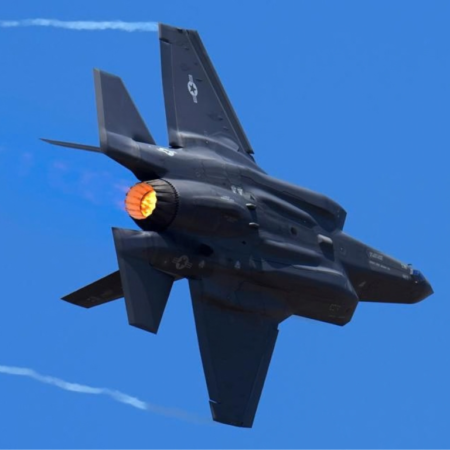
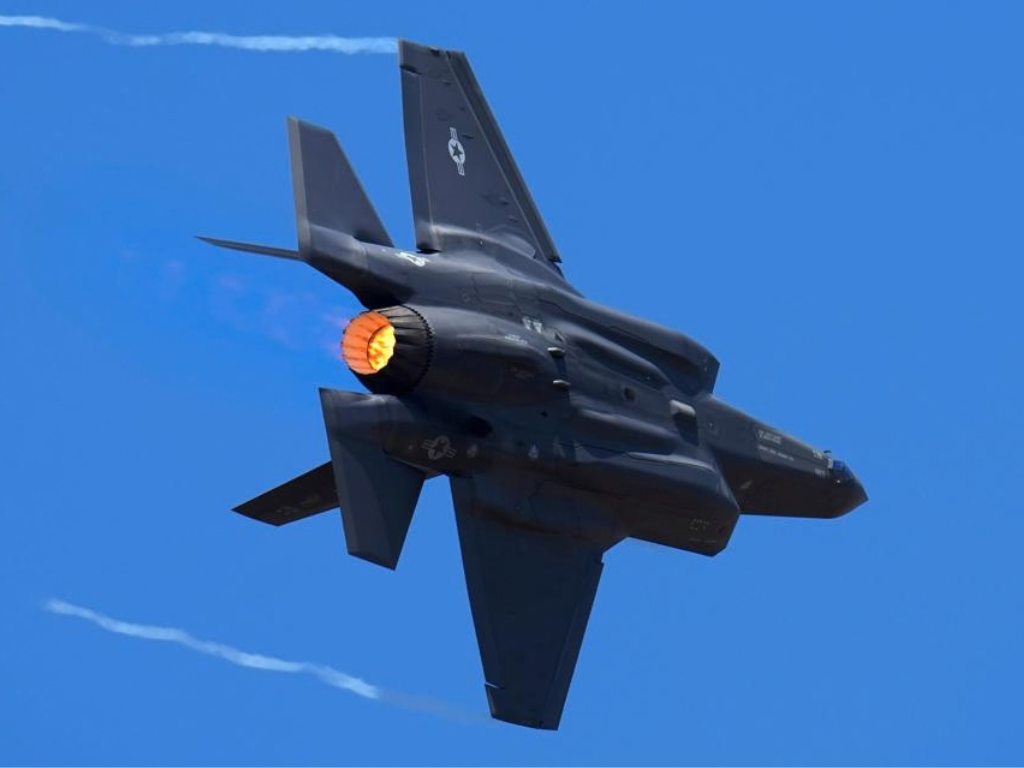
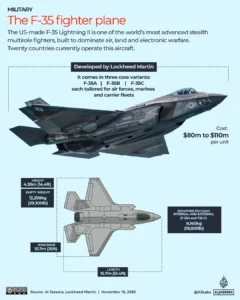
The F-35 is also not an ordinary fighter aircraft. It combines stealth technology with advanced sensors, electronic warfare capabilities, communications and data-sharing systems. More than 1,200 F-35s have been produced, with the aircraft operated or ordered by numerous US allies. Australia itself operates the F-35A.
That makes the programme’s supply chain enormous. Australia is an important regional hub for F-35 components and maintenance. The programme depends on suppliers and logistics networks spread across multiple countries, with spare parts moving between operators and maintenance facilities.
And that global system creates another vulnerability: every additional movement of a sensitive component creates another opportunity for something to go wrong.
A bigger F-35 supply-chain issue
The Hong Kong incident is particularly uncomfortable because concerns over F-35 spare-parts management are not new.
A 2023 US Government Accountability Office report found significant problems with tracking F-35 spare parts. The report said more than one million spare parts had gone missing over a five-year period and highlighted the fact that the Pentagon did not have complete visibility over parts held in the programme’s global spare-parts pool.
Lockheed Martin maintains much of the relevant information on those parts, creating an accountability challenge for the Pentagon.
That does not mean those missing components contained classified technology.
But it does demonstrate how difficult it is to maintain complete visibility over a massive international supply chain.
Why Washington is taking this seriously?
The Pentagon’s F-35 Joint Program Office has acknowledged a “shipment issue” involving unserviceable F-35 components.
It says US authorities and industry partners are working to retrieve the parts, investigate what happened and introduce safeguards to prevent a repeat incident.
Congress is also examining the incident, with multiple committees receiving briefings.
That is significant because the concern goes beyond the value of two physical aircraft components.
The F-35 represents decades of American investment in stealth, sensors, materials science and combat networking.
China has also previously been accused by US authorities of seeking information related to the Joint Strike Fighter programme through espionage and cyber operations. That history makes any unexplained movement of F-35 components particularly sensitive.
But it would still be wrong to conclude that possession of a canopy or weapons-bay door would suddenly allow China to reproduce the F-35.
The aircraft’s capabilities are spread across thousands of components, software, sensors, manufacturing processes and classified systems. A physical component could provide information, but it would not by itself reveal the entire aircraft’s technology.
The real lesson
The most important issue here may not be whether China obtained a secret blueprint.
It is whether one of the world’s most sophisticated military programmes can maintain complete control over its physical supply chain.
The F-35 was designed to give the United States and its allies a technological advantage.
But that advantage depends not only on what is inside the aircraft. It also depends on who can access the parts when the aircraft is being repaired, transported, maintained or replaced.
For now, the investigation has not established that China deliberately diverted the shipment or that classified F-35 technology has been compromised.
But the fact that F-35 components intended for the United States travelled to Hong Kong at all is enough to force Washington, Canberra and Lockheed Martin to ask a very uncomfortable question:
How did a piece of America’s most advanced fighter programme leave the intended supply chain—and who ultimately got their hands on it?