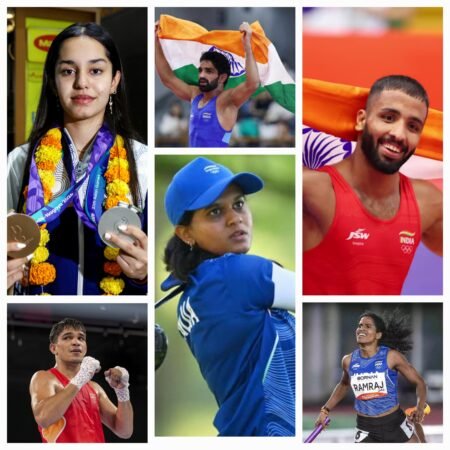
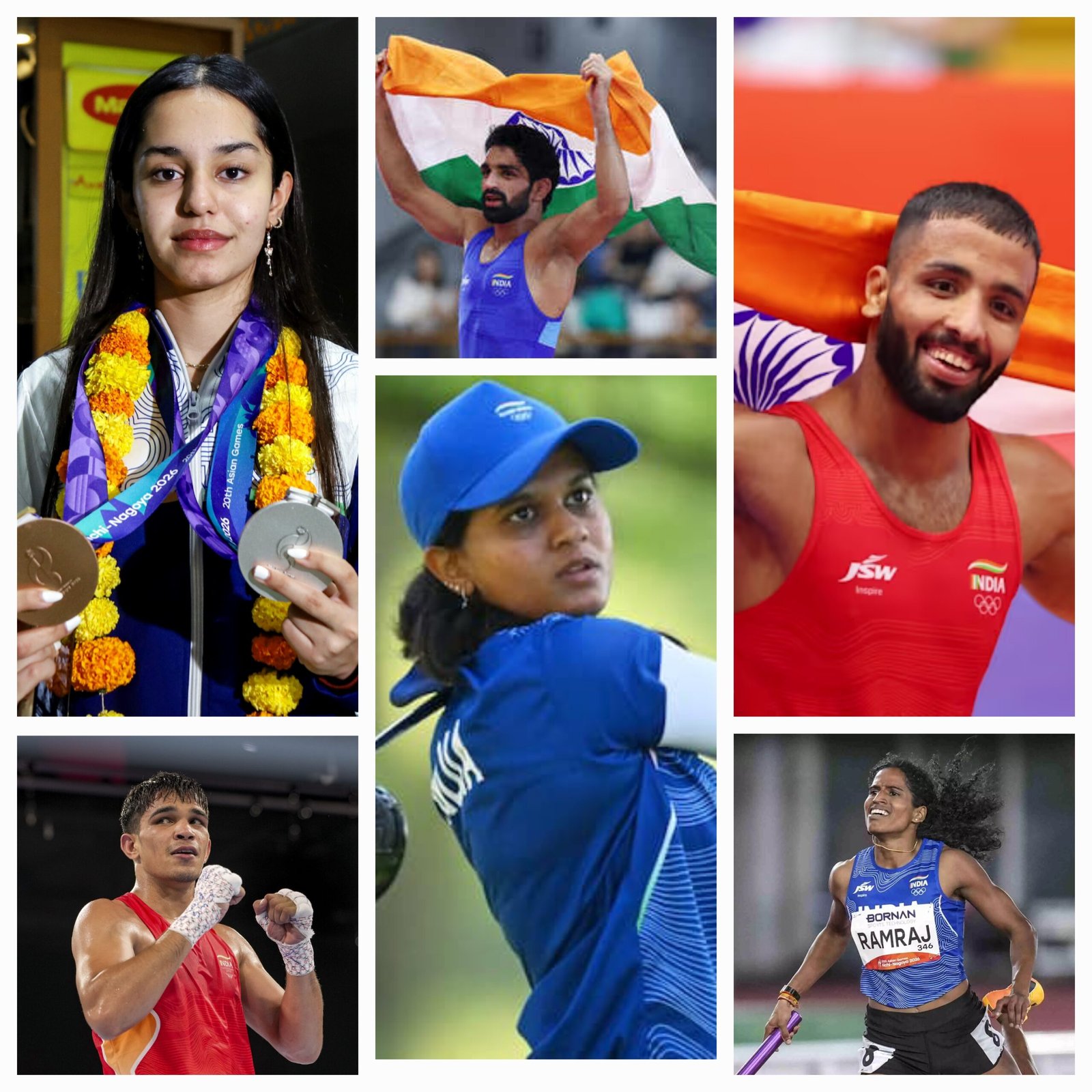

With the Asian Games in Japan warapping up, India finished theie campaign with a fourth place overall with 85 medals (21 gold, 27 silver, 37 bronze)—its second-best haul ever. Beyond the numbers, a new generation of athletes delivered historic firsts, multi-medal campaigns, and performances that signal strong potential for the Los Angeles 2028 Olympics and beyond.
Here are some of the standout talents who shone brightest and carry the greatest promise for India’s future.
Kumkum Mohod (Archery)
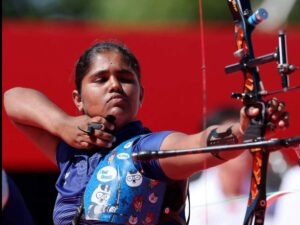
At just 17, Kumkum Mohod emerged as the brightest star of India’s campaign at the 2026 Asian Games. The Maharashtra archer scripted history by becoming the first Indian woman to win an individual recurve gold, defeating South Korea’s Oh Yejin 6-5 in a tense shoot-off with a perfect 10.
She also claimed women’s recurve team gold (alongside Ankita Bhakat and Kirti Sharma, ending South Korea’s long dominance) and mixed team silver with Dhiraj Bommadevara, completing a remarkable three-medal haul on her Asian Games debut.
Her composure under pressure, ability to upset established world and Olympic champions, and the individual Olympic quota she secured for Los Angeles 2028 mark her as a generational talent destined to lead Indian archery for years to come.
Pranavi Urs (Golf)

Pranavi Urs, the 23-year-old from Mysuru, etched her name in Indian golf history by becoming the first Indian woman to win individual gold at the Asian Games. She overcame a costly triple-bogey early in the final round to finish at 15-under and hold off strong international challengers by a single stroke.
Urs also contributed significantly to India’s women’s team silver alongside Aditi Ashok and Diksha Dagar. This dual-medal performance ended a long wait for Indian women’s golf on the continental stage and positions her as a key figure capable of contending in major international events and future Olympic cycles.
Neeru Dhanda (Shooting)
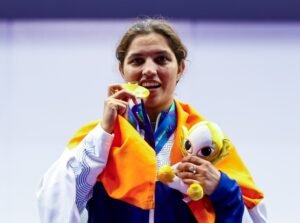
Haryana’s Neeru Dhanda delivered one of the most significant individual breakthroughs of the Games. The Army shooter became the first Indian woman to win Asian Games gold in the women’s trap event, ending a 48-year wait for any Indian individual trap gold, while setting an Asian record in the process.
She followed it up with mixed trap gold (partnering Kynan Chenai) and a team silver, finishing with three medals. Her rapid rise, including recent World Cup success, and proven ability to perform under pressure make her a strong medal contender for the 2028 Olympics and a torchbearer for Indian shotgun shooting.
Anahat Singh (Squash)
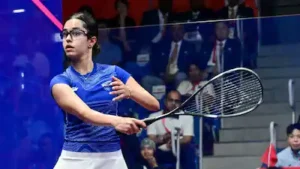
The 18-year-old Anahat Singh continued her rapid ascent by becoming the first Indian woman to reach an Asian Games squash singles final, where she claimed silver.
Building on her World Junior Championship title and previous medals from Hangzhou, she also contributed to additional podium finishes for India.
Her skill, competitive maturity at a young age, and consistent progress against top Asian opposition signal a bright future as one of India’s leading hopes in squash for upcoming World Championships, Asian events, and potential Olympic pathways.
Ankush Panghal (Boxing)
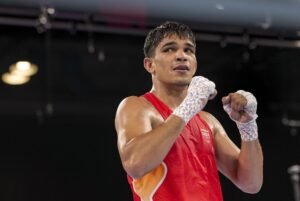
On his Asian Games debut, 21-year-old Ankush Panghal claimed gold in the men’s 80 kg category with a series of dominant performances, including a notable victory over a reigning world champion in the semifinals before securing the title.
His power, tactical maturity, and ability to rise to the occasion on the big stage have established him as a serious Olympic prospect. With continued development, Panghal is well-placed to challenge for medals at the highest levels in the coming years.
Sujeet Kalkal (Wrestling)
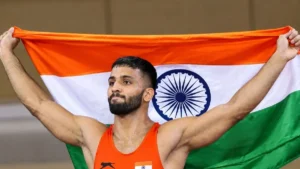
Sujeet Kalkal captured freestyle gold in the 65 kg category, reinforcing India’s strength in wrestling. After being 9-2 down against his Tajik opponent in the final, Sujeet displayed extraordinary mental and physical prowess by overturning the score to a 10-9 winning a tremendous match.
The Haryana wrestler’s technical prowess and competitive edge at the Asian Games underline his potential to become a consistent performer on the international circuit. As he gains more experience at senior world-level events, Kalkal is expected to push for Olympic medals and help sustain India’s wrestling dominance.
Aman Sehrawat (Wrestling)
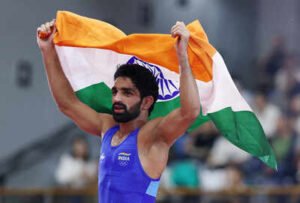
Aman Sehrawat secured freestyle gold in the 57 kg category, adding another highlight to India’s combat sports success. Already recognised for his speed and aggression, his Asian Games triumph further elevates his profile. Sehrawat’s combination of youth and proven big-stage ability makes him a strong candidate to contend for medals at future World Championships and the 2028 Olympics.
Vithya Ramraj (Athletics)
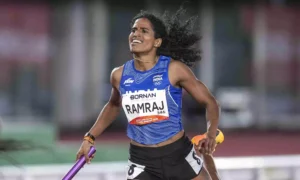
Vithya Ramraj was one of India’s most productive track athletes, contributing to the women’s 4×400 m relay gold (India’s only athletics gold of the Games), the mixed 4×400 m relay silver, and an individual bronze in the 400 m hurdles.
Vithya Ramraj clinched a bronze clocking a personal best of 54.75 seconds to break a more than four-decade-old national record. Ramraj bettered Usha’s 55.42sec effort that came in the 1984 Olympics in Los Angeles.
Her versatility across individual and team events, combined with her ability to deliver under pressure, positions her as a key figure in India’s middle-distance and relay future. With further refinement, she has the potential to challenge for individual medals at major championships in the years ahead.
Contingent does Proud
Apart from these talents the women’s Hockey team got a historic Asian games gold for the first time since 1962. Rohit Yadav and Yashveer Singh filled in fantastically for the injured Neeraj Chopra, grabbing a bronze and silver assuring India’s bright future in the Javelin throw. Along with hockey, both cricket and kabbadi mens and women’s teams bagged gold.
These athletes combined historic milestones with youth and consistency. Many already hold Olympic quotas or have shown the temperament to perform on the biggest stage. With continued support, coaching, and competitive exposure, they form the core of a generation expected to push India higher in future Asian Games, Olympics, and world championships—delivering the pride the nation anticipates.
India’s depth across archery, shooting, combat sports, athletics, and emerging disciplines like golf and squash looks stronger than ever after Japan 2026, as it will look to push ahead on its path of cementing itself as a major force in international events across a range of sporting fields.