“The Story of Ram Temple” From Ayodhya’s Ancient Heritage to a Modern Architectural Marvel

The Shri Ram Janmabhoomi Temple in Ayodhya is more than a place of worship. Its story connects India’s ancient cultural memory with a decades-long legal journey and one of the country’s most ambitious modern temple-building projects.
Ayodhya, situated on the banks of the Sarayu River in Uttar Pradesh, has occupied a special place in India’s religious and cultural traditions for centuries. Revered as the birthplace of Lord Ram and closely associated with the Ramayana, the city has remained an important pilgrimage centre.
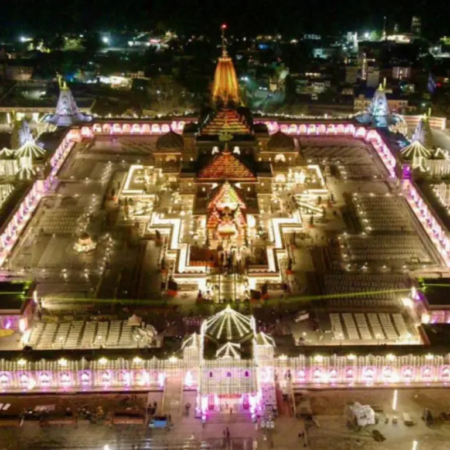
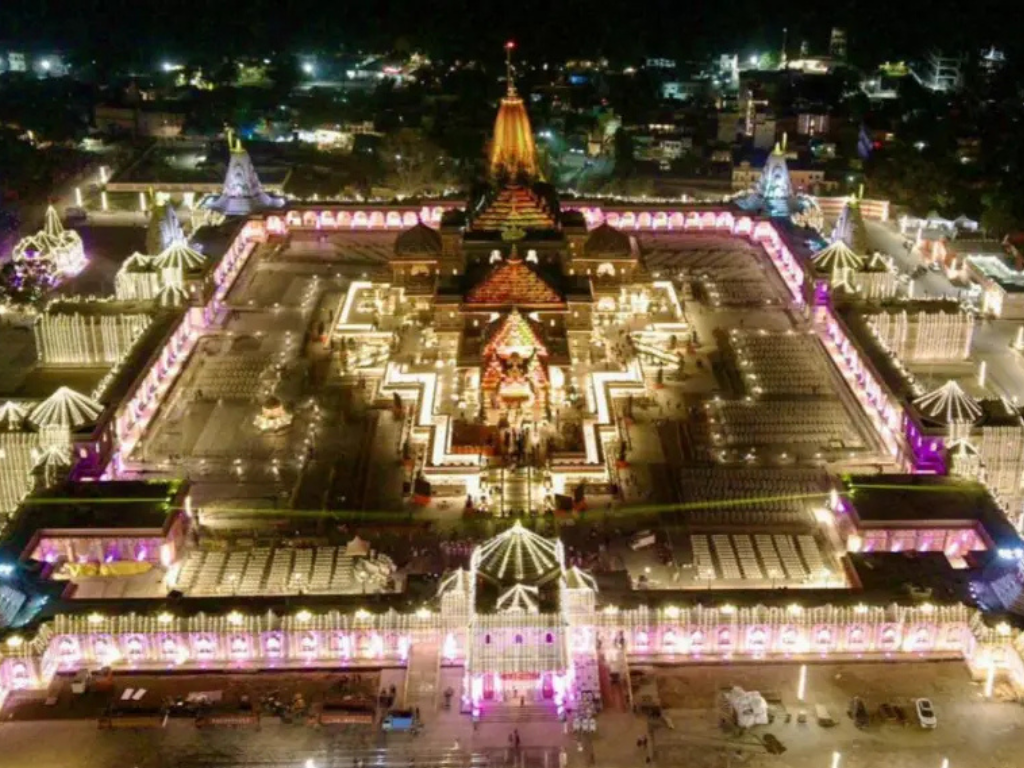
Today, its skyline is dominated by the newly built Shri Ram Janmabhoomi Temple—a monumental structure that combines traditional Indian temple architecture with modern engineering.
But the story of the temple did not begin with its construction. It stretches across centuries of religious belief, historical developments, political movements and a prolonged legal dispute.
The significance of Ayodhya
AccordingThe Story of Ram Temple to Hindu tradition, Ayodhya was the capital of the ancient kingdom of Kosala and the birthplace of Lord Ram, the seventh avatar of Lord Vishnu and the central figure of the Ramayana.
For generations, devotees have associated a particular site in Ayodhya with the birthplace of Ram. The site eventually became the centre of a major dispute between different religious communities.
A mosque known as the Babri Masjid stood at the disputed site until its demolition in 1992. The dispute subsequently became one of the most politically and socially significant issues in modern India.
The legal journey
The Ayodhya dispute continued through various courts for decades.
The matter eventually reached the Supreme Court of India. In November 2019, the Supreme Court delivered its historic judgment in the Ayodhya title dispute.
The court awarded the disputed land for the construction of a Ram temple while directing that an alternative five-acre plot be provided to the Sunni Central Waqf Board for the construction of a mosque.
The verdict brought the long-running title dispute to a legal conclusion and paved the way for the construction of the temple.
Beginning of the new temple

Following the Supreme Court judgment, the Shri Ram Janmabhoomi Teerth Kshetra Trust was established to oversee the construction and management of the temple.
The foundation stone ceremony, or Bhoomi Pujan, was held on August 5, 2020.
From this point, the project moved from decades of legal and political debate to a massive architectural and engineering undertaking.
The temple was designed by the renowned Sompura family of temple architects. Chandrakant Sompura, along with his sons Ashish and Nikhil, played a central role in developing the architectural design.
The Sompura family has a long tradition of temple architecture spanning several generations and has been associated with the design of numerous temples across India.
An architectural revival

The Ram Temple follows the traditional Nagara style of Hindu temple architecture, which developed primarily in northern India.
The style is characterised by a towering shikhara, a sanctum or garbhagriha, pillared halls and elaborate stone ornamentation.
The Ayodhya temple adapts these traditional principles on a monumental scale.
The main temple is approximately 380 feet long, 250 feet wide and 161 feet high. It has three storeys, with each floor designed around the traditional temple layout.
The structure contains hundreds of intricately carved pillars and numerous doors, with sculptures and motifs reflecting India’s religious and artistic traditions.
The heart of the temple: Garbhagriha
At the centre of the temple is the garbhagriha, or sanctum sanctorum.
This is the most sacred part of a Hindu temple because it houses the principal deity.
In Ayodhya, the sanctum houses Ram Lalla, the child form of Lord Ram.
The Pran Pratishtha ceremony was conducted on January 22, 2024, marking the formal consecration of the deity in the newly constructed temple.
For devotees, this transformed the newly built structure from an architectural project into a functioning sacred space.
Five mandaps
The temple incorporates several large halls, known as mandaps, which form an important part of traditional Hindu temple architecture.
Among them are the:
- Nritya Mandap
- Rang Mandap
- Sabha Mandap
- Prarthana Mandap
- Kirtan Mandap
These spaces create a gradual transition from the outer areas of the temple towards the sacred inner sanctum.
Their pillars and walls are decorated with detailed carvings, giving the temple an elaborate visual character.
Built to last for centuries
One of the most remarkable aspects of the project is its emphasis on long-term durability.
The temple uses large quantities of stone, including sandstone and granite, rather than relying on conventional reinforced concrete and steel construction for the principal temple structure.
The foundation was engineered after extensive soil and structural studies because the temple is being constructed on land that required significant ground preparation.
A deep engineered foundation and a substantial stone plinth were developed to provide stability and protect the structure from moisture.
Traditional methods of joining stone have also been incorporated, including the use of copper elements rather than conventional steel reinforcement in many structural connections.
The objective was to create a temple capable of enduring for many centuries.
Where ancient architecture meets modern engineering
The Ram Temple demonstrates an unusual combination of traditional craftsmanship and modern technology.
Traditional stone architecture forms the visual and structural identity of the temple, while modern engineering has been used for foundation design, structural analysis, earthquake resistance, crowd management and environmental systems.
This combination allows the temple to preserve the appearance and principles of traditional Indian architecture while meeting the requirements of a modern mass pilgrimage centre.
A temple complex, not just a shrine
The Ram Temple is part of a much larger complex.
The wider development includes facilities for pilgrims, security, medical assistance, sanitation, water management and other essential services.
The complex also incorporates shrines dedicated to several Hindu deities and important figures associated with the Ramayana and Hindu tradition.
The project therefore seeks to function not merely as a temple but as a major cultural and pilgrimage destination.
The Pran Pratishtha of 2024
January 22, 2024, became a landmark date in the modern history of Ayodhya.
The Pran Pratishtha ceremony of Ram Lalla was conducted in the newly constructed temple in the presence of religious leaders, political representatives, invited guests and devotees.
The ceremony was watched by millions across India and abroad.
For devotees, it represented the culmination of a long-awaited religious aspiration.
For Ayodhya, it marked the beginning of a new phase in the city’s transformation into a major pilgrimage and cultural centre.
More than an architectural structure
The significance of the Ram Temple extends beyond its physical dimensions.
Its story brings together several layers of India’s history: the cultural memory surrounding Lord Ram, the ancient tradition of temple architecture, the modern history of the Ayodhya dispute, the constitutional and judicial process, and contemporary engineering.
Architecturally, the temple represents a revival of the Nagara tradition on a monumental scale.
Culturally, it has become a major symbol associated with the religious traditions surrounding Lord Ram.
And historically, it represents the culmination of a long and deeply contested chapter in India’s modern history.
The story written in stone
For centuries, the story of Ram has been transmitted through texts, poetry, music, theatre, oral traditions and festivals.
The new temple adds another form to that tradition: architecture.
Its pillars, carvings, mandaps and shikhara transform elements of India’s temple heritage into a monumental structure.
The Ram Temple in Ayodhya is therefore not simply a newly constructed building. It is the physical expression of a story that has lived in India’s cultural consciousness for generations.
From the ancient traditions of Ayodhya to the Supreme Court’s 2019 verdict, from the Bhoomi Pujan in 2020 to the Pran Pratishtha in 2024, the journey of the Ram Temple reflects a remarkable intersection of faith, history, law, politics, architecture and modern engineering.
And as the temple becomes an increasingly important pilgrimage destination, Ayodhya itself is entering a new chapter—one in which an ancient city and a modern architectural landmark are becoming inseparably linked.