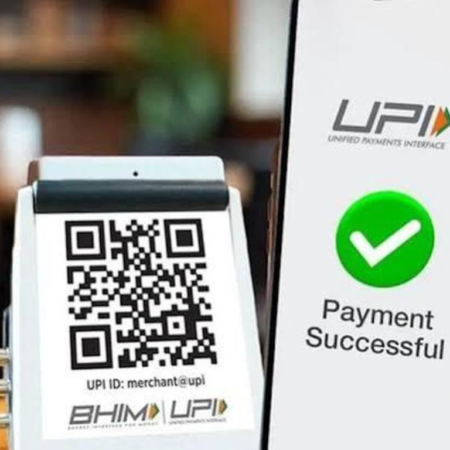
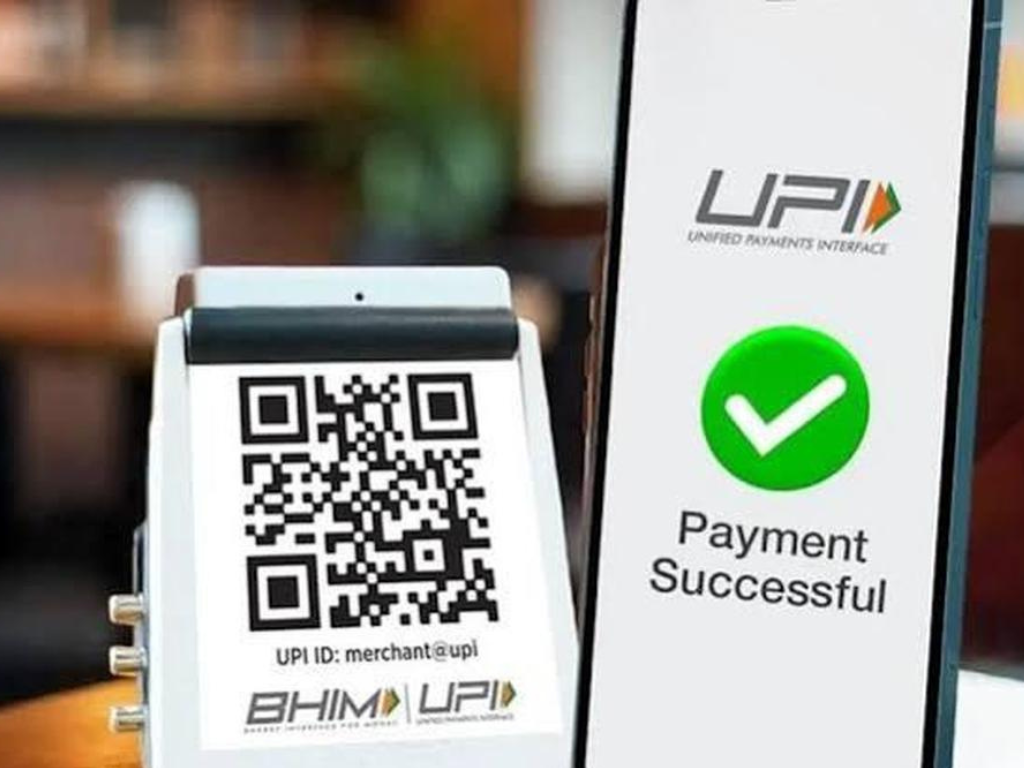

Unified Payments Interface (UPI) transaction will no longer be free Oct 15 2026 onward , Union govt has decided to charge 0.4% MDR( Merchant Discount Rate) on transactions above ₹2000 Person to Merchant payment with certain exemption.
UPI has transformed the country’s digital payments ecosystem, enabling billions of instant transactions every month with their 0 MDR transaction services. However this news MDR framework has triggered political and economic debate: Whether India is introducing a sustainable revenue model, Or has it responded to pressure from American payment networks such as Visa and Mastercard?
Former Bharatpe co founder Ashneer Grover said any charge on UPI could push consumer and merchant back toward cash Economy and India become “a cash economy again”
The government has rejected allegations that the decision was driven by foreign pressure. Opposition leaders and critics, however, have linked the policy to long-standing complaints by global card networks about India’s digital payments framework.
Here is what the new MDR rules mean, why the government says they were introduced, and what they could mean for consumers, merchants, and India’s digital payments ambition. What Changes from October 15, 2026?
The new MDR framework applies to specific categories of UPI merchant transactions. It does not introduce a blanket fee on all UPI payments.
The key provisions are:
- Person-to-person (P2P) payments: Transfers between individuals remain free, regardless of the amount.
- Person to Merchant (P2M) transactions up to ₹2,000: No MDR applies.
- Standard P2M transactions above ₹2,000: Merchants pay an MDR of 0.4%, subject to a maximum of ₹300 for transactions of ₹75,000 or more.
- Essential services: Transactions involving sectors such as railways, telecom, insurance, fuel, utilities, and certain agricultural inputs attract a flat ₹5 MDR on payments above ₹2,000.
- Capital-market transactions: Payments related to mutual funds, securities, and stockbroking attract a lower MDR of 0.02%, also capped at ₹300.
- Small merchants under the P2PM category: Merchants receiving up to ₹1 lakh per month through UPI QR codes continue to remain exempt from MDR.
For example, under the stated framework, a ₹3,000 standard merchant payment would attract an MDR of ₹12, while a ₹50,000 payment would attract ₹200. A qualifying transaction of ₹75,000 or more would be subject to the ₹300 cap.
The fee is levied on the merchant side of the transaction rather than directly on the customer.
Does This Mean UPI transaction is No Longer Free?
For ordinary users, the answer is largely no.
Person-to-person transfers remain free, and merchant payments below the ₹2,000 threshold continue to attract zero MDR. Small merchants covered under the P2PM exemption also remain protected.
Official estimates cited in discussions around the policy suggest that approximately 95–96% of P2M transactions will remain unaffected by the new threshold and exemptions.
This means that routine activities such as sending money to family, paying a friend purchasing everyday groceries, or making smaller QR-code payments are not directly affected by the new MDR framework.
However, the distinction is important: UPI remains free for consumers under the stated rules, but certain merchants will now incur a payment-processing cost.
Who Pays the MDR?
The MDR is a fee associated with processing a merchant payment. Under the new rule, it is paid by the MERCHANT side , rather than being charged directly to the person making the payment.
The revenue is intended to be distributed among participating entities in the payment ecosystem, including banks, payment service providers, and third-party application providers, according to the applicable arrangements.
The MDR is not a government tax or cess. The stated objective is to create a revenue stream that can support the operation, expansion and maintenance of UPI.
The government and payment ecosystem have also emphasised that customers should not be charged MDR separately at the point of payment. Nevertheless, whether some businesses eventually incorporate the MDR cost into their overall pricing remains a matter of market behaviour.
Why Was MDR Introduced?
UPI’s zero-MDR model played a major role in accelerating digital payments across India. By removing transaction charges for most users and merchants, it encouraged widespread adoption, including among small businesses and informal retailers.
But operating a nationwide, real-time payments network involves substantial costs. These include:
- Digital infrastructure and server capacity
- Cybersecurity and fraud prevention
- Payment processing and system maintenance
- Merchant onboarding and support
- Reliability, monitoring, and ecosystem expansion
Industry estimates have placed the annual operating cost of the UPI ecosystem at approximately ₹20,700 crore. Government incentives and payments-related support mechanisms have helped sustain the system, but concerns have increasingly emerged over the long-term financial sustainability of a zero-MDR model.
The government’s stated argument is that a modest charge on a limited category of high-value merchant transactions can help create a more sustainable revenue model while preserving free access for ordinary users and small merchants.
A portion of the revenue is also intended to support smaller merchants and expand UPI acceptance in Tier-III to Tier-VI towns and rural areas.
The Visa-Mastercard Pressure Allegation
The most politically controversial aspect of the MDR change is not the 0.4% rate itself, but the question of why it was introduced.
Opposition parties and some commentators have connected the decision to concerns raised by the United States Trade Representative (USTR), as well as long-standing complaints from international payment networks such as Visa and Mastercard.
Global card networks have previously argued that India’s zero-MDR framework and certain preferential treatment or domestic payment systems, including RuPay, create an uneven competitive environment.
Critics therefore contend that introducing MDR could be viewed as a response to external commercial and trade pressure.
The government has rejected these allegations. Official statements have described claims that the policy was imposed under foreign influence as “patently false and misleading.” Its position is that the decision was made independently, with the objective of building a self-sustaining, inclusive, and affordable digital payments ecosystem.
The government also added that UPI has strengthened India’s digital sovereignty by reducing dependence on international card networks and limiting potential foreign-exchange outflows associated with payment processing.
Whether the policy was influenced by international pressure cannot be established merely by comparing the new rules with earlier demands. It requires evidence about the decision-making process, negotiations, and the rationale documented by the relevant authorities.
How does change impact merchants?
The impact will vary depending on the merchant’s size, transaction value, and business model.
Large Retailers and E-Commerce Platforms
Large retailers, online marketplaces, electronics stores, and other businesses processing high-value UPI payments may face an additional transaction cost under the new framework.
For a ₹50,000 payment, a 0.4% MDR would amount to ₹200, subject to the applicable rules. Businesses may absorb this cost, negotiate payment-processing arrangements, or account for it within their broader operating expenses.
The extent to which merchants pass costs on to customers will depend on competition, margins, payment preferences, and enforcement of the applicable rules.
Small Merchants and Street Vendors
Small merchants remain comparatively protected under the P2PM exemption, provided they meet the specified monthly receipt criteria.
This is significant because UPI’s growth has been closely associated with QR-code payments at kirana stores, chai tapri, street stalls, local service providers, and other micro-businesses.
Maintaining zero MDR for eligible small merchants/vendors is intended to prevent the new rules from undermining the low-cost payment infrastructure that helped drive UPI adoption in the first place.
How Does UPI MDR Compare with Card Payments?
One argument in favour of the new framework is that the proposed MDR remains lower than typical rates associated with several card-payment categories.
The rates commonly cited in discussions include approximately:
- Debit cards: Around 0.9%, depending on the applicable category and arrangement
- Credit cards: Often between 1.5% and 2.5%, depending on the network, card type, merchant category, and agreement
These figures are indicative rather than universal. Actual card-processing costs vary across payment networks, card products, merchant categories, and negotiated contracts.
Even so, the comparison illustrates why UPI may remain commercially attractive to merchants despite the introduction of a limited MDR.
Could Consumers Eventually Pay More?
Under the stated policy, customers are not directly charged MDR. However, the possibility of indirect cost pass-through remains part of the debate.
A merchant facing higher payment-processing cost could theoretically respond by:
- Absorbing the cost as part of its operating expenses
- Adjusting prices across products or services
- Encouraging customers to use other payment methods
- Negotiating lower processing costs with payment providers
Whether such effects occur at scale will depend on competition, merchant behaviour, regulatory enforcement, and consumer payment choices.
The distinction between a direct transaction fee and an indirect pricing effect is therefore important. The policy does not directly charge consumers MDR, but its broader market impact will need to be observed after implementation.
What about Essential Services and Investments?
The new rules provide differentiated treatment for certain categories.
Essential services—including railways, telecom, insurance, fuel, electricity, water, piped natural gas, and selected agricultural inputs—are subject to a flat ₹5 MDR on qualifying transactions above ₹2,000.
Capital-market transactions, including certain mutual fund, securities, and stockbroking payments, attract a much lower rate of 0.02%, subject to a ₹300 cap.
These differentiated rates indicate that the framework is not designed as a uniform charge on every high-value UPI transaction. Instead, it categorises transactions based on their nature and the sectors involved.
Users should still refer to the latest NPCI circulars and applicable payment-provider guidance for category-specific details, particularly for specialised payment flows and implementation exceptions.
Implications :Sustainability Versus Accessibility
UPI’s success was built on a model that prioritised accessibility, convenience, and scale. Zero MDR helped make digital payments attractive to both consumers and merchants, especially in a country where cash had historically dominated everyday transactions.
The new framework attempts to balance that model with the rising cost of maintaining and expanding a nationwide digital payments network.
Supporters of the change see it as an effort to reduce dependence on perpetual subsidies and create a revenue model for infrastructure that has become central to India’s economy.
Critics worry that even a limited MDR could create friction, encourage indirect cost recovery, or gradually weaken the simplicity that made UPI so popular.
Both concerns are relevant to assessing the policy’s long-term effects. The key questions will be whether the new framework generates sufficient ecosystem revenue, whether small merchants remain protected in practice, whether consumers continue to experience seamless payments, and whether the fee structure evolves over time.
What next ?
New UPI MDR changes do not end free digital payments for consumers. Person-to-person transfers remain free. However it’s been History that companies/ merchants have often found ways to pass additional costs on to consumers through various loopholes. This time, we hope that does not happen.