
From a state of immense potential to a state of rising ambition, when Yogi Adityanath began his second term as Chief Minister of Uttar Pradesh in March 2022, the challenge before him was considerably larger than merely retaining political momentum. Uttar Pradesh, India’s most populous state, had enormous economic potential but also carried the legacy of inadequate infrastructure, uneven industrialisation, weak investment sentiment and a reputation for poor law and order.
Over the years, CM Yogi has sought to change that perception through a governance model built around safety, stability and speed. The approach has increasingly focused on making infrastructure, investment, manufacturing, agriculture, tourism and small businesses work together rather than treating them as isolated sectors. Recent assessments of the state’s transformation point to the economy having roughly tripled in size over the past nine years, with infrastructure, manufacturing, agriculture and MSMEs emerging as important drivers.
The second term has therefore been less about announcing a new vision and more about executing at scale.
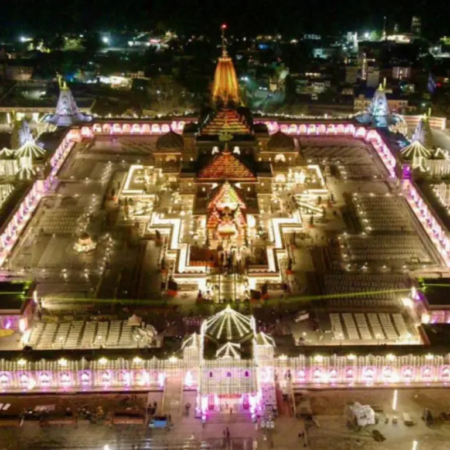
Expressways and airports are changing the state’s connectivity. Industrial corridors are bringing new investment possibilities to districts beyond Lucknow and Noida. Irrigation projects are opening new possibilities for farmers. Medical infrastructure is expanding. Ayodhya, Varanasi and other cultural destinations are becoming major tourism centres.
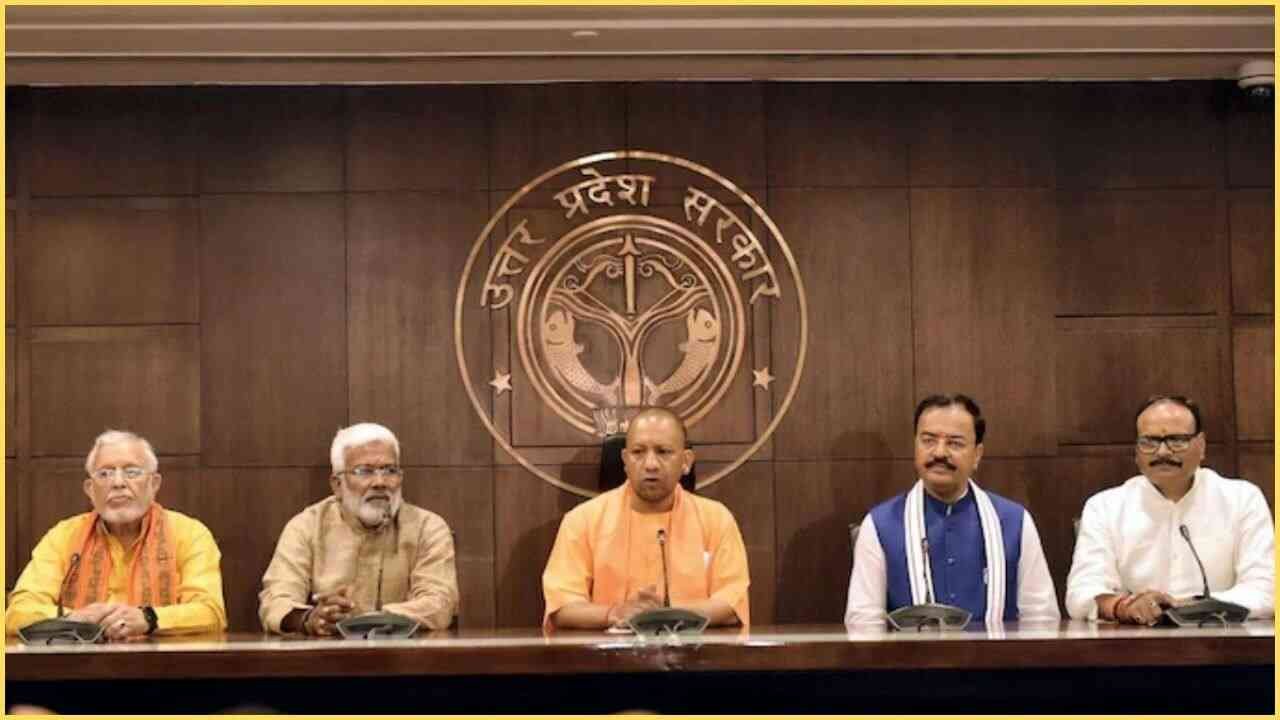
This transformation has been a collective effort led by the Chief Minister, and well executed by his ministers and the state bureaucracy. Here are some ministers whose departments stand out particularly strongly:
1. Suresh Kumar Khanna — Finance
Suresh Kumar Khanna, the long-serving Finance Minister of Uttar Pradesh, his biggest contribution is not one individual scheme—it is the financial and budgetary architecture behind the Yogi government’s development programme.
Under him the 2026–27 UP Budget is ₹9.12 lakh crore, the state’s largest ever. The budget maintains a revenue-surplus position and targets a fiscal deficit of about 3% of GSDP. Capital expenditure has also been raised substantially.
More importantly, the underlying economy has expanded substantially:
UP GSDP increased from ₹13.30 lakh crore in 2016–17 to ₹30.25 lakh crore in 2024–25.
Per-capita income increased from ₹54,564 to ₹1,09,844 over the same period.
The state’s share of India’s economy increased from 8.6% to 9.1% while the 2025–26 GSDP was projected at roughly ₹36 lakh crore as Khanna continues the good work in the Finance department.
2. Arvind Kumar Sharma — Energy & Urban Development
Arvind Kumar Sharma (AK Sharma) is particularly interesting because, unlike many UP ministers, he came into politics after a long career as a senior IAS officer and worked closely with Narendra Modi in Gujarat and later in the PMO. In the Yogi government, his main portfolios have included Urban Development and Energy.
His portfolio is unusually large and strategically important, as he simultaneously handles two areas with direct impact on households, businesses and infrastructure
The energy numbers are particularly significant.
By May 2026, UP had tied up approximately 32,305 MW of power capacity since 2015, with roughly 62% of that capacity added in the previous three years. Another 10,719 MW was under development through wind, battery storage, pumped hydro and hybrid projects
UP has been performing strongly on solar adoption. Sharma highlighted UP’s leading position in the PM Surya Ghar programme in the Assembly. The Centre has also been working directly with Sharma on the state’s power-sector reforms and renewable-energy transition
3. Nand Gopal Gupta ‘Nandi’ — Industrial Development and Investment
If Uttar Pradesh is to become one of India’s principal economic engines, industrialisation and investment have to be at the heart of the strategy. That is where Nand Gopal Gupta ‘Nandi’, Cabinet Minister for Industrial Development, Export Promotion, NRI and Investment Promotion, has an important role.
The Yogi government has made attracting investment one of the central pillars of its second-term economic agenda. The objective is no longer simply to secure investment announcements but to move projects from the proposal stage towards actual implementation.
The state has reported thousands of projects being grounded through its Ground Breaking Ceremonies, while the government has continued to push investment facilitation, industrial land availability and sector-specific incentives.
The broader UP industrial transformation is substantial:
UP says ₹45 lakh crore of investment proposals were received, with approximately ₹15 lakh crore actually materialised by 2025.
Those realised investments were associated with more than 60 lakh employment opportunities, according to the government’s 2025 review.
Registered factories reportedly increased from 14,169 in 2017 to 27,295 in 2025.
UP now reports about 96 lakh MSME units, employing around 1.75 crore people.
FDI increased from roughly ₹3,303 crore during 2000–17 to ₹16,316 crore since 2017, according to figures presented by the state government.
Nandi’s department therefore sits at the intersection of some of the government’s biggest ambitions: manufacturing, exports, investment and employment.
4. Swatantra Dev Singh — Jal Shakti and Irrigation
For a state where agriculture remains fundamental to rural livelihoods, few departments have a more direct impact on the economy than Jal Shakti.
Swatantra Dev Singh, Cabinet Minister for Jal Shakti, has overseen a portfolio central to irrigation expansion and water infrastructure. The results are particularly significant because irrigation projects often require years of planning, financing and execution before farmers see their benefits.
Since 2017, Uttar Pradesh has completed 29 major irrigation projects, 16 medium projects and six small projects. Among the most important achievements has been the completion and operationalisation of the long-delayed Saryu Nahar National Project, which has expanded irrigation capacity and provided relief to farmers in areas that had suffered from inadequate water availability for decades.
This remains one of the most underrated portfolios in terms of measurable impact.
By early 2026, UP had reported:
- roughly 2.5 crore rural families with functional tap connections;
- 26,564 villages declared Har Ghar Jal by gram panchayats;
- more than 97,000 villages involved in ongoing implementation;
- about 80% of Gramin Pipe Peyajal Yojana projects using solar energy;
- estimated annual CO₂ reduction of around 13 lakh tonnes from the solar-based water systems.
- Singh was also actively handling flood management during the August 2026 Nepal-flood situation, with the state maintaining flood preparedness.
In a state as large as Uttar Pradesh, water infrastructure is ultimately economic infrastructure. Singh’s department is therefore contributing directly to one of the central challenges of UP’s development story: ensuring that growth reaches the rural heartland as well as the major cities.
5. Brajesh Pathak — Health and Medical Education
One of the most consequential aspects of the Yogi government’s long-term record could turn out to be its expansion of medical and healthcare infrastructure.
Brajesh Pathak, Deputy Chief Minister and Minister responsible for Medical Education, Medical Health and Family Welfare, has been at the centre of this effort.
Uttar Pradesh has historically faced a major shortage of healthcare infrastructure relative to its enormous population. The government’s response has included expanding medical colleges, strengthening existing institutions and increasing the state’s medical education capacity.
The government’s 2026 transformation report gives these figures:
• 81 medical colleges — 51 public and 30 private.
• 221 district/special hospitals.
• 3,750 community health centres/PHCs in the reported infrastructure dataset.
• Around 9,235 Ayushman Arogya Mandirs/sub-centres.
• Frontline workforce includes approximately 1.62 lakh ASHAs, 35,000 ANMs, 18,000 nurses and 17,700. medical officers.
The government’s continued emphasis on health and medical education in its budget and development planning suggests that this is being treated as a long-term investment in human capital rather than simply a welfare expenditure.
6. Surya Pratap Shahi — Agriculture
No assessment of Uttar Pradesh’s development can be complete without agriculture.
Surya Pratap Shahi, Cabinet Minister for Agriculture, Agricultural Education and Agricultural Research, presides over a sector that affects millions of families directly and remains central to the state’s rural economy.
There are some concrete indicators of his department’s activity:
In 2025, the Centre approved procurement of 2,27,860 tonnes of urad worth ₹1,777.30 crore from UP farmers, with 100% procurement approved for that crop under the relevant programme.
In June 2026, the Centre and UP government worked on a broader scientific agriculture roadmap covering cropping patterns, irrigation, water conservation, seeds, technology and marketing
The 2026 agriculture discussion specifically involved Shahi and his department, including MSP procurement and climate-resilient agriculture.
The agricultural story under Yogi has increasingly been linked with irrigation, infrastructure, technology and farmer support rather than being treated simply as a question of subsidies.
This is particularly important because one of Yogi’s biggest challenges is to ensure that the state’s economic rise is broad-based rather than concentrated in a few urban centres.
7. Jaiveer Singh — Tourism and Culture
Few departments illustrate the changing economic identity of Uttar Pradesh as clearly as Tourism and Culture.
Jaiveer Singh, Cabinet Minister for Tourism and Culture, has been part of the government’s effort to convert UP’s eextraordinary heritage into a mega industry funding the lives of crores of citizens.
The Ministry boasts 110 tourism projects completed between 2022 and 2025–26, according to the state government’s reported figures.
These included:
43 Buddhist projects, 30 Jain heritage projects, 19 Ravidas-related projects, 9 gurdwara projects and 7 Kabir-related projects.
UP has reorganised tourism development into 12 thematic tourism circuits, covering Ramayana, Krishna-Braj, Buddhist, Mahabharata, Shaktipeeth, Sufi-Kabir, Jain, Bundelkhand and ecotourism themes.
Tourism expenditure has expanded sharply: the reported tourism budget rose from roughly ₹109 crore in 2017 to ₹1,734 crore in 2024–25.
The important point is that Singh’s department has moved beyond simply promoting individual destinations. The government is attempting to build destination clusters and circuits. This is particularly relevant because UP has major tourism assets such as Ayodhya, Varanasi, Mathura-Vrindavan, Prayagraj, Kushinagar, Sarnath, Chitrakoot and the Taj Mahal/Agra region.
The larger Yogi story
The most important feature of Yogi Adityanath’s second term is that these achievements are increasingly interconnected.
Industrial development needs roads and expressways. Industries need skilled workers and reliable power. Farmers need irrigation and connectivity. Tourism needs airports, roads, hotels and security. MSMEs need markets and logistics. Healthcare needs investment and infrastructure.
The government has attempted to bring these pieces together under a single development narrative.
This is also why law and order remains central to the Yogi model, even though Home is retained by the Chief Minister himself and therefore does not belong on a list of minister-led portfolios. The government’s argument is straightforward: investment requires confidence, businesses require security and citizens require an administration capable of enforcing the law. The state’s own formulation of the model as Safety, Stability and Speed captures this philosophy.
For decades, Uttar Pradesh was discussed primarily in terms of its problems and its unrealised potential. Under Yogi Adityanath, the political and economic conversation is increasingly about how far the state can rise.
That may ultimately be the defining achievement of his second term: not merely that Uttar Pradesh has grown, but that the state has begun to develop the confidence, infrastructure and institutional machinery to believe that it can become one of India’s principal engines of growth
And behind that transformation is a ministerial team whose work—from industry and irrigation to health, agriculture, tourism and MSMEs—is turning the larger Yogi vision into sector-by-sector execution.