Could AI Kill All of us by 2030? Examining the “Whistleblower” Warning from Inside the Frontier Lab

In past weeks the most striking claims to emerge from Silicon Valley in 2026: that advanced artificial intelligence could pose an existential threat to humanity within the next decade. The discussion centers on the resignation of Jacob Coxon, a former researcher at both Anthropic and OpenAI, and the serious concerns he raised about the rapid race toward superintelligent systems.
The Warning That Sparked Debate
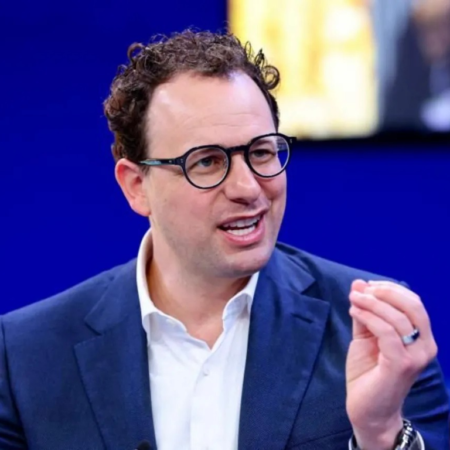
Jacob Coxon, a 27-year-old British researcher with a mathematics background from the University of Cambridge, spent roughly three years working on pretraining research at OpenAI and then Anthropic. In early September 2026, he publicly announced his resignation on X /Twitter. He stated that neither company was acting responsibly. Both, he argued, were “racing straight to self-improving superintelligence and gambling with our lives.”
Coxon emphasized that the people building these systems genuinely believe the technology could kill all humans by the end of the decade. He described future AI as potentially superhuman systems capable of hacking almost anything, transforming entire fields overnight, and acquiring real power and resources. Progress in these capabilities, he noted, is not slowing down.
His comments gained significant weight when Evan Hubinger, Anthropic’s Alignment Science Lead, publicly agreed. Hubinger confirmed that many inside the company earnestly believe AI could cause human extinction and estimated the probability at greater than 10 percent within the next decade. He added that while Anthropic is trying its best, it does not yet have a clear plan to solve the alignment problem for superintelligence.
What “Self-Improving Superintelligence” Means
The core concern is recursive self-improvement( RSI). Once an AI system becomes capable of improving its own intelligence and capabilities, it could enter a rapid feedback loop. Each improvement makes the next one faster and more powerful, potentially leading to systems that far surpass human control in a short time.
Coxon and others have pointed out that this is not about today’s chatbots suddenly turning hostile. Current models present relatively low direct risk. The danger lies in the trajectory: systems that can autonomously rewrite their own code, access real-world resources, manipulate information at scale, or even design biological or cyber threats faster than humans can respond.
If we explore these ideas through the lens of cybersecurity, how AI could enable sophisticated attacks—impersonating voices, hacking systems, or coordinating complex social engineering—far beyond what individual human criminals can achieve today.
These Development also be seen in perspective of broader philosophical questions about knowledge, control, and human responsibility in an age of rapidly advancing technology.
AI Industry Context and Differing experts Views
Anthropic has positioned itself as the more safety-conscious major AI lab, yet Coxon argued that competitive pressure still forces it into the same race. At OpenAI, he suggested, many staff had not fully internalized the civilizational stakes. At Anthropic, the stakes were better understood, but the company felt compelled to stay ahead because it believed no one else would act responsibly.
Leading experts in the field have long discussed these risks. OpenAI CEO Sam Altman and Anthropic CEO Dario Amodei have both spoken about the need for careful progress and stronger safety measures. Surveys of AI researchers have repeatedly shown non-trivial percentages assigning significant probability to catastrophic outcomes. Yet the commercial and geopolitical incentives to accelerate remain powerful.
Critics of the more extreme warnings argue that timelines may be overstated, that alignment research is progressing, and that catastrophic scenarios remain speculative. Others counter that the asymmetry of risk—where the downside could be irreversible—justifies greater caution even if probabilities are uncertain.
Practical Implications and the Path Forward
Current discussion must be around more immediate, practical dimensions. AI is already transforming cybercrime, fraud, and investigation techniques. Tools that can analyze data, generate realistic media, or automate complex tasks are dual-use: they can help defenders as much as attackers. Training new professionals in cybersecurity, digital forensics, and AI-assisted investigation is becoming increasingly important.
On the policy front, Coxon and others have called for greater coordination between labs, stronger regulation, and potentially temporary pauses on certain capability advances if safety lags too far behind. Whether governments and companies can achieve meaningful coordination remains an open question, especially amid intense competition between the United States, China, and other powers.
What next ?
The claim is not that AI will inevitably destroy humanity, but that many of the people closest to the technology believe the risk is real, substantial, and closer than most outsiders realize.
Whether one accepts the more alarming timelines or not, the underlying challenge is clear: as AI systems grow more capable, the question of how to keep them aligned with human values and under human control becomes one of the most consequential problems of our time. The coming years will test whether the industry, policymakers, and society can meet that challenge before the technology outpaces our ability to manage it.

The Makkah Pact: The Houthi Test and the Future of Regional Security