
As this is being written, a Jamaat-e-Islami convoy is rolling toward Islamabad by train and road, and Khyber Pakhtunkhwa’s chief minister is finalising a route for a second, larger march due a week later. On paper, therefore, the two protests are about distinct issues: one primarily economic and the other political. But their simultaneous emergence points to a broader convergence of pressures confronting Pakistan’s political system.
The petroleum levy has become a particularly visible symbol of the cost-of-living crisis because changes in fuel prices feed directly into transport costs and, indirectly, the prices of food and other essential goods. Jamaat-e-Islami has maintained that the levy should be abolished rather than replaced by temporary relief measures, and negotiations between the party and the government have so far failed to produce an agreement.
The political mobilisation around Imran Khan operates on a different plane. For his supporters, his continued imprisonment has become part of a wider dispute over political representation, the treatment of opposition parties and the direction of the country’s political system. The fact that this mobilisation is being organised from Khyber Pakhtunkhwa, where PTI has a strong political presence, gives the confrontation an additional provincial dimension. It places the federal government and the provincial administration on opposite sides of a rapidly developing political contest.
The making of a “hard state”
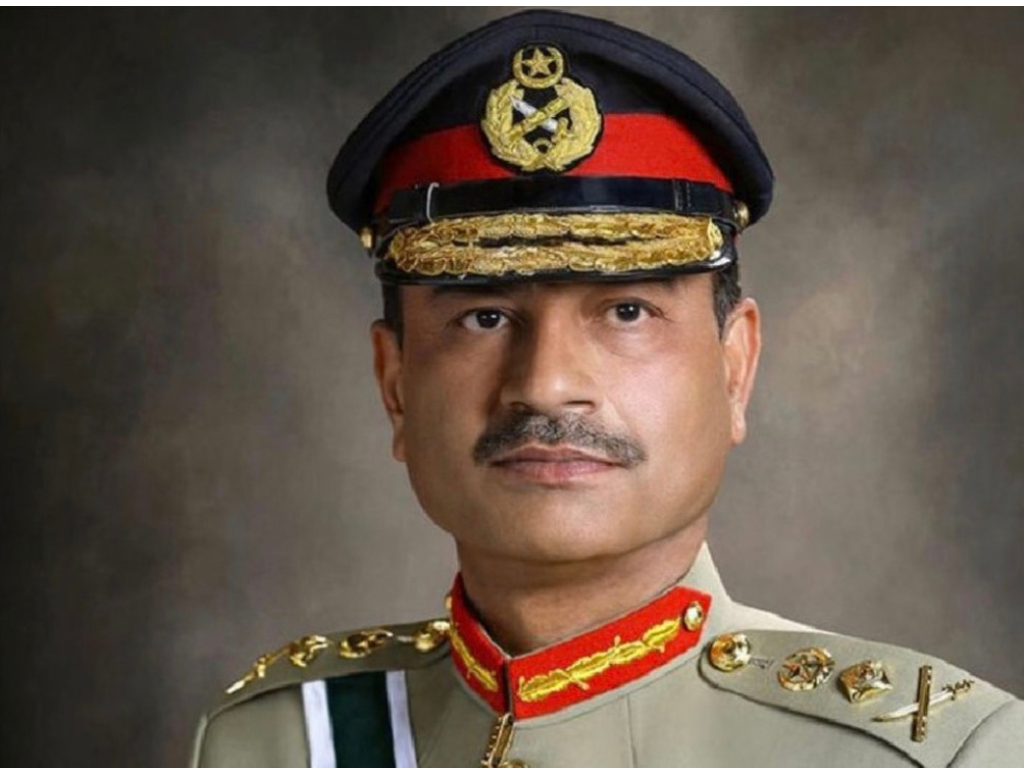
Weeks after the May 2025 clash with India — in which Pakistan’s air defences came under sustained Indian strikes before a ceasefire was reached — Munir was promoted to Field Marshal, only the second Pakistani officer to hold the rank after Ayub Khan in 1959. Unlike Khan’s self-conferred title, Munir’s was formally approved by the cabinet, and Islamabad presented it as recognition of a strategic victory, a framing India has disputed.

Six months later came the more consequential move. Pakistan’s 27th Constitutional Amendment — pushed through parliament in November 2025 with little public debate, 234 votes to 4 in the National Assembly — created a new post, Chief of Defence Forces (CDF), held concurrently with the army chief’s own office. The post places Munir at the helm of the army, air force and navy for a fixed five-year term, renewable once — which is how the podcast’s reference to Munir’s ambitions stretching out to 2035 checks out arithmetically. In the role, Munir has primacy over the air force and navy chiefs, who were previously treated as equals, and exercises full command over the Strategic Plans Division, which manages Pakistan’s nuclear arsenal. The amendment further grants Munir lifetime immunity from prosecution, a protection that can only be withdrawn by a two-thirds parliamentary vote — a far higher bar than the simple majority needed to remove an elected prime minister
During his visit to US in late 2025,a comment Munir made to the Pakistani diaspora after meeting President Trump in mid-2025, expressing hope of resolving Pakistan’s economic and diplomatic problems by around 2035 — a horizon that, at the time, seemed to presuppose he would still be around to see it through. A pointed parallel to AyubKhan can also be drawn, recalling that a two-man committee once quietly examined whether Pakistan should become a monarchy with Khan as its king (the committee said no; Khan scrawled on the file that it wasn’t such a bad idea).
Two insurgencies, one overstretched army
In Balochistan, the Balochistan Liberation Army (BLA) has increasingly gone after infrastructure and investment rather than headline body counts — highways, power lines, railways and, above all, mining projects. The clearest evidence is Reko Diq, one of the world’s largest undeveloped copper-gold deposits in Chagai district: Barrick Mining, which holds half the project announced in February 2026 that it was delaying financing amid escalating security incidents, and by mid-year had extended that review by a further twelve months — not quite the full exit.

The same period saw the BLA hijack the Jaffar Express for thirty hours, holding more than 350 passengers, and stand up a maritime wing that has since struck a Pakistani coast guard vessel near Gwadar — evidence, independent trackers confirm, of a movement broadening its tactics rather than being worn down. The Pakistan Institute for Peace Studies recorded 254 attacks and over a thousand casualties in Balochistan in 2025 alone, a quarter more than the year before, and Al Jazeera’s reporting from this September finds the province has pulled further ahead of Khyber Pakhtunkhwa as the country’s deadliest region through 2026, with the Pakistani Taliban now also making inroads into the province’s Pashtun-majority districts.
Khyber Pakhtunkhwa presents a different problem entirely. The TTP has also moved out of the old tribal badlands into settled districts such as Bannu, Kohat and Dera Ismail Khan, deliberately targeting security forces in ways designed to humiliate the state in front of its own citizens. Its adoption of quadcopter drones is a genuine escalation: Pakistan’s own army spokesperson acknowledged 405 drone strikes in 2025, KP police logged 246 with the bulk concentrated in Bannu, and independent trackers count dozens more through the first half of 2026 — a capability that barely existed three years ago.
This crackdown has closed off the moderate, negotiable end of Baloch politics specifically. Dr Mahrang Baloch, the young activist who built the Baloch Yakjehti Committee into the closest thing the province has had to an organised, non-violent political voice — Time named her among its 100 emerging leaders in 2024 — was arrested in March 2025 after a sit-in over enforced disappearances and was sentenced to life imprisonment this June on charges of inciting a fatal riot, a verdict the United Nations and international rights groups have criticised as part of a broader clampdown on dissent.
 Akhtar Mengal, the veteran Balochistan National Party leader who quit the National Assembly in 2024 declaring that his province had “already gone,” has stayed outside parliament since.
The third fault line: Sindh
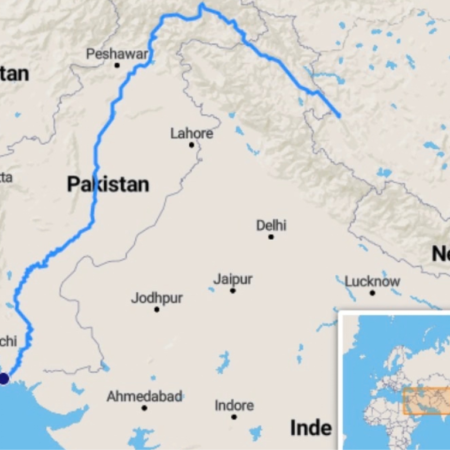
The proximate trigger is the Cholistan canals scheme, a roughly $3.3 billion plan to draw new canals off the Indus to irrigate corporate farmland in southern Punjab, jointly inaugurated in February 2025 by Punjab Chief Minister Maryam Nawaz and Asim Munir himself. Sindh, downstream on the same river, saw it as an existential threat to its water share and has not let the issue drop: the provincial assembly passed a unanimous resolution against the project, sustained street protests forced it off the table at the Council of Common Interests, and the episode has left Punjab-Sindh relations, and the ruling coalition’s own PPP-PML-N alliance, visibly strained through much of 2026.
Layered on top of that is a live, and far more combustible, debate about redrawing Pakistan’s provincial map altogether — floated this year by federal ministers frustrated with governance failures, and framed by critics as a strategy of fragmenting opposition strongholds rather than genuinely devolving power.
For Sindh, the objection is not merely tactical. Of Pakistan’s four provinces, it is the only one that has never been divided since the British separated it from the Bombay Presidency — Punjab was partitioned in 1947, the old NWFP was cut by the Durand Line in 1893, and Balochistan by the Goldsmid Line, which sent a third of Baloch territory into Iranian Sistan. That unbroken territorial history, tied to an identity built around the Indus itself, is why the Sindh Assembly has now passed variations of the same rejectionist resolution repeatedly since 1948, most recently under the banner “Sindh is one,shall remain one.”
Beneath the security headlines, a generation at risk
Pakistan’s National Nutrition Survey, last conducted in 2018, found 40.2% of children under five stunted — around 12 million children — a rate that has barely moved in over two decades and that recent analysis puts at a cost to the economy of roughly $17 billion a year in lost human capital. Separately, Pakistan’s own education ministry told parliament this year that 25.4 million children aged five to sixteen remain out of school, the worst burden of any single country outside Nigeria, even as other survey methodologies produce lower estimates — a reminder that even the scale of the crisis is contested inside Pakistan’s own data.
The week that may decide the shape of the crisis
The Jamaat-e-Islami’s Hafiz Naeemur Rehman has led sit-ins in dozens of cities since mid-August against a petroleum levy that adds more than Rs100 a litre to fuel prices, demanding both its abolition and a three-percentage-point cut in the central bank’s policy rate, and set off from Karachi toward Islamabad by train and road on 20 September. A week later, Khyber Pakhtunkhwa Chief Minister Sohail Afridi is to personally lead a Pakistan Tehreek-e-Insaf march on the capital demanding Imran Khan’s release and medical access, joined by the opposition alliance Tehreek Tahaffuz-e-Ayeen-e-Pakistan, led by veteran Pashtun nationalist Mahmood Khan Achakzai. Organisers have floated figures as high as four million participants; the government has responded with court orders barring the use of state resources against protesters and, separately, with the detention of members of Imran Khan’s own family.
What it means for India
Pakistan’s military establishment has, in the aftermath of last year’s clash, largely internalised that it lacks a credible defence against India’s missile capability and has little realistic prospect of altering the situation in Kashmir by force — a conclusion consistent with how India’s own army leadership has characterised the outcome of that confrontation. If that reading holds, the more consequential story for India over the next few years may not be played out on the Line of Control at all, but inside Pakistan itself: a hard state that has fused control of the military, the nuclear command structure and constitutional immunity in one office, even as its writ visibly erodes in Balochistan, comes under sustained pressure in Khyber Pakhtunkhwa, and faces a newly assertive Sindh. Precisely because Rawalpindi’s western and nuclear-adjacent province, Balochistan, is also the corridor for the China-Pakistan Economic Corridor, sustained instability there carries direct implications for Beijing’s calculus as well as Delhi’s. A Pakistan absorbed in holding its own federation together is,on one reading, a less dangerous external neighbour; on another, a nuclear-armed state with a more centralised, less accountable command structure and a deepening domestic legitimacy crisis is not obviously a more predictable one.

How an AI Hallucination Nearly Triggered a US-China Military Confrontation

Very good and insightful analysis. content is gives a complete idea of the political, economic, security, and societal issues faced by Pakistan. Connections that have been established between different fault lines such as political mobilization, insurgency, provincial issues, economic concerns, and human development issues make the analysis quite insightful.
Article Useful For UPSC